A death in the ED waiting room is a system failure, not one bad day
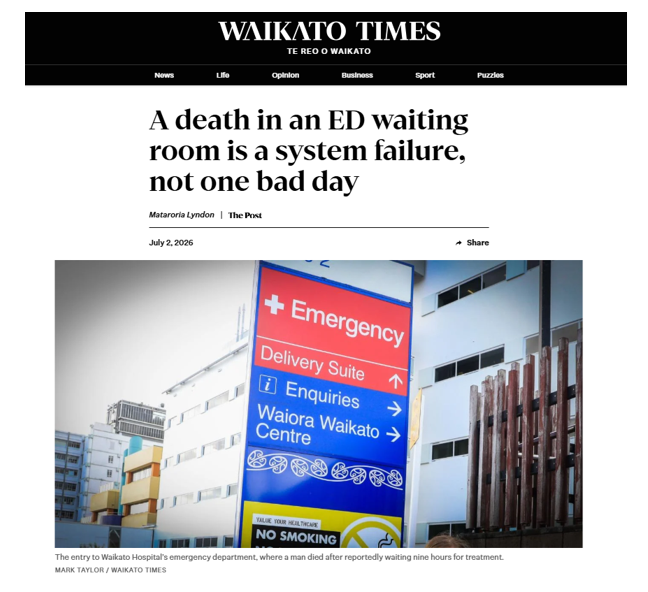
A person died in a toilet in the waiting room of Waikato Hospital’s emergency department this week, after reportedly waiting nine hours to be seen. Staff performed CPR in front of a packed waiting room, full of whānau and tamariki. The patient could not be revived.
Three factors typically drive it. Patients wait too long for assessment and a definitive management decision by a senior clinician. Those who require admission remain in the emergency department because no inpatient beds are available. Delays in diagnostics, such as CT scans, slow diagnosis and treatment, create further bottlenecks throughout the hospital.
The consequences ripple well beyond the waiting room. Ambulances queue outside because they cannot hand patients over. Emergency clinicians cannot move patients into treatment spaces. Hospital wards remain full because people who are medically ready cannot be discharged while community and aged-care services are stretched. Pressure builds across every part of the system, from primary care through to hospital discharge. Simply adding more emergency department staff cannot solve a problem when there is nowhere for patients to go.
For whānau Māori, these system pressures compound barriers that already exist. Waikato Hospital serves a vast region extending far beyond Hamilton, where rural communities often face longer travel times, fewer primary care services and more limited access to urgent healthcare. Combined with the wider determinants of health, including poor housing and socioeconomic disadvantage, many whānau become seriously unwell before they even reach the hospital.
Understanding these realities does not excuse what happened this week. It helps explain why the burden of an overstretched system falls disproportionately on those who already experience the greatest inequities.
Two reviews are now under way: a rapid review and a serious adverse event review. Those processes must establish exactly what happened clinically, and that work should proceed without prejudice.
But our responsibility cannot end when those reports are released.
Te Tiratū will continue to scrutinise emergency department performance and the wider health system that sits behind it. We will continue advocating for meaningful implementation of the recommendations that emerge, for Waikato Hospital and for a health system under strain across the country.
The evidence for the solutions already exists, even if implementing them requires sustained investment and political commitment.
We need stronger primary and community healthcare, including Māori health providers delivering care closer to where whānau live. We need workforce planning that ensures graduates from the new Waikato medical school progress into specialist training and remain in our region. We need hospital infrastructure that provides safe clinical spaces rather than relying on corridors and waiting rooms. We also need better information sharing across primary care, community providers and hospitals so patients are not forced to repeat their story every time they encounter another part of the system.
To whānau who may now feel anxious about seeking care, please do not let this tragedy stop you from accessing health services when you need them. Delaying care carries risks of its own. If your condition is not an emergency, your GP, community pharmacy, telehealth services and Māori health providers remain important options. If it is an emergency, please still come to hospital.
As winter deepens, we can all help reduce pressure on the health system by getting influenza and Covid-19 vaccinations, keeping childhood immunisations up to date to protect against serious vaccine-preventable illnesses such as whooping cough and pneumococcal disease, staying home when unwell, and checking in on kaumātua and those living with chronic health conditions.
A whānau has lost someone they loved. We owe them, and the staff who tried to save them, more than sympathy. We owe them a health system that learns from this tragedy and is better because of it.
Dr Mataroria Lyndon (Ngāti Hine, Ngāti Wai, Ngāti Whātua, Waikato) is a member of the Te Tiratū Iwi Māori Partnership Board, director of population health and equity at Tend Health, and senior lecturer at the University of Auckland’s Centre for Medical and Health Sciences Education.

Māori health leaders respond after person dies waiting in Waikato Hospital
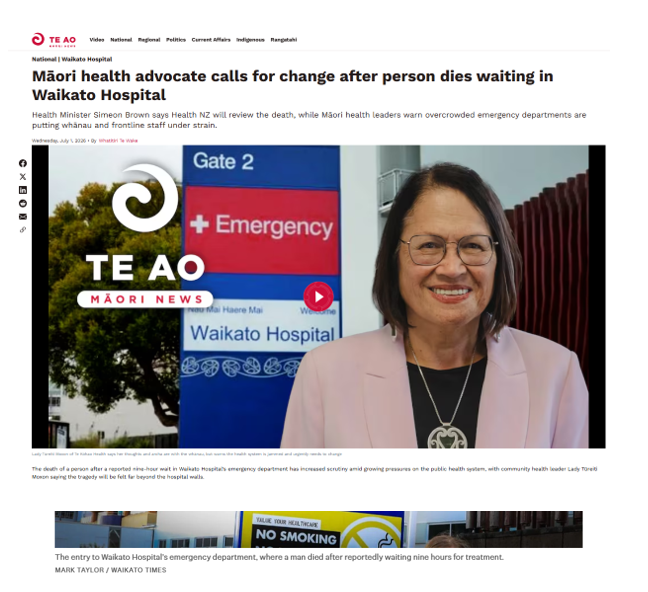
A Whakaata Māori News report has highlighted renewed concern about pressure on Waikato Hospital’s emergency department following the death of a patient after a reported nine-hour wait for care.
Lady Tūreiti Moxon, managing director of Te Kohao Health, said the impact of the tragedy would extend well beyond the hospital, affecting the patient’s whānau, hospital staff, and others who were present. She said long emergency department delays have become distressingly common.
Te Tiratū Iwi Māori Partnership Board, also expressed condolences and emphasised that no whānau should endure the trauma of losing a loved one while waiting for emergency care.
Board member and Hauraki PHO chair Glen Tupuhi said the focus must be on understanding systemic failure and preventing recurrence, noting that Māori experience disproportionate harm within the health system, including for rurally based whānau who face added barriers such as travel and long wait times.
Rangatira call for urgent systemic reform after autistic child case exposes serious agency failures
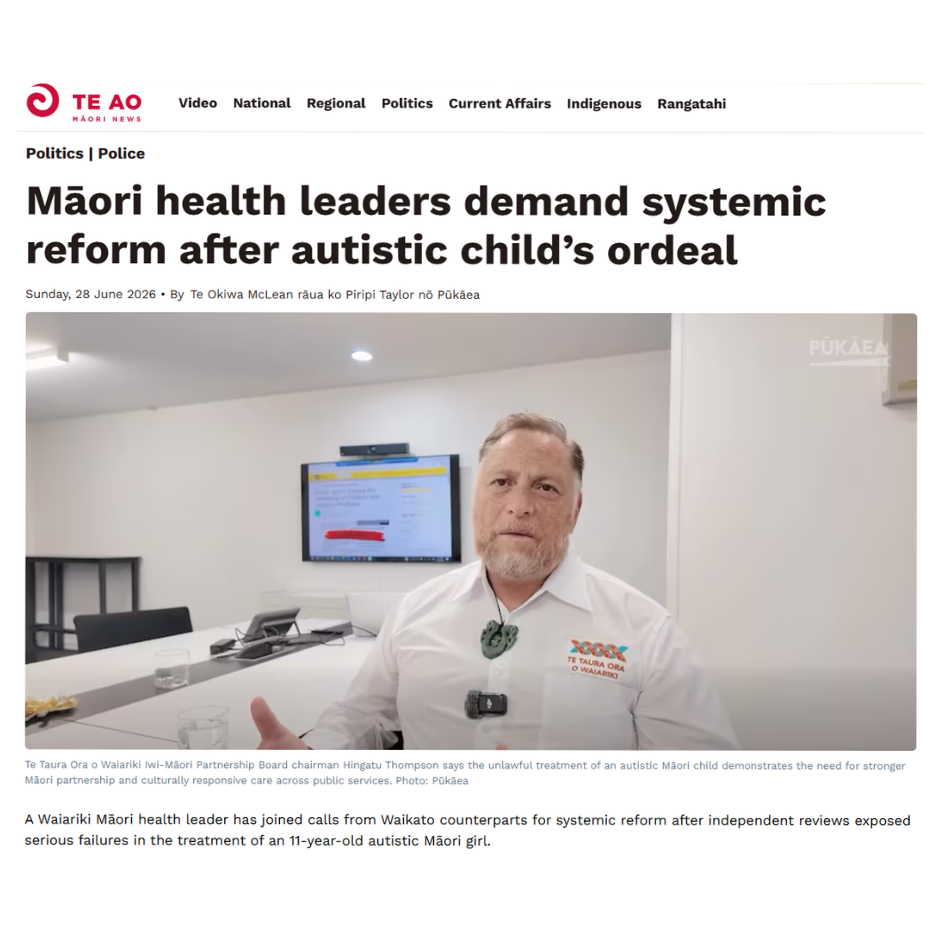
Māori health leaders including Te Taura Ora o Waiariki Iwi-Māori Partnership Board, Te Tiratū Iwi Māori Partnership Board and Lady Tūreiti Moxon are calling for urgent systemic reform following two independent reviews into the treatment of an 11-year-old autistic Māori child. Whakaata Māori reports the findings revealed multiple agency failures, including misidentification, unlawful restraint and inappropriate medication, prompting renewed demands for accountability, a formal Government apology, stronger Māori partnership in frontline services and disability system reform.
Waikato Times cover childhood immunisation rate rise as Māori-led health approaches deliver results
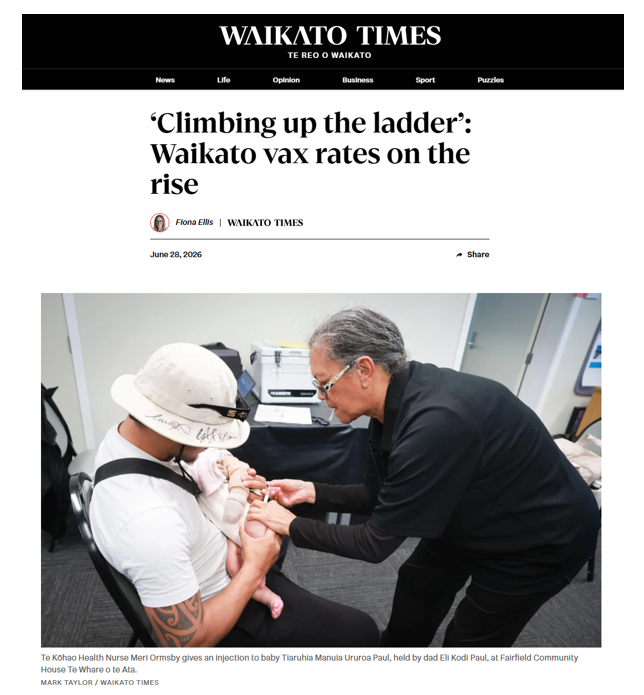
The Waikato Times has highlighted Waikato’s significant improvement in childhood immunisation rates, with Te Kōhao Health and Te Tiratū Iwi Māori Partnership Board recognising the impact of trusted Māori providers, whānau-centred outreach and community-based vaccination services. Board member Dr Mataroria Lyndon said the progress was encouraging but stressed continued investment is needed to close the remaining equity gap for Māori tamariki and achieve the Government’s 95% immunisation target.
RNZ highlights IMPBs call for independent whānau advocacy following Waikato Hospital failures
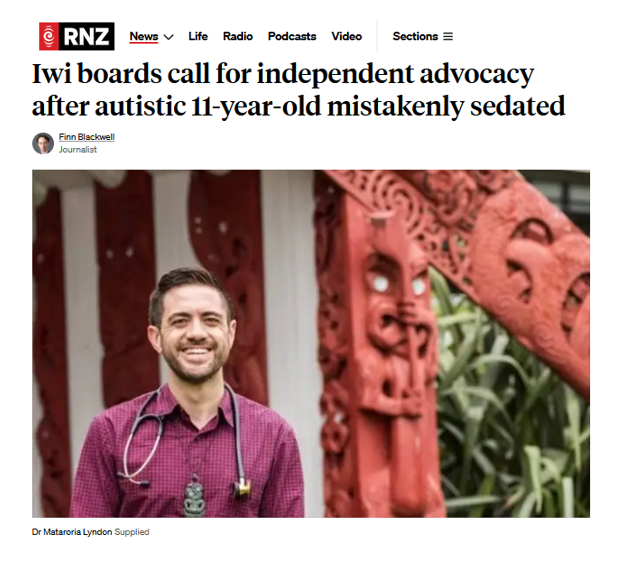
Te Tiratū, Te Taura Ora and Te Moana a Toi Iwi Māori Partnership Boards are calling for independent advocacy for whānau from the outset of serious incidents, following RNZ coverage of findings into the treatment of an 11-year-old autistic Māori child mistakenly identified as a 20-year-old and subjected to restraint and sedation at Waikato Hospital.
The child had been taken to hospital by Police after being found in the community, but was incorrectly identified as a missing adult mental health patient. Subsequent reports identified significant system failures across health and Police services, including breaches of Te Tiriti o Waitangi, the Health and Disability Code, Pae Ora and mental health legislation.
Speaking to RNZ, Te Tiratū Board member Dr Mataroria Lyndon described the findings as deeply concerning and said a more whānau-centred approach is urgently needed, including independent advocacy throughout serious incidents and investigations. The Boards also raised concern about delays in information sharing despite their statutory monitoring role under Pae Ora, and are calling for all recommendations to be fully implemented.
More doctors closer to home for whānau in the Waikato
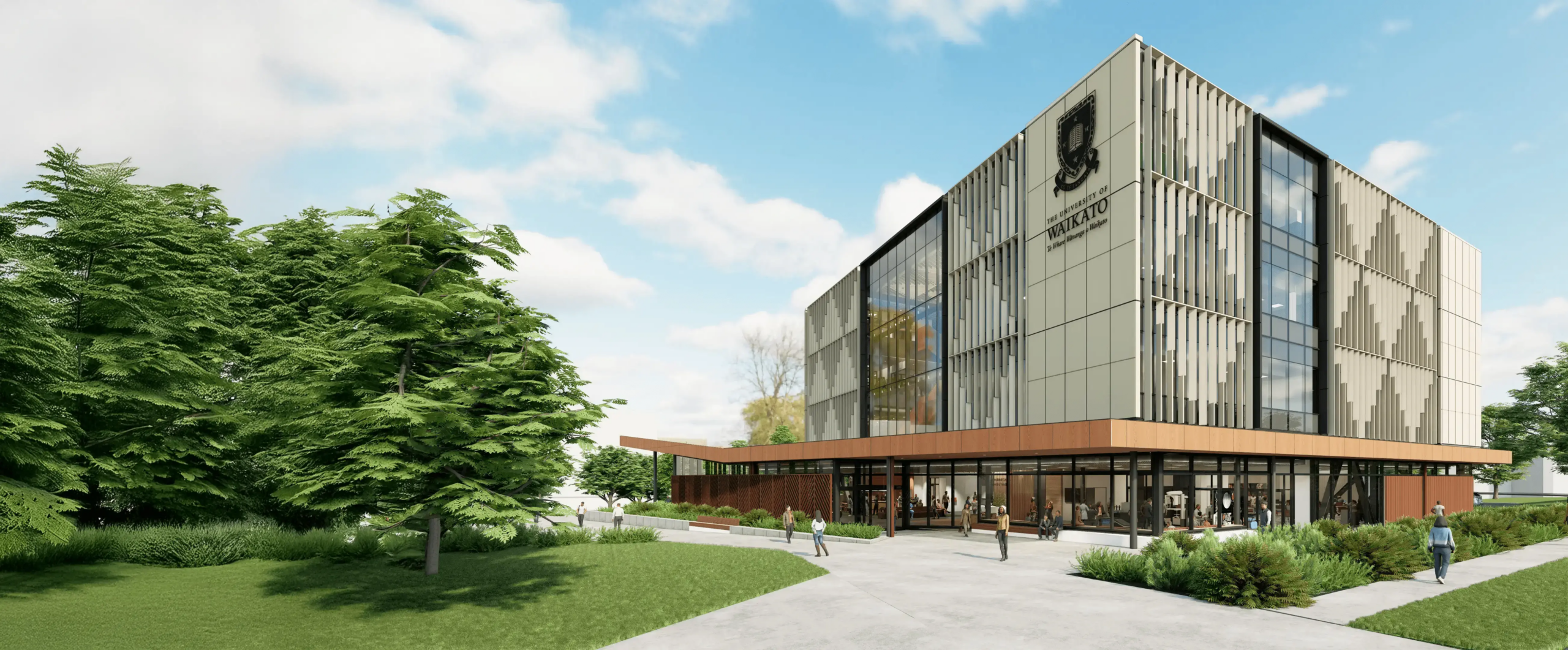
Image: University of Waikato’s New Zealand Graduate School of Medicine
Communities across Te Manawa Taki (Midlands) will play an important role in training future doctors of Aotearoa following official confirmation by the Health Minister of clinical placement locations for the proposed New Zealand Graduate School of Medicine at the University of Waikato.
The announcement includes successful iwi-led proposals in both the Tainui and Te Arawa waka regions, creating new opportunities to grow a local medical workforce and improve access to healthcare for whānau.
Across the Tainui waka rohe, North Waikato, Hauraki/Thames-Coromandel, South Waikato and Waipā/King Country have also been confirmed as Community Clinical Learning Centre locations, with Waikato Hospital serving as the anchor hospital for hospital-based placements.
The centres will provide medical students with opportunities to train in community, primary care and hospital settings, helping build stronger local workforce pathways and addressing doctor shortages in regional communities.
Waikato-Tainui Te Arataura Chair Tukoroirangi Morgan says the initiative represents a significant investment in local communities and the future health workforce. “The introduction of a third medical school is a game changer for our people,” he said.
In Te Arawa, a collective involving Te Taura Ora o Waiariki Iwi Māori Partnership Board has been selected to establish a Community Clinical Learning Centre.
For Māori communities, the initiative is about more than medical education. It creates pathways for whānau into medicine, strengthens Māori workforce development and helps ensure future healthcare services better reflect and understand the communities they serve.
As members of the Te Manawa Taki collective, Te Tiratū acknowledges the leadership of Waikato-Tainui, Raukawa, Hauraki, Maniapoto, Ngāti Hāua (Taumarunui) Te Taura Ora and their partners in securing opportunities that will benefit whānau across the wider region.
For Māori communities, this is about more than medical education. It is about creating pathways for our whānau into medicine, strengthening Māori and regional workforce pipelines, and ensuring communities have a greater voice in shaping the healthcare workforce of the future.
Under the proposed model, students will undertake training across community health services, primary care and hospital settings throughout the region. The programme is expected to welcome its first students in 2028, with community clinical placements beginning from 2029.
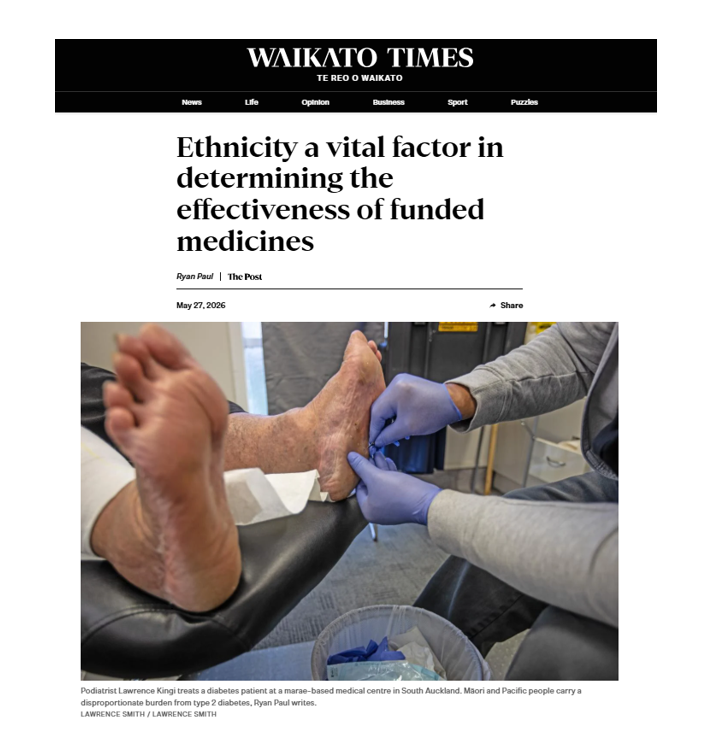
Ethnicity a vital factor in determining the effectiveness of funded medicines
Associate Professor Dr Ryan Paul, a clinician and technical expert advisor to Te Tiratū, explains why ethnicity should be a criterion for access to funded medications in Aotearoa New Zealand. [This think piece also appeared in The Post and The Press]
He says it is important to look at the evidence objectively. Māori and Pacific peoples are at least 2–3 times more likely to develop type 2 diabetes, acquire complications, and die prematurely from those complications than other New Zealanders.
“Pharmac’s volte-face to then remove the ethnicity criterion suggests that it was either ineffective or unfair, yet no public impact assessment or scientific explanation has been provided,” Dr Ryan Paul says.
Te Tiratū is encouraging whānau, clinicians, providers and community leaders to make a submission opposing the removal of equity access pathways.
Use Our Free Submission Template
We have created a free submission template to make it easy for whānau to have their voices heard.
Simply:
- Download or copy the template HERE
- Add your name and any personal comments
- Email it directly to Pharmac before 11 June 2026
The consultation closes on 11 June 2026.
Te Tiratū Iwi Māori Partnership Board crackdown on vaping
Te Tiratū Iwi Māori Partnership Board is calling for urgent action to curb rising vaping rates among rangatahi Māori across the Waikato rohe, warning that current market practices are fuelling nicotine addiction and harming whānau wellbeing.
Released ahead of World Smokefree Day 2026, Te Tiratū’s new Vaping Position Statement, developed with the University of Otago Faculty of Medicine and Associate Professor Andrew Waa, calls for vaping products to be regulated as therapeutic cessation tools only and available through accredited health services with strict nicotine limits, standardised packaging, reduced flavours, and stronger enforcement against illicit supply chains.
The statement highlights alarming vaping rates among rangatahi Māori, particularly Māori girls, and warns that vaping has become dangerously normalised as a lifestyle product rather than a smoking cessation aid.
Te Tiratū says stronger prevention-focused regulation is essential to protect future generations and uphold the wellbeing of whānau, hapū, and iwi.
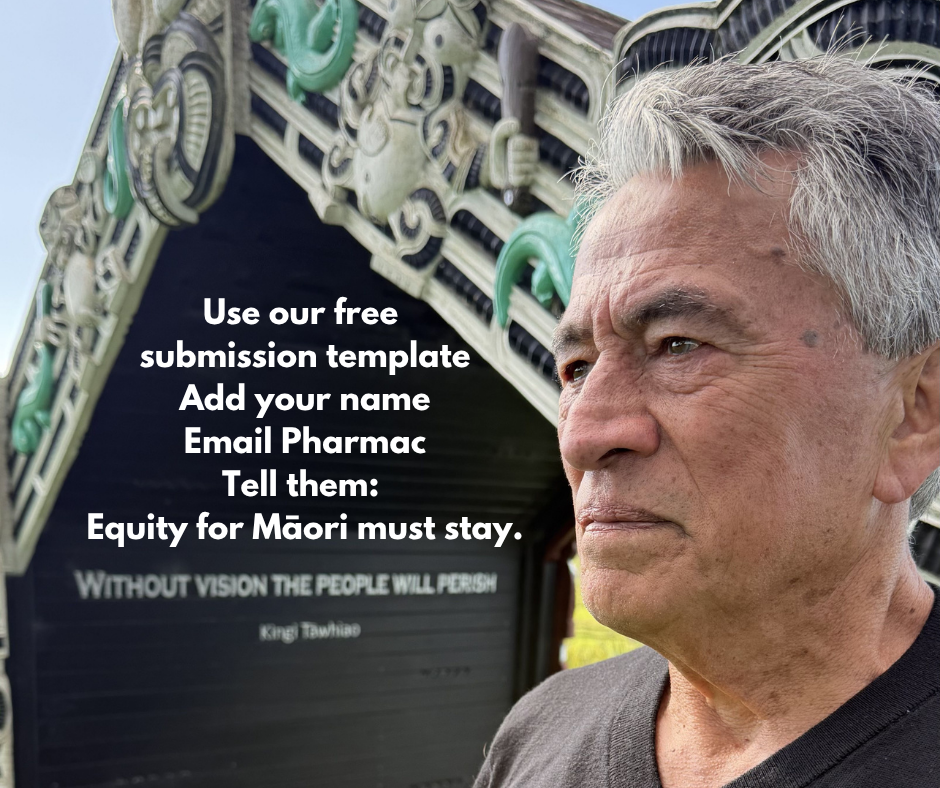
Whānau encouraged to send submissions to Pharmac before deadline
Pharmac is proposing to remove Māori and Pacific ethnicity equity criteria from access to important medicines used to treat type 2 diabetes, heart failure and chronic kidney disease. Read our media release for all the details.
These medicines help prevent serious complications including dialysis, amputations, heart attacks and early death. For many whānau, this is not an abstract policy issue it is about survival, quality of life, and equitable access to treatment.
Consultation closes at 5:00pm, Thursday 11 June 2026.
Te Tiratū is encouraging whānau, clinicians, providers and community leaders to make a submission opposing the removal of equity access pathways.
Use Our Free Submission Template
We have created a free submission template to make it easy for whānau to have their voices heard.
Simply:
- Download or copy the template
- Add your name and any personal comments
- Email it directly to Pharmac before 11 June 2026
Every submission matters.
Why This Matters
One of the largest Iwi Māori Partnership Boards in the country, Te Tiratū represents more than 121,300 Māori and is calling on Pharmac to immediately reconsider the proposal.
The ethnicity equity criteria were introduced in 2021 because Māori and Pacific peoples experience significantly higher rates of diabetes, cardiovascular disease and kidney disease, while also facing systemic barriers accessing medicines.
Te Tiratū Co-Chair Glen Tupuhi says:
“These medicines save lives and prevent devastating complications for whānau. Māori are diagnosed younger, become sicker earlier, and die sooner from preventable chronic illnesses. Equity pathways exist because the health system has not delivered equitable outcomes for Māori.”
Research and evidence presented through the Waitangi Tribunal Wai 2575 inquiry has already documented significant “prescription inequity” affecting Māori.
Te Tiratū is calling on Pharmac to:
- Retain ethnicity equity criteria for access to these medicines
- Release equity impact analysis publicly
- Demonstrate how Māori health outcomes will improve if criteria are removed
- Engage directly with Iwi Māori Partnership Boards and Māori health leaders
- Uphold Te Tiriti o Waitangi obligations in medicines policy decisions
Add Your Voice Today
Help protect equitable access to medicines for Māori whānau.
Use the free template, add your name, and email your submission to Pharmac before 5:00pm Thursday 11 June 2026.
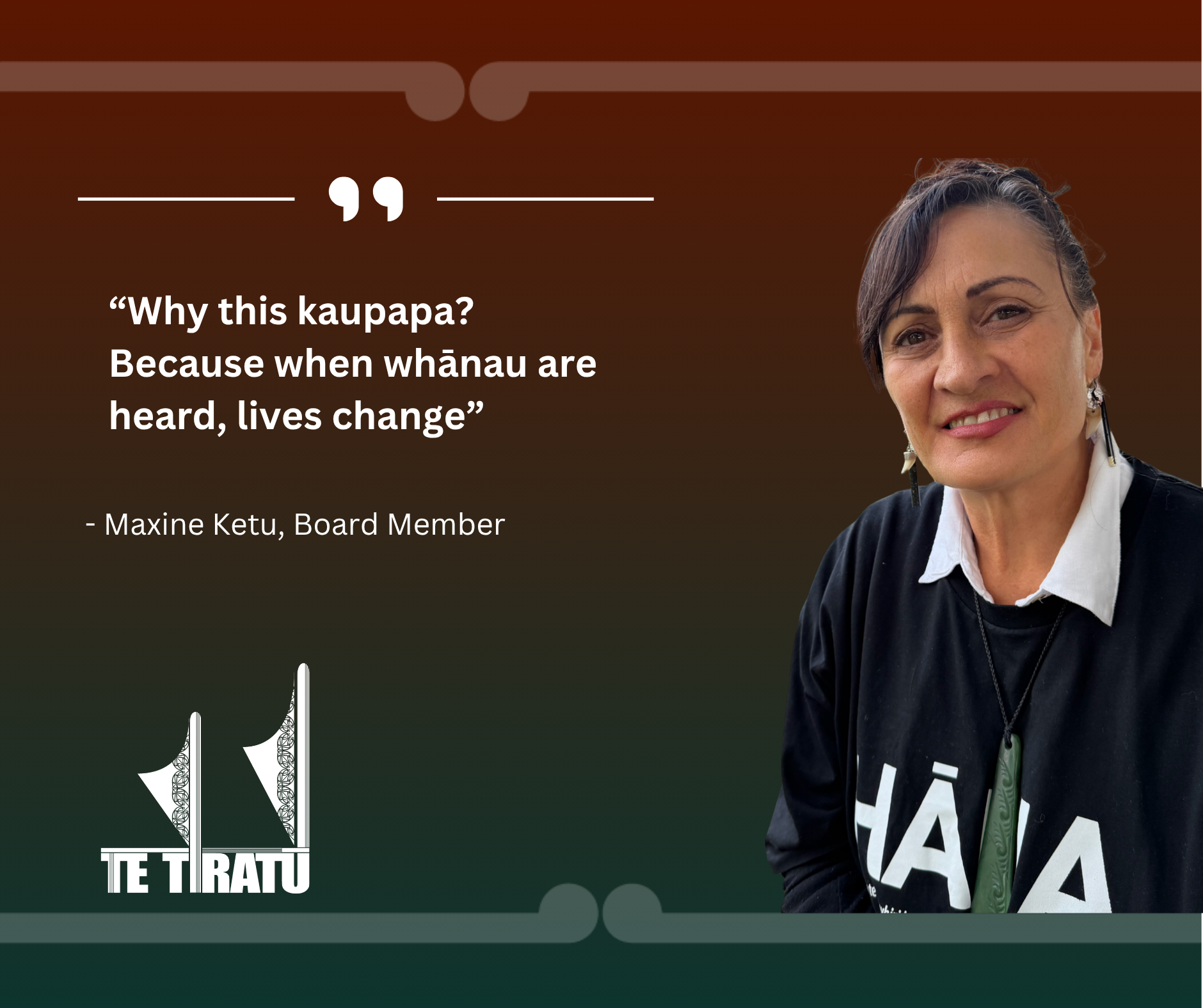
Ngā Kōrero a te Poari: Maxine Ketu
Our Board Member Maxine Ketu (Ngāti Maniapoto, Waikato-Tainui), shares whakaaro on improving health outcomes for whānau and communities.
Why this kaupapa?
Firstly, why me?
I was appointed Pouārahi/General Manager of Ngāti Hāua Iwi Trust with a key focus on supporting our Trustees through the completion of our Treaty Settlement journey.
As that role evolved, I was appointed to the Waikato DHB Iwi Māori Council, and over the years I have continued alongside the evolution of Māori health representation to where we are today with Te Tiratū.
The responsibility I carry when representing Ngāti Hāua and our rohe is significant. For me, this mahi is about the difference between life and death for our people.
That understanding comes from lived experience. My own whānau experienced the impacts of rural isolation, poverty, limited access to healthcare, and the inequities Māori continue to face within the health system. Those realities contributed to the untimely loss of a loved one.
That was 11 years ago, but since 2014 I have walked beside many whānau who have experienced the same pain and loss. I have woven waka wairua for whanaunga taken too young, too soon. I have stood at nehu and helped lay our loved ones to rest when I know they should still be here.
My representation, my passion, and my commitment to this kaupapa all come from those lived experiences.
What does real change look like?
Real change starts with whānau feeling empowered to take charge of their own health and wellbeing. That looks like:
- having access to good health education and information
- understanding our own whānau and generational health histories
- feeling confident to ask questions and seek second opinions when needed
- not settling for poor treatment or mediocre care
- putting ourselves and our loved ones first
- making informed and healthy choices through ongoing learning
- knowing we have the right to demand high-quality care for ourselves and our whānau at all times
Real change also means the health system valuing the mātauranga, lived experiences and voices of whānau as part of healthcare assessment, treatment and follow-up.
We need a health workforce that is trained to recognise and address unconscious bias. This learning should not be optional, it should be embedded across all health education, professional training and ongoing development.
For our rural communities, real change means equitable access to healthcare no matter where you live. Communities that are far from hospitals and specialist services need secure, long-term investment that is protected across governments and political cycles. Rural whānau should not receive poorer outcomes simply because of where they live.
We also need stronger systems for accountability and learning. A national complaints and feedback system could help ensure concerns raised by whānau are heard, responded to, and used to improve services over time. The information gathered could help identify gaps in access, improve service delivery, strengthen professional practice, and ultimately lead to better health outcomes for our people.
What needs to stop, shift or grow?
We need to stop accepting inequitable outcomes for Māori and rural communities as normal.
The health system must be shifted toward one that truly listens to whānau, values Māori knowledge, and responds with compassion, accountability and equity.
We need to grow:
- investment in iwi-led health education and prevention
- culturally safe healthcare practices across the system
- unconscious bias training throughout health education and workforce development
- diversity within the health workforce, so our people can see themselves reflected in the system
- better access to healthcare services for rural communities
- stronger systems for listening and responding to whānau feedback and complaints
When whānau feel seen, heard, respected and supported, health outcomes improve. That is the future we should all be working toward.