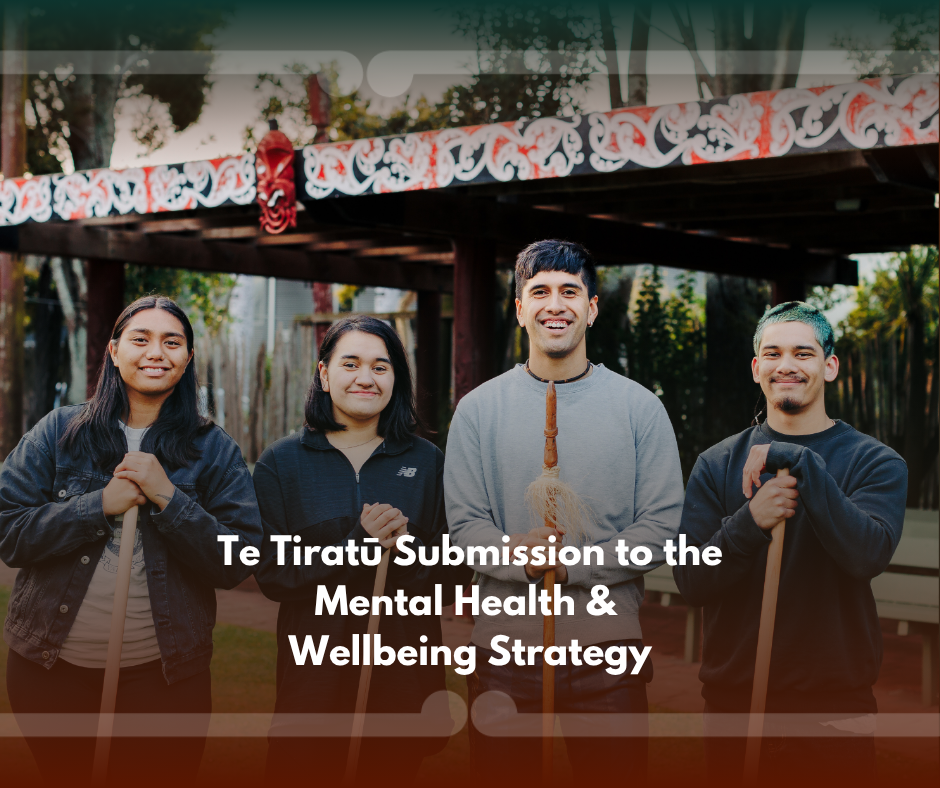
Te Tiratū represents approximately 121,000 Māori across the Waikato rohe, with around half under the age of 25. In our submission to the Government’s Mental Health and Wellbeing Strategy filed today we said the national mental health policy must be built from the realities of rangatahi Māori and whānau Māori and not retrofitted to them.
In rural Waikato, distress is not abstract. It is shaped by access barriers, workforce shortages, housing and income pressure, and the compounding effects of isolation. Te Tiratū argues that unless these conditions are addressed directly, the mental health system will continue to respond too late, and too often in crisis.
Our core message to Government
Te Tiratū is calling for a strategy that shifts from crisis response to prevention, from generic service design to Māori-led solutions, and from urban-centric planning to rural equity.
Our submission’s most critical recommendations are:
- Increase rural funding and expand telehealth capacity.
- Build and retain a rural mental health workforce.
- Address socioeconomic drivers of distress.
- Resource Māori cultural perspectives and whānau involvement.
- Support youth-led and community-based programmes.
The evidence from Tainui Waka Rohe
Our submission draws on our locality evidence base, which shows persistent and significant inequities in mental health outcomes across our region.
- Between 2017 and 2022, 16.0% of Māori aged 15+ in Waikato District experienced high or very high psychological distress
- Rising to 19.7% for Māori women
- Māori were 1.7 times more likely than non-Māori to experience high or very high distress
The data also shows the depth of unmet need:
- 5% of Māori reported a depression diagnosis
- 1% reported an anxiety disorder
- Māori were 1.9 times more likely than non-Māori to be hospitalised for mental or substance use disorders (2020–2023)
- Including 4.6 times higher hospitalisation rates for schizophrenia
- Around 225 Māori aged 15 to 44 are hospitalised each year for intentional self-harm
What must change in the system
We believe the current system is still too weighted toward crisis care, with insufficient investment in early intervention, rural access, and culturally grounded support.
Our submission says that meaningful improvement will only occur when services are designed closer to communities, delivered earlier, and shaped by a te ao Māori worldview and leadership.
We know workforce retention in rural areas is a critical pressure point because without it, access gaps will persist regardless of funding increases.
Treaty obligations and system accountability
A key concern of our submission is the limited visibility of Te Tiriti o Waitangi within the draft strategy, particularly Article 3 obligations relating to equity.
Without explicit Te Tiriti grounding, the strategy risks failing to address the structural drivers of inequity in mental health outcomes for Māori.
How accountability, investment, and service design are structured determines whether equity is achieved or not.
National context reinforces urgency
National data from Te Hiringa Mahara – Mental Health and Wellbeing Commission confirms the same pattern seen in Waikato, with 22.5% of Māori adults experiencing high or very high psychological distress, and 22.9% of young people aged 15–24 affected.
This aligns strongly with our locality findings and reinforces that rangatahi Māori are carrying a disproportionate burden of distress across the country.
Strategy alignment, but not yet sufficient
Our submission responds to the Ministry of Health New Zealand Draft Mental Health and Wellbeing Strategy 2026–2036, which focuses on prevention, access, workforce, and quality of care.
We support these directions in principle but argues they will not succeed unless they are explicitly grounded in Te Tiriti, rural equity, and Māori-led service design. Without this, the strategy risks maintaining existing inequities under a restructured framework.
Mental health reform will not succeed in Tainui Waka rohe if it continues to treat Māori as an “equity consideration” rather than the foundation of system design. The evidence shows that inequities are persistent, and the solutions are known. What is required now is investment, accountability, and a shift in power toward Māori-led, whānau-centred, community-based approaches.
Important References to inform the strategy:
- Te Tiratū IMPB, Hauora Māori Priorities Summary Report, here, pp.36-41 – Waikato Māori psychological distress, depression, anxiety, suicide, mental health hospitalisations, substance/alcohol-related hospitalisations and intentional self-harm data.
- Te Tiratū IMPB, Monitoring Report to March 2025 here, 15 May 2025, pp.22 and 25-26 – Māori access to primary and specialist mental health and addiction services, ED mental health waits, and commentary that services must remain culturally safe and whānau-friendly.
- Te Tiratū IMPB, Position Statement – Rangatahi Māori Mental Health, here23 September 2025 – Te Tiratū public position on rangatahi Māori mental health in rural Waikato, including rising distress, suicide risk, addictions, takatāpui youth pressures, rural isolation, service gaps, and the call for kaupapa Māori, whānau-led solutions.
- Te Hiringa Mahara – Mental Health and Wellbeing Commission, NZ Health Survey 2024/25 mental health and substance use data summary, 25 February 2026 – national context: 22.5% of Māori adults and 22.9% of young adults aged 15-24 experienced high or very high psychological distress.
- Ministry of Health, Draft Mental Health and Wellbeing Strategy 2026-2036 consultation, 8 April 2026 – consultation context and the four priority areas: prevention and early intervention, improved access, supported workforce, and quality/effectiveness of care.