Te Tiratū Iwi Māori Partnership Board is backing urgent calls for action following the release of the fifth State of Child Health in Aotearoa New Zealand Report, which highlights worsening child health outcomes and persistent inequities for tamariki Māori.
The report, produced by Cure Kids in partnership with the New Zealand Child and Youth Epidemiology Service at the University of Otago, shows around 60,000 children are admitted to hospital every year with illnesses considered preventable.
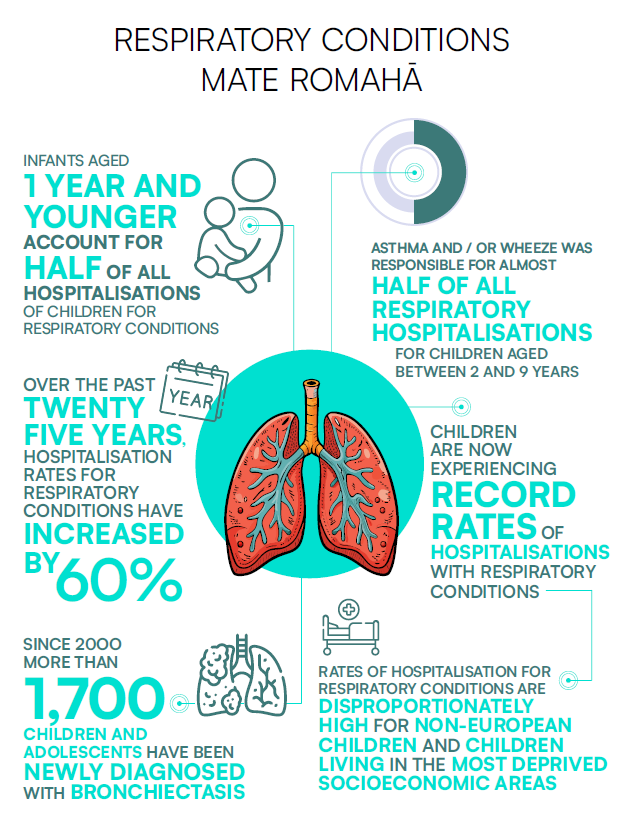
Respiratory hospitalisations have increased by 60 percent since 2000, with babies under one year old accounting for almost half of all admissions. Tamariki Māori continue to experience disproportionately high rates of respiratory illness and rheumatic fever.[1]
These national trends are already being felt across Tainui waka rohe. Local monitoring shows an average of 215 Māori children aged 14 and under were hospitalised for asthma each year in Waikato District between 2020 and 2023 1.9 times the rate of non-Māori children.
The figures reflect the wider realities many whānau are living with. Nearly half of Māori in Waikato DHB lived in the two most deprived deciles, almost one in four lived in overcrowded housing, 45 percent reported damp homes, 37.2 percent reported mould, and an estimated 17.5 percent of Māori were not enrolled with primary care.[2]
For rural whānau, the pressures are often even greater. Long travel distances, transport barriers, workforce shortages and delayed access to care can quickly turn manageable illness into hospital-level illness.
Te Tiratū says these outcomes are not inevitable. They are the result of longstanding inequities in housing, income, healthcare access and investment.
The Board is calling for sustained investment in kaupapa Māori and whānau-led solutions, accessible primary care, warm and healthy housing, and stronger accountability for Māori health outcomes.
Te Tiratū says Māori leadership and whānau voices must sit at the centre of any national response to child health, including decisions about funding, service design and prevention, as part of upholding Te Tiriti o Waitangi and mana motuhake in health.
[1] Source: Cure Kids, 2026 State of Child Health in Aotearoa New Zealand, March 2026 – national child health findings, including preventable hospitalisations, respiratory illness, rheumatic fever, mental health, deprivation, housing, and primary care access. Relevant pages: pp.4, 6-9
[2] Source: Te Tiratū IMPB, Monitoring Report to March 2025, 15 May 2025 – Waikato District asthma hospitalisation data: average of 215 Māori children aged 14 and under hospitalised for asthma each year between 2020-2023, 1.9 times the rate of non-Māori children. Relevant page: p.24. and Te Tiratū IMPB, Health Profile Volume 1: Key Indicators, 26 April 2024 – Waikato Māori deprivation, overcrowding, damp housing, mould, and primary care enrolment data and Te Tiratū, Community Health Plan – Refreshed Draft, 28 April 2026 – local town report themes around rural access, distance, transport, service availability, prevention, primary care connection and whānau voice.