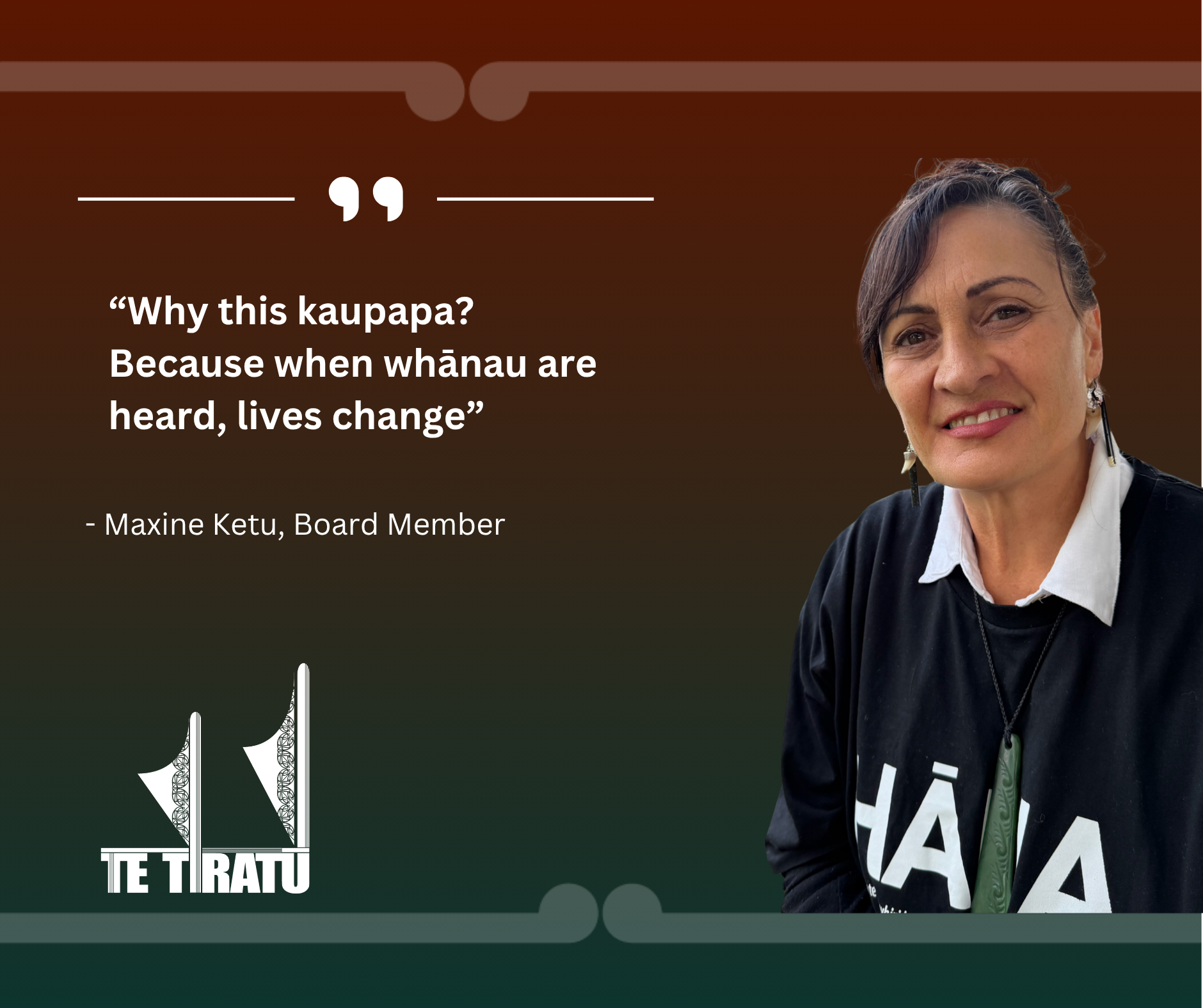
Our Board Member Maxine Ketu (Ngāti Maniapoto, Waikato-Tainui), shares whakaaro on improving health outcomes for whānau and communities.
Why this kaupapa?
Firstly, why me?
I was appointed Pouārahi/General Manager of Ngāti Hāua Iwi Trust with a key focus on supporting our Trustees through the completion of our Treaty Settlement journey.
As that role evolved, I was appointed to the Waikato DHB Iwi Māori Council, and over the years I have continued alongside the evolution of Māori health representation to where we are today with Te Tiratū.
The responsibility I carry when representing Ngāti Hāua and our rohe is significant. For me, this mahi is about the difference between life and death for our people.
That understanding comes from lived experience. My own whānau experienced the impacts of rural isolation, poverty, limited access to healthcare, and the inequities Māori continue to face within the health system. Those realities contributed to the untimely loss of a loved one.
That was 11 years ago, but since 2014 I have walked beside many whānau who have experienced the same pain and loss. I have woven waka wairua for whanaunga taken too young, too soon. I have stood at nehu and helped lay our loved ones to rest when I know they should still be here.
My representation, my passion, and my commitment to this kaupapa all come from those lived experiences.
What does real change look like?
Real change starts with whānau feeling empowered to take charge of their own health and wellbeing. That looks like:
- having access to good health education and information
- understanding our own whānau and generational health histories
- feeling confident to ask questions and seek second opinions when needed
- not settling for poor treatment or mediocre care
- putting ourselves and our loved ones first
- making informed and healthy choices through ongoing learning
- knowing we have the right to demand high-quality care for ourselves and our whānau at all times
Real change also means the health system valuing the mātauranga, lived experiences and voices of whānau as part of healthcare assessment, treatment and follow-up.
We need a health workforce that is trained to recognise and address unconscious bias. This learning should not be optional, it should be embedded across all health education, professional training and ongoing development.
For our rural communities, real change means equitable access to healthcare no matter where you live. Communities that are far from hospitals and specialist services need secure, long-term investment that is protected across governments and political cycles. Rural whānau should not receive poorer outcomes simply because of where they live.
We also need stronger systems for accountability and learning. A national complaints and feedback system could help ensure concerns raised by whānau are heard, responded to, and used to improve services over time. The information gathered could help identify gaps in access, improve service delivery, strengthen professional practice, and ultimately lead to better health outcomes for our people.
What needs to stop, shift or grow?
We need to stop accepting inequitable outcomes for Māori and rural communities as normal.
The health system must be shifted toward one that truly listens to whānau, values Māori knowledge, and responds with compassion, accountability and equity.
We need to grow:
- investment in iwi-led health education and prevention
- culturally safe healthcare practices across the system
- unconscious bias training throughout health education and workforce development
- diversity within the health workforce, so our people can see themselves reflected in the system
- better access to healthcare services for rural communities
- stronger systems for listening and responding to whānau feedback and complaints
When whānau feel seen, heard, respected and supported, health outcomes improve. That is the future we should all be working toward.