
MEDIA STATEMENT
FOR IMMEDIATE RELEASE
Friday 28 August 2026, 10:00AM
2 minutes to Read
A new report is calling for better access to specialist care, stronger connections between local services and longer-term investment in Te Awamutu.
Te Awamutu has a strong network of health and community providers, but whānau can still face barriers getting the care they need, including travelling outside the town for specialist treatment.
That is a key finding of a new Te Awamutu Hauora Report by Te Tiratū Iwi Māori Partnership Board.
Board member Kataraina Hodge says the issue is not necessarily a lack of services but knowing what is available and where to go.
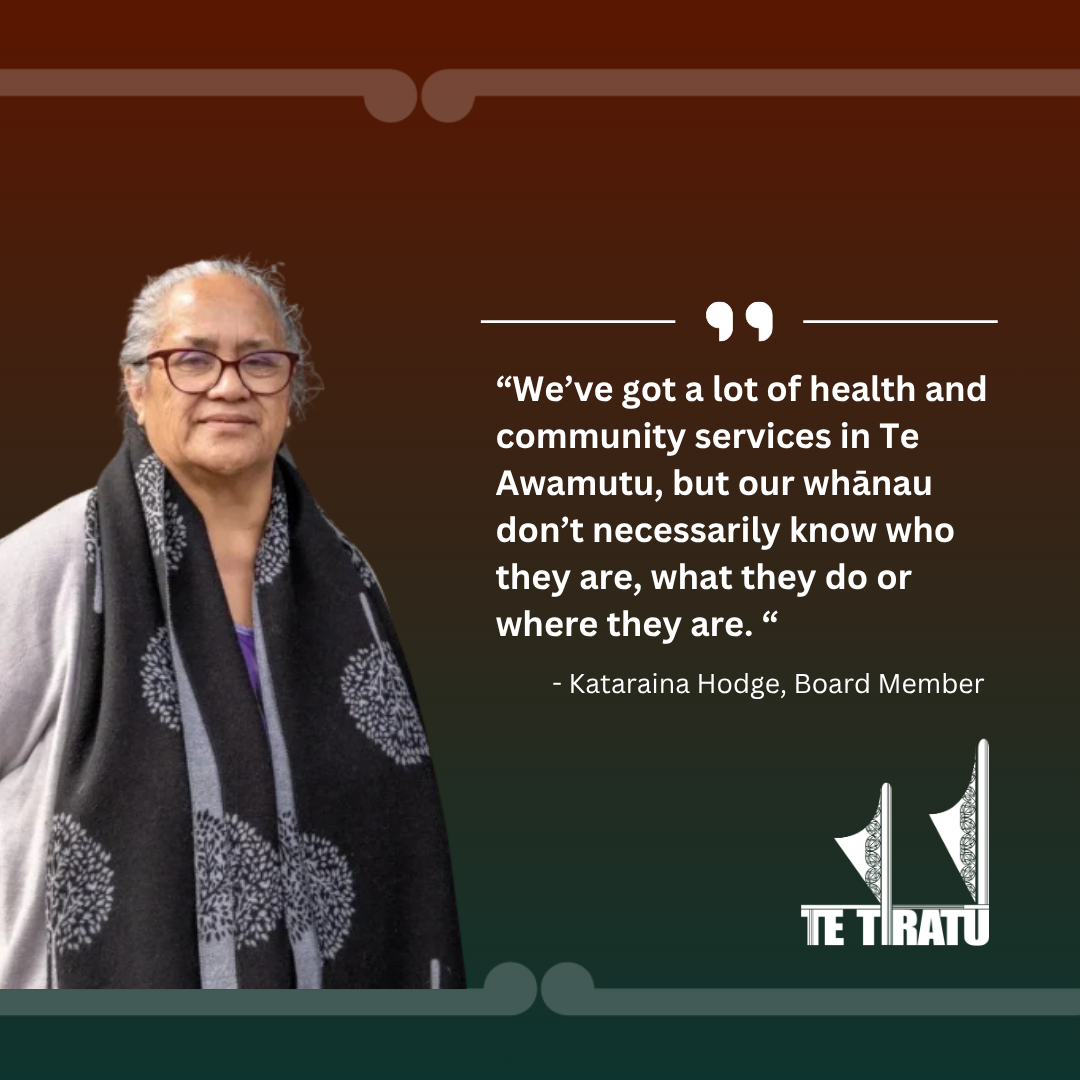
“We’ve got a lot of health and community services in Te Awamutu, but our whānau don’t necessarily know who they are, what they do or where they are. It’s often not until someone tells them, ‘You should go and see these people’, that they find out a service exists,” she says.
She says making information about local services easier to find and navigate would help whānau make better use of the services already available.
To help address the information gap, Te Tiratū is developing an online directory of kaupapa Māori hauora services across the rohe, giving whānau a clearer pathway to the support available in their communities.
The report also highlights a more fundamental gap for people needing care beyond primary health care.
Te Awamutu does not have a hospital providing the range of specialist services available in Hamilton, meaning whānau can face the added costs of transport, parking and time away from work and family.
“We don’t have a hospital. So if you need anything outside our normal doctor, the flu or an X-ray, you have to go to Hamilton. We don’t have a choice.”
Being close to Hamilton does not remove Te Awamutu’s rural healthcare challenges either according to Hodge.
“We’re rural enough to have the challenges of rural healthcare, but sometimes we’re not rural enough to get the attention and resources that other rural communities receive.”
Workforce stability, especially retaining doctors is another concern, with frequent turnover undermining continuity of care.
“You might have a doctor for three months and then they’re gone. What is it that’s not keeping them here? We need to look at why our health professionals aren’t staying.”
The strength of Te Awamutu’s existing relationships is also identified as an asset. People who have moved away will often return to see healthcare providers they have known for years.
“People still want to come home. They want to come home for their doctors because they’ve been here forever. We’ve grown up relying on the person who’s always been there for us.”
The report identifies cost, transport, workforce shortages and poor coordination between services as barriers to timely care. Housing pressures, the rising cost of living and increasing mental health needs can add further pressure for whānau.
The answer is not necessarily to create another layer of services, Hodge says, but to make the existing system work better around the people who use it.
That means stronger primary care, a sustainable workforce, better access to specialist care closer to home, stronger coordination between health and social services, and continued investment in prevention and kaupapa Māori approaches.
Funding is also critical. Short-term and fragmented funding makes it difficult for providers to plan together and build sustainable services.
“I’ve been fighting for years for five-year funding. Give us a programme of what you want us to deliver, we’ll put a budget to it, we’ll tell you how we’re going to do it and we’ll work together. But we’re still getting piecemeal funding.”
“The issue isn’t whether whānau want care. It’s whether the system makes it easy to get it,” she says.
The Te Awamutu edition is one of 10 locality Hauora Reports being developed by Te Tiratū across the Tainui waka rohe. Together, the reports are intended to ensure local voices and experiences inform health planning, investment and decisions about the services communities need.
Copies of the reports have been sent to every mayor and relevant local council across the rohe, as well as senior Te Whatu Ora officials and other relevant stakeholders putting the findings directly in front of those responsible for health planning and local decision-making.