
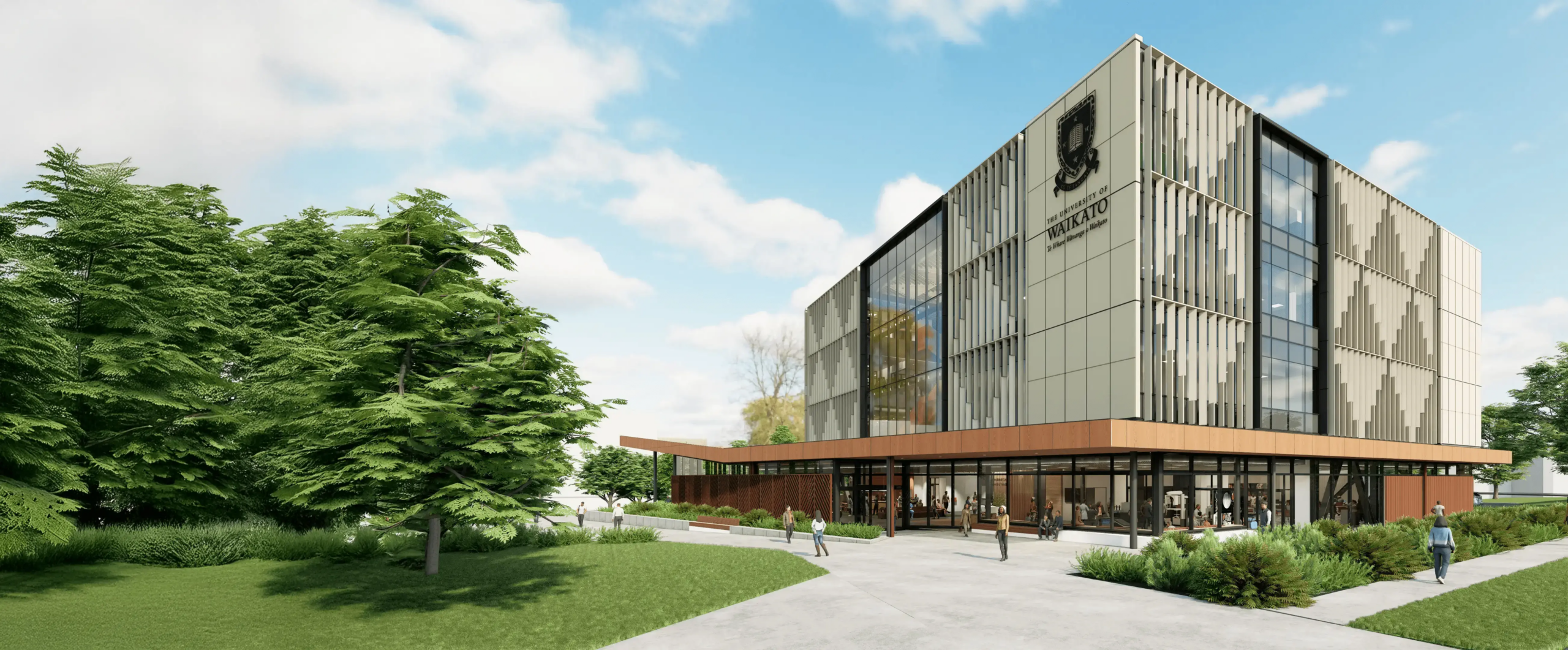
Image: University of Waikato’s New Zealand Graduate School of Medicine
Communities across Te Manawa Taki (Midlands) will play an important role in training future doctors of Aotearoa following official confirmation by the Health Minister of clinical placement locations for the proposed New Zealand Graduate School of Medicine at the University of Waikato.
The announcement includes successful iwi-led proposals in both the Tainui and Te Arawa waka regions, creating new opportunities to grow a local medical workforce and improve access to healthcare for whānau.
Across the Tainui waka rohe, North Waikato, Hauraki/Thames-Coromandel, South Waikato and Waipā/King Country have also been confirmed as Community Clinical Learning Centre locations, with Waikato Hospital serving as the anchor hospital for hospital-based placements.
The centres will provide medical students with opportunities to train in community, primary care and hospital settings, helping build stronger local workforce pathways and addressing doctor shortages in regional communities.
Waikato-Tainui Te Arataura Chair Tukoroirangi Morgan says the initiative represents a significant investment in local communities and the future health workforce. “The introduction of a third medical school is a game changer for our people,” he said.
In Te Arawa, a collective involving Te Taura Ora o Waiariki Iwi Māori Partnership Board has been selected to establish a Community Clinical Learning Centre.
For Māori communities, the initiative is about more than medical education. It creates pathways for whānau into medicine, strengthens Māori workforce development and helps ensure future healthcare services better reflect and understand the communities they serve.
As members of the Te Manawa Taki collective, Te Tiratū acknowledges the leadership of Waikato-Tainui, Raukawa, Hauraki, Maniapoto, Ngāti Hāua (Taumarunui) Te Taura Ora and their partners in securing opportunities that will benefit whānau across the wider region.
For Māori communities, this is about more than medical education. It is about creating pathways for our whānau into medicine, strengthening Māori and regional workforce pipelines, and ensuring communities have a greater voice in shaping the healthcare workforce of the future.
Under the proposed model, students will undertake training across community health services, primary care and hospital settings throughout the region. The programme is expected to welcome its first students in 2028, with community clinical placements beginning from 2029.