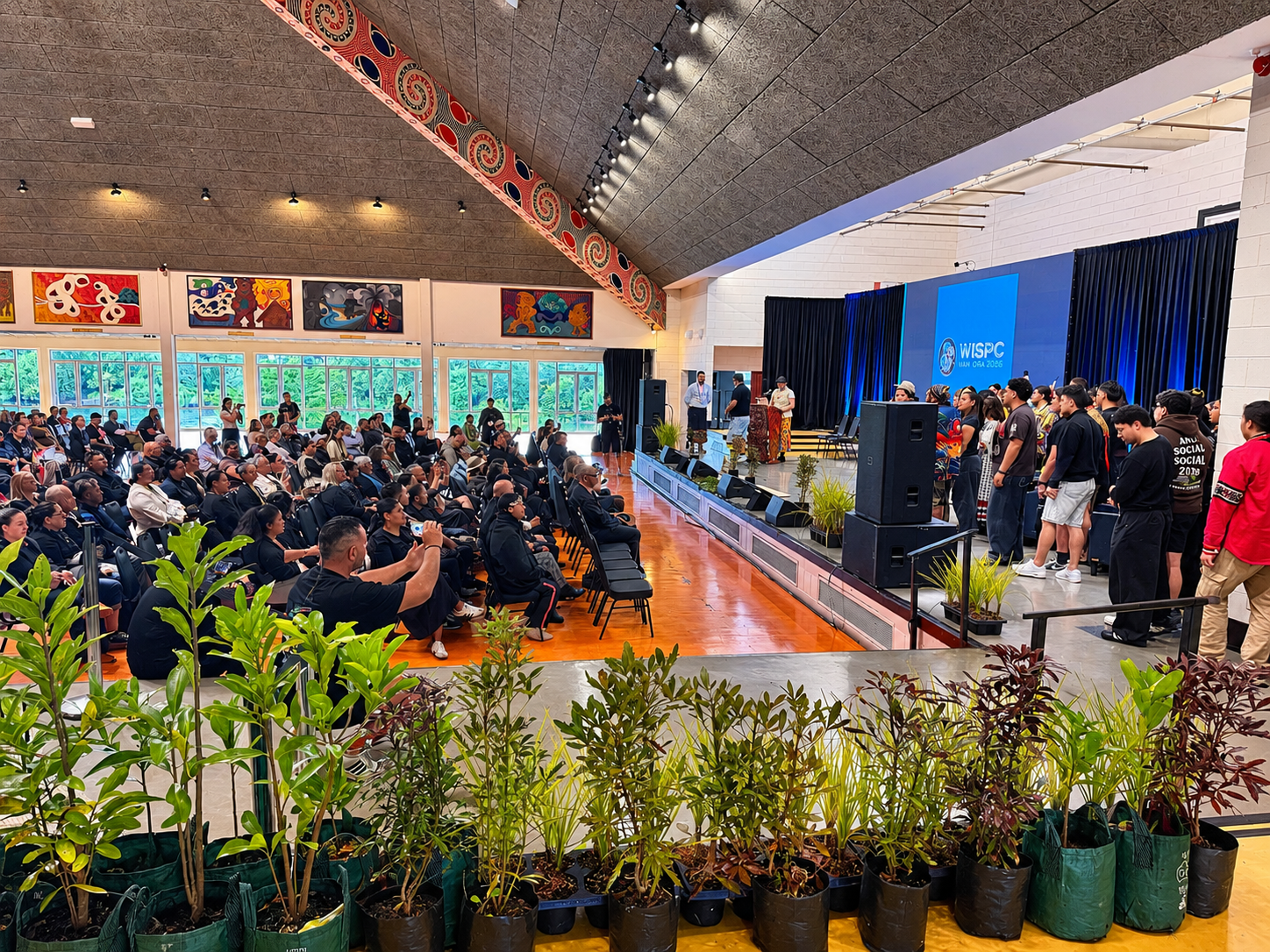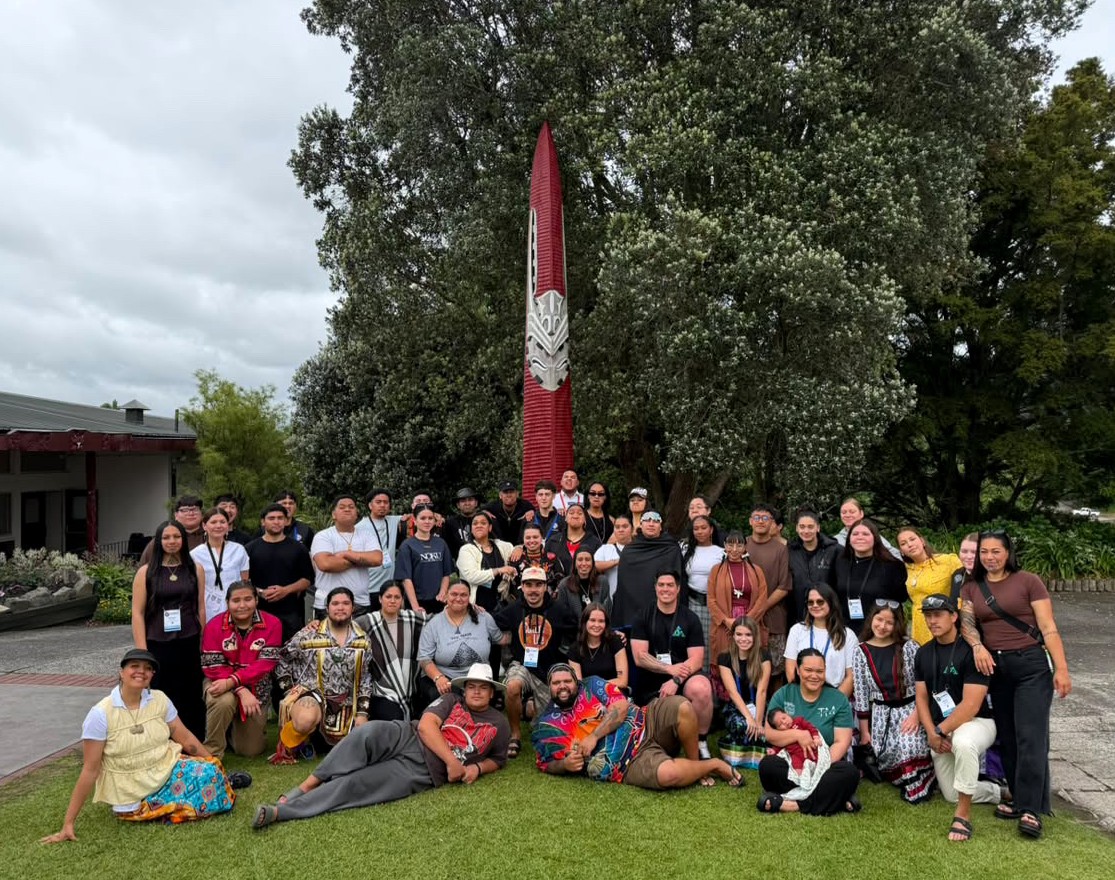
The night before the World Indigenous Suicide Prevention Conference opened at Tūrangawaewae Marae, 50 rangatahi sat down to dinner together.
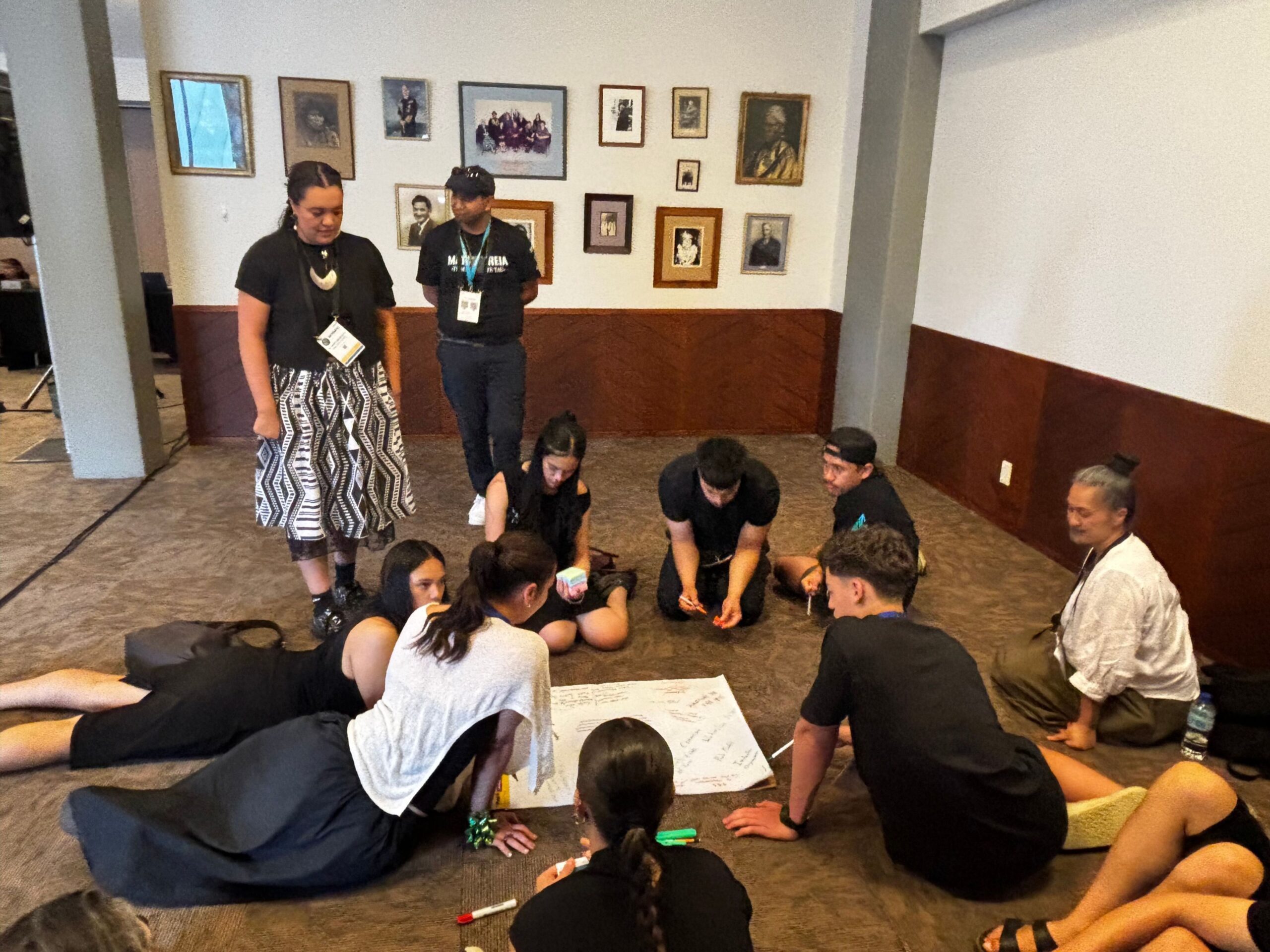
They had travelled from across Aotearoa and other Indigenous nations. Most had never met. Over kai, they answered five pātai anonymously, sharing their experiences, challenges and hopes for the future.
The session was facilitated by Te Ahurei a Rangatahi and hosted by Te Rau Ora. Their responses offer a powerful insight into what rangatahi need to feel safe, connected and able to thrive.
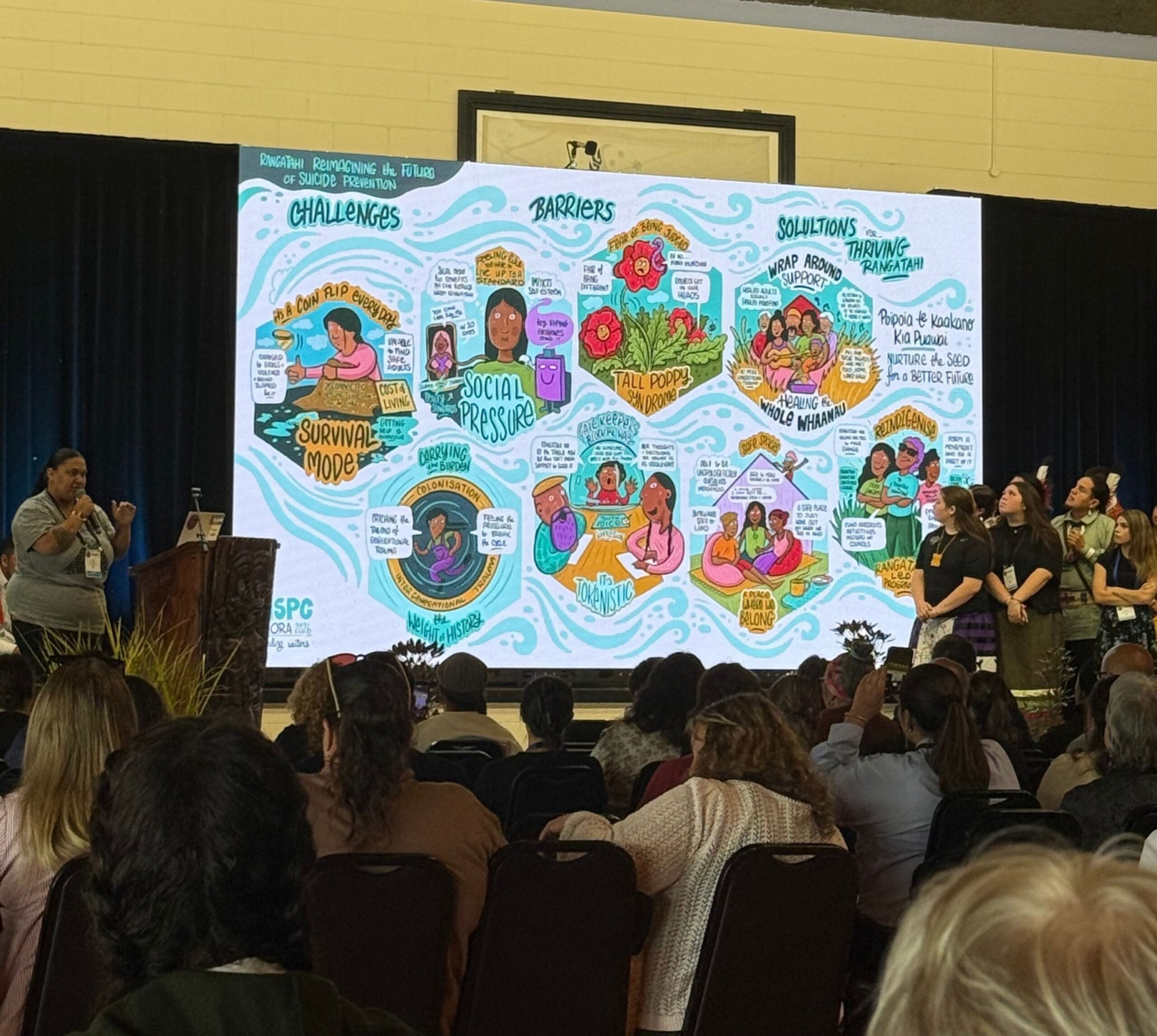
Rangatahi didn’t sugar-coat what life looks like right now. Some described being “constantly in survival mode, unable to find safe adults to support them”. Others spoke about the impact of beauty standards and social media on self-esteem, alongside anxiety, past trauma and feeling left out.
But when asked what keeps them strong, the kōrero lifted. Rangatahi talked about support groups, learning whakapapa and “teaching the old ways”. They valued “safe group settings where we connect in real life” and said whānau and Māori-led programmes “help rangatahi feel safe, included and valued”. Connection to home, culture and te taiao featured strongly throughout their responses.
They were equally clear about what gets in the way. Some spoke about being “judged on how we look, and assumptions about our background”, while others pointed to not knowing that rangatahi-led services exist. Lack of confidence and self-belief, anxiety and grief were also part of the picture.
When invited to imagine a future where they were thriving, rangatahi described a world with “no beauty standard, less judgement, taught life skills and supported along the journey”. They wanted to know and connect with their Indigenous roots, see generational growth, and have “more open-minded adults, and rangatahi empowering rangatahi to break generational trauma”.
For Kia Tū Rangatahi Māori Hauora Leadership Programme, an initiative of Te Tiratū Iwi Māori Partnership Board, these messages resonate strongly. The programme is guided by the whakataukī “Mā te huruhuru, ka rere te manu” adorn the bird with feathers so it can fly.
What rangatahi shared at WISPC26 reflects much of what we hear from rangatahi in Kia Tū schools across the Waikato. Culture, connection and good mates are their feathers. Judgement, exclusion and not being heard can hold them back.
There is something important in the fact that rangatahi from different places, many meeting for the first time, are identifying the same needs and aspirations. Their voices deserve to be heard, and their insights need to inform how we support them.
Te Tiratū Iwi Māori Partnership Board also sponsored five teachers and eight hauora kaimahi to attend WISPC26. They have now returned to their kura and communities, where they are putting what they learned into practice alongside rangatahi.
More insights from Waikato rangatahi will be shared when the Kia Tū rangatahi report is released before the end of this year.