
MEDIA RELEASE
FOR IMMEDIATE RELEASE
Thursday 5 November 2026, 5:00PM
2 minutes to Read
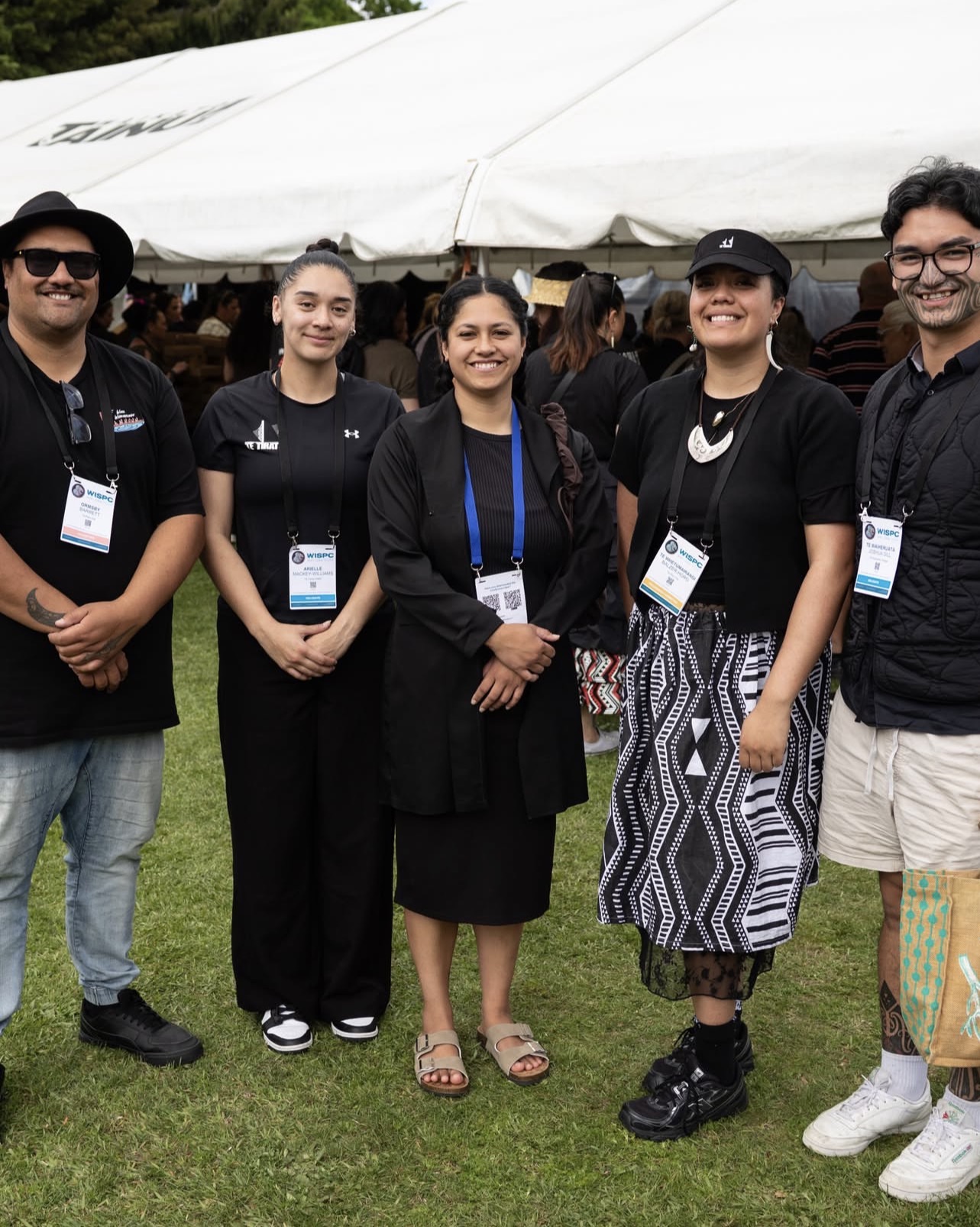
Photo: Te Rau Ora and Te Tiratū kaimahi with teacher Te Waiheruata Rawiri from Te Kauwhata College (right). [Crediting Te Rau Ora for the image]
Five Waikato teachers and eight hauora workers are bringing home fresh insights and practical approaches to supporting rangatahi after attending an international Indigenous suicide prevention conference at Tūrangawaewae Marae.
Sponsored by Te Tiratū Iwi Māori Partnership Board, the thirteen delegates are attending the WISPC26 in Ngāruawāhia held from 4 to 6 November under the theme ‘Wai Ora Waikato – Healing Waters’. The conference has attracted more than 500 delegates from around the world.
The investment by the Iwi Māori Partnership Board builds on its Kia Tū Rangatahi programme which supports rangatahi across the Tainui waka rohe to develop leadership skills and take an active role in shaping their own wellbeing and hauora.
It comes as schools face growing pressure to respond to the mental health needs of students. Poverty, food insecurity, peer pressure, social media and the demands of the education system are all contributing to anxiety among rangatahi.
“Teachers are often on the frontline when it comes to supporting our rangatahi, but they are being asked to carry increasingly complex responsibilities, often without the resources or specialist support they need,” says Brandi Hudson, Tumu Whakarae of Te Tiratū Iwi Māori Partnership Board.
“We wanted to give these 13 educators the opportunity to step outside their everyday environments, connect with Indigenous leaders and practitioners from around the world, and bring back knowledge, ideas and renewed energy for the critical work they do.”
Insights gathered by Te Tiratū through its Whānau Voice surveying and in-school Kia Tū programme reveal that teachers are increasingly picking up the pieces, supporting students in emotional distress and taking on counselling roles without formal qualifications.
The pressure is particularly acute in rural and remote areas, where professional counselling and mental health services can be difficult to access, if available at all.
The scale of the challenge is reflected globally, with suicide the second leading cause of death among young people aged 15 to 29 years, according to the World Health Organisation (2026). The WHO emphasises that suicide prevention requires coordinated action across multiple sectors, including health, education and communities.
Te Tiratū is working to address whakamomori through whānau engagement, evidence-based advocacy and support for kaupapa Māori, community-led responses. Its work recognises the importance of whakapapa, whenua, culture, connection and belonging in strengthening rangatahi mental health and wellbeing.
WISPC26 brought together Indigenous leaders, health practitioners, educators, researchers, and First Nation peoples from Aotearoa, Australia, Canada and the United States.
For the sponsored teachers, it was a chance to hear international Indigenous perspectives, build professional networks and connect with other professionals facing similar challenges like whakamomori in their own communities.
Personal stories of hardship, recovery and resilience struck a chord with many delegates, underlining the value of lived experience alongside research and professional frameworks.
“What we’re seeing in our evidence is that food insecurity is coming through as a major source of worry for young people, including concern over whether younger siblings had enough to eat,” Hudson says.
She believes community gardens and food-growing projects can help, but only if they come with practical wrap-around support to build cooking skills and provide basic kitchenware such as pots and pans.
This year’s conference marks 10 years since the inaugural World Indigenous Suicide Prevention Conference was held in Rotorua under the theme Tūramarama ki te Ora.
That gathering resulted in the ‘Tūramarama Declaration’, written by Emeritus Professor Sir Mason Durie and endorsed by the National Iwi Chairs Forum. It established 14 commitments to support Indigenous peoples to live well and flourish across generations.
Rather than treating Whakamomori suicide as a purely clinical issue, the Declaration took a wider view. It covered cultural identity, whānau, healing, safe communities, accessible services and Indigenous leadership.
“We know the wellbeing of our rangatahi is shaped by much more than what happens in the classroom. Housing, education, employment, cultural connection and the impacts of substance harm all influence the opportunities young people have to thrive,” says Hudson.
“A decade on from the first conference, we have an opportunity to reflect on the progress made and consider what needs to happen next. The Tūramarama Declaration called for Indigenous peoples to work together, with collective leadership and coordinated responses across communities and services. Those principles are just as important today.”
“Indigenous knowledge and community-led solutions must remain at the heart of suicide prevention. For Te Tiratū IMPB, supporting these kaiako to attend was a practical investment in the people who stand alongside our rangatahi every day.”
“When we strengthen the people, relationships and networks that support our young people, we strengthen our whānau and communities too.”
The teachers came from:
1.Tai Wānanga ki Ruakura – Judy Wiki Papa
2.Te Kauwhata College – Te Waiheruata Rawiri
3.Ōtorohanga College – Michelle Carr (Mickey)
4.Putaruru Primary – Karla Lyttle
5.Awarua Whānau Services – Cheyanne Wilson
6.Te Kōpuku High – Caroline Samson
7.Te Awhi Whānau Charitable Trust – Brenden Te Wao
8.Tuhono Trust – Georgie Davenport
9.Ko Wai Au – Vinnie Ngaruhe
10.Te Ahurei a Rangatahi / CAYaD, Raahui Pookeka – Sheryl Matenga
11.Taumarunui Community Kokiri Trust – Kevalena Rata
12.Kaimahi – Shani Matenga-Troughear
13.Kaimahi – Jamie Muru