
MEDIA STATEMENT
FOR IMMEDIATE RELEASE
Thursday 14 May 2026, 6:00 PM
2 minutes to Read
One of the largest Iwi Māori Partnership Boards in the country, Te Tiratū that represents 121,300 Māori is calling on Pharmac to immediately reconsider proposals to remove ethnicity equity criteria from access to SGLT2 inhibitors and GLP-1 receptor agonists that are internationally recognised treatments for type 2 diabetes, heart failure and chronic kidney disease.
Te Tiratū warns the proposal risks reversing one of the few medicines policy decisions in Aotearoa specifically designed to address entrenched inequities in diabetes, cardiovascular disease and chronic kidney disease for Māori.
Pharmac has opened public consultation today on proposals to remove Māori and Pacific ethnicity from Special Authority access criteria for these medicines – despite the criteria being introduced in 2021 following sustained advocacy from Māori clinicians, researchers and Indigenous health leaders.
The ethnicity criteria were implemented because evidence showed Māori and Pacific peoples were significantly less likely to receive modern diabetes and cardiovascular medicines, despite carrying a substantially higher burden of disease and experiencing earlier and more severe complications.
Te Tiratū Co-Chair, Glen Tupuhi says the proposal ignores the overwhelming evidence that Māori experience significantly higher rates of diabetes, cardiovascular disease and kidney disease, while continuing to face systemic barriers accessing medicines and treatment.
“These medicines save lives and prevent devastating complications for whānau,” he said. “Māori are diagnosed younger, become sicker earlier, and die sooner from preventable chronic illnesses. Equity pathways exist because the health system has not delivered equitable outcomes for Māori.”
Te Tiratū says the proposal is particularly concerning because the strongest emerging evidence for SGLT2 inhibitors is now in chronic kidney disease (CKD), including for people without diabetes.
They are around twice as likely to live with diabetes compared to non-Māori, experience cardiovascular disease at significantly higher rates, and face chronic kidney failure at disproportionately higher levels.
Diabetes often emerges around a decade sooner for Māori than in non-Māori populations, contributing to earlier onset of complications such as heart failure, kidney disease, amputations and premature death. Māori experience approximately 3.5 times higher mortality from diabetes-related causes and are significantly more likely to progress to end-stage renal failure, even when living with the same diagnosis.
The Waitangi Tribunal’s Health Services and Outcomes Inquiry (Wai 2575), including Wai 2919 filed by Associate Professor Leanne Te Karu, has documented “prescription inequity” within the New Zealand health system, including under-access to diabetes, cardiovascular and renal medicines for Māori.
Dr Leanne Te Karu, author of Te Tiratū’s recent position statement on 12-month prescriptions and claimant in Wai 2919 has consistently highlighted the impact prescription inequity has on Māori health outcomes.
Her research references the “missing million prescriptions” analysis, highlighting the scale of inequitable prescribing relative to Māori health need.
“Restricting equitable access to SGLT2 inhibitors and GLP-1 medicines risks widening the very inequities the health system has acknowledged for years,” said Dr Te Karu.
Te Tiratū says removing ethnicity equity criteria raises serious concerns about whether Pharmac is meeting its obligations to achieve equitable Māori health outcomes under Te Tiriti o Waitangi.
“Treating all universally in the system does not create fairness. It entrenches inequity,” said Glen Tupuhi.
The Iwi Māori Partnership Board is calling on Pharmac to:
•Retain ethnicity equity criteria for access to these medicines;
•Publicly release equity impact analysis before consultation proceeds;
•Demonstrate how Māori health outcomes will improve if the criteria are removed;
•Engage directly with Iwi Māori Partnership Boards, Māori clinicians and Māori health providers;
•Uphold Te Tiriti obligations in medicines policy and funding decisions.
Te Tiratū says any proposal affecting equitable access to medicines must be assessed against the reality that Māori continue to experience some of the highest rates of avoidable illness, preventable hospitalisation and premature death in Aotearoa.
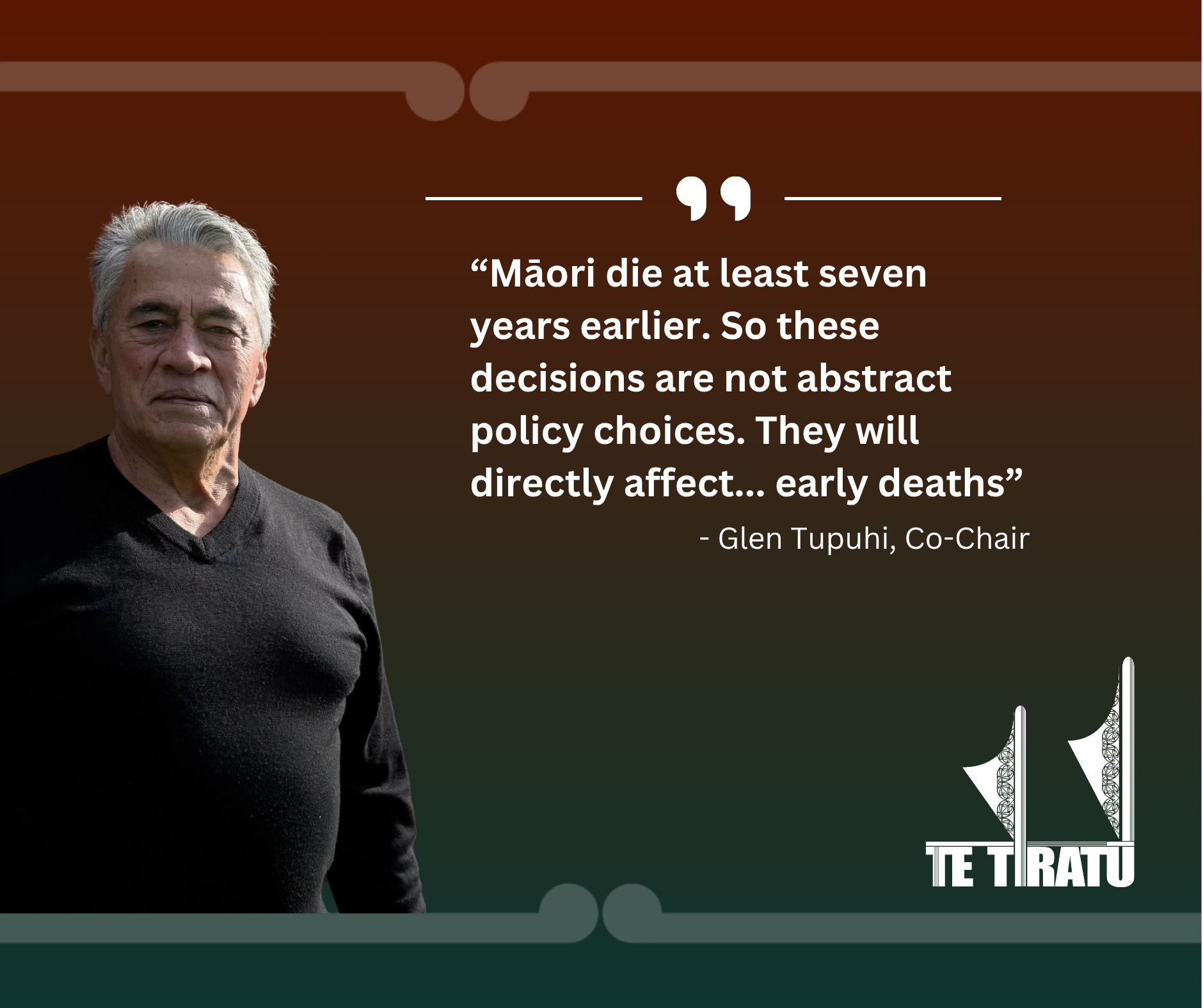
“Māori die at least seven years earlier.1 So these decisions are not abstract policy choices. They will directly affect whether whānau avoid dialysis, amputations, heart attacks and early death,” he said.
Te Tiratū is developing resources to support whānau, Māori health providers, clinicians and community leaders to make informed submissions ahead of the consultation deadline of 5:00pm, Thursday, 28 May, opposing the removal of equity access criteria.
It will also brief all 14 Iwi Māori Partnership Boards nationally, the Hauora Iwi Leaders Group within the National Iwi Leaders Forum, the Hauora Māori Advisory Committee to Minister Brown, the Attorney General, the Chief Ombudsman, the Human Rights Commission, and Members of Parliament on the adverse impact the proposal could have on Māori health outcomes.

Dr Leanne Te Karu