
Gaps remain in Māori health
The Waikato Local has covered Te Tiratū Iwi Māori Partnership Board’s warning about the 12-month prescription medicine policy change and its potentially adverse impact on whānau Māori as outlined in our Position Statement.

Rangitāmiro & shareholders strengthen shared vision
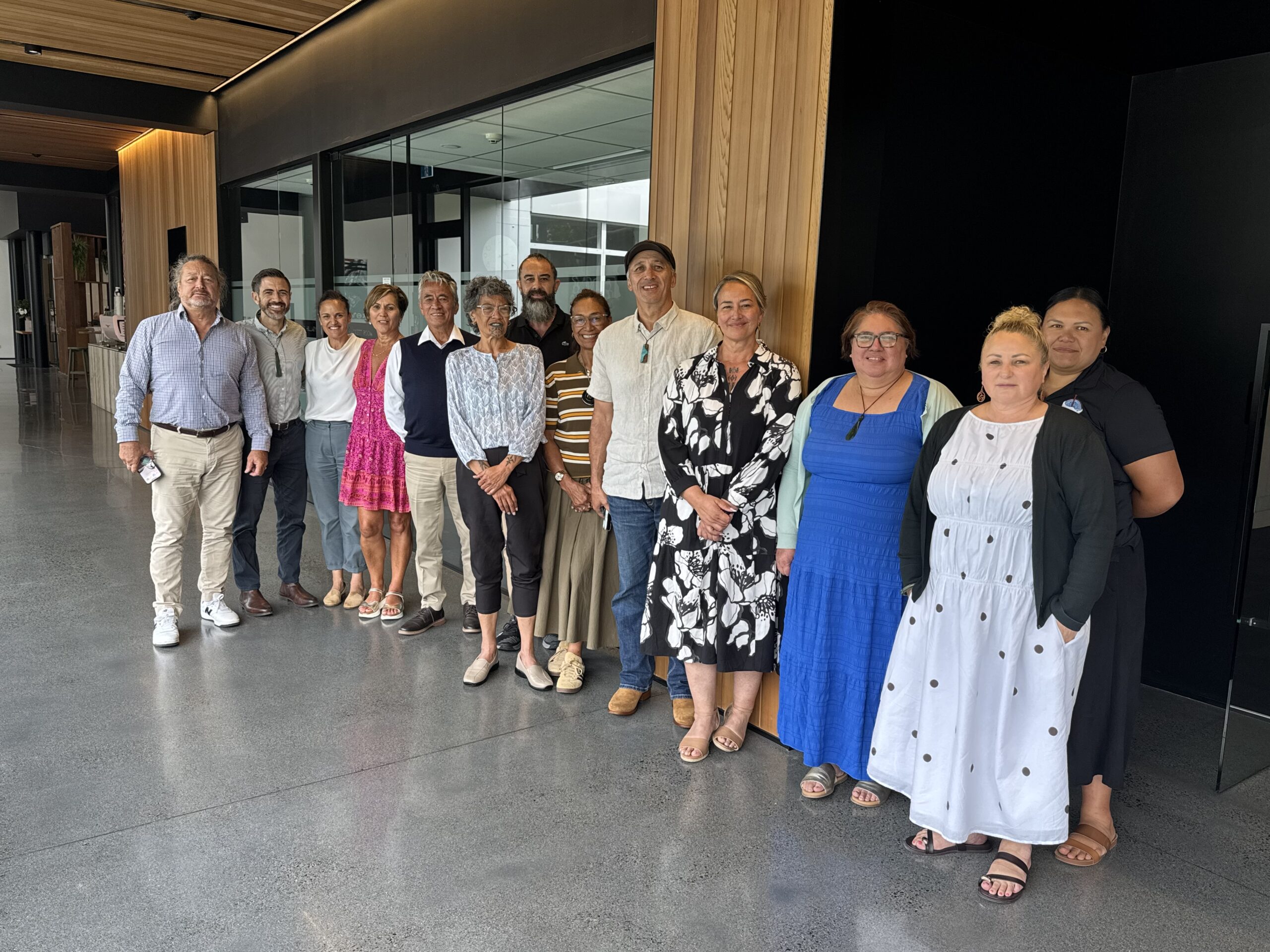
Photo: Governance and operational rangatira of Rangitāmiro with shareholders, Te Tiratū Iwi Māori Partnership Board, Ngaa Pou Hauora oo Taamaki Makaurau Iwi Māori Partnership Board, National Hauora Coalition (NHC)
Board members from Rangitāmiro Whānau Ora Commissioning Agency and its three shareholders, National Hauora Coalition, Ngaa Pou Hauora oo Taamaki Makaurau Iwi Māori Partnership Board, and Te Tiratū Iwi Māori Partnership Board came together in early February to strengthen their shared commitment to improving outcomes for whānau.
The hui brought governance and operational leaders around the same table to reflect on progress, discuss current challenges, and look ahead to the future of investment and support for hapori.
During the hui, Te Tiratū shared insights from its latest quarterly monitoring report on Te Whatu Ora. The report highlighted that many whānau are still facing barriers within the health system. These include long waits to see specialists, delays for surgery, reduced funding for health promotion initiatives, and lower screening rates for some conditions. Gaps also remain in making health information accessible and easy for whānau to understand.
At the same time, there were encouraging signs of progress. Screening rates for cervical and breast cancer have increased by around ten percent, showing the impact of targeted outreach and the strength of community-based engagement. Leaders at the hui reflected on how consistent data, trusted relationships, and clear health messaging all play an important role in helping whānau access care earlier.
Chair of Rangitāmiro, Eru Lyndon, spoke about the importance of maintaining optimism and purpose when working in the social development space.
“Whānau trust the people delivering services and the information they receive, they are more likely to engage with health initiatives such as immunisation, health checks and prevention programmes,” he said. “Building that trust remains one of the most important tasks for those working to support whānau wellbeing.”
The hui also recognised the vital role played by Whānau Ora navigators who walk alongside whānau, supporting them to achieve their aspirations and helping them connect with services, information, and practical support.
Rangitāmiro Chief Executive Te Rōpu Poa provided an update on how Whānau Ora supported communities during the recent cyclone. The kōrero highlighted the critical role marae and hapū play as first responders when emergencies affect their communities.
Leaders emphasised that while immediate support during disasters is essential, building long-term resilience is just as important. Strengthening preparedness and ensuring communities have the support they need to recover and rebuild will remain a key focus moving forward.
Further insight was shared by Te Tiratū board member Dr Mataroria Lyndon, who recently took on the role of Chair of the Independent Investment Board advising Rangitāmiro. He spoke about how the board will help guide equitable and effective commissioning decisions that support whānau wellbeing across generations.
Dr Lyndon also encouraged leaders to think boldly about the future vision for “Whānau Ora 7.0” looking forward seven generations. While the original framework focused on supporting self-managing whānau, he suggested the next phase should aim even higher supporting self-determining whānau exercising tino rangatiratanga, living longer and healthier lives, creating intergenerational prosperity, strengthening economic security through wealth creation, and protecting whenua and the environment through kaitiakitanga.
These whakaaro will help shape future investment priorities and the direction of Rangitāmiro.
Leaders are expected to meet again in May or June to continue building this shared strategy and long-term vision for whānau wellbeing.
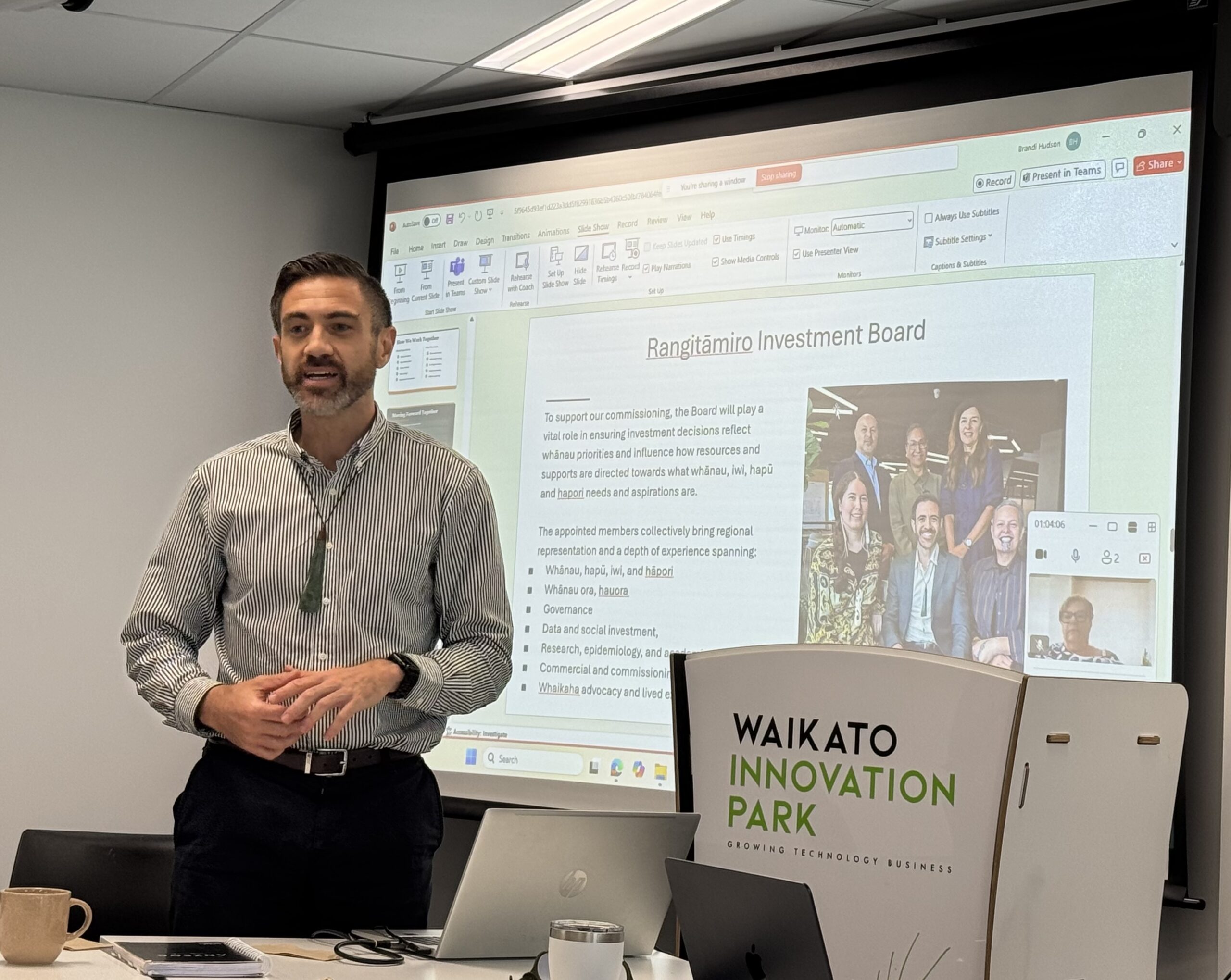
Photo: Te Tiratū Iwi Māori Partnership Board member and Chair of the Independent Investment Advisory Board for Rangitāmiro, Dr Mataroria Lyndon
Prescriptions risk warning
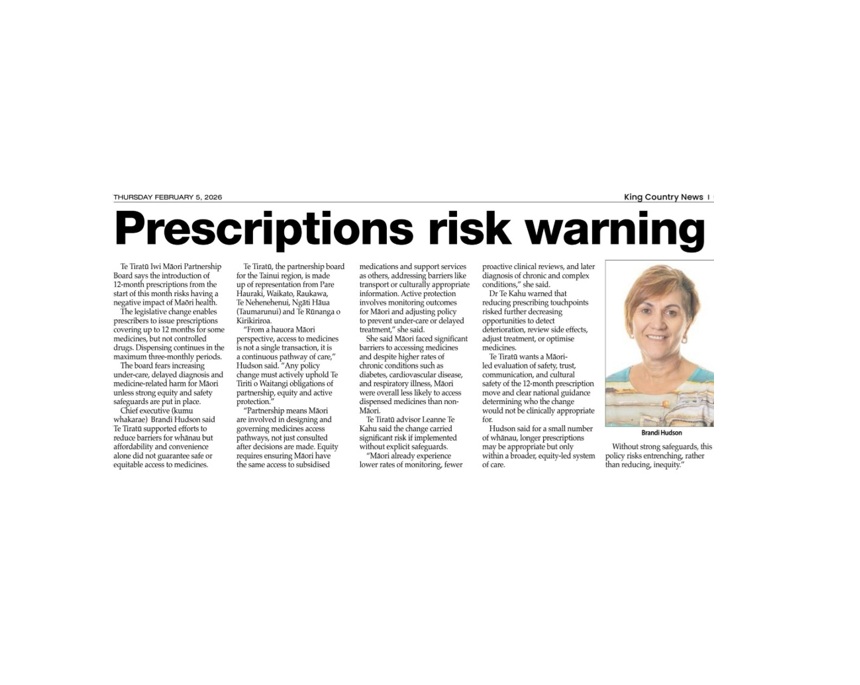
The King Country News has covered Te Tiratū Iwi Māori Partnership Board’s warning about the 12-month prescription medicine policy change and its potentially adverse impact on whānau Māori as outlined in our Position Statement.

No safeguards for 12-Month prescriptions, Māori health leaders warn
Brandi Hudson, Te Tiratū Tumu Whakarae is warning the Government’s move to 12-month prescriptions could deepen under-care and widen health inequities for whānau Māori unless strong safeguards are built in from day one. Speaking with Waatea she says longer scripts may suit some, but without proper monitoring and follow-up they risk fewer check-ins, delayed diagnosis and worsening long-term conditions. The board is calling for mandatory review points, proactive follow-up systems, culturally safe pathways designed with Māori providers, and real-time data oversight given the policy took effect on 1 February 2026.
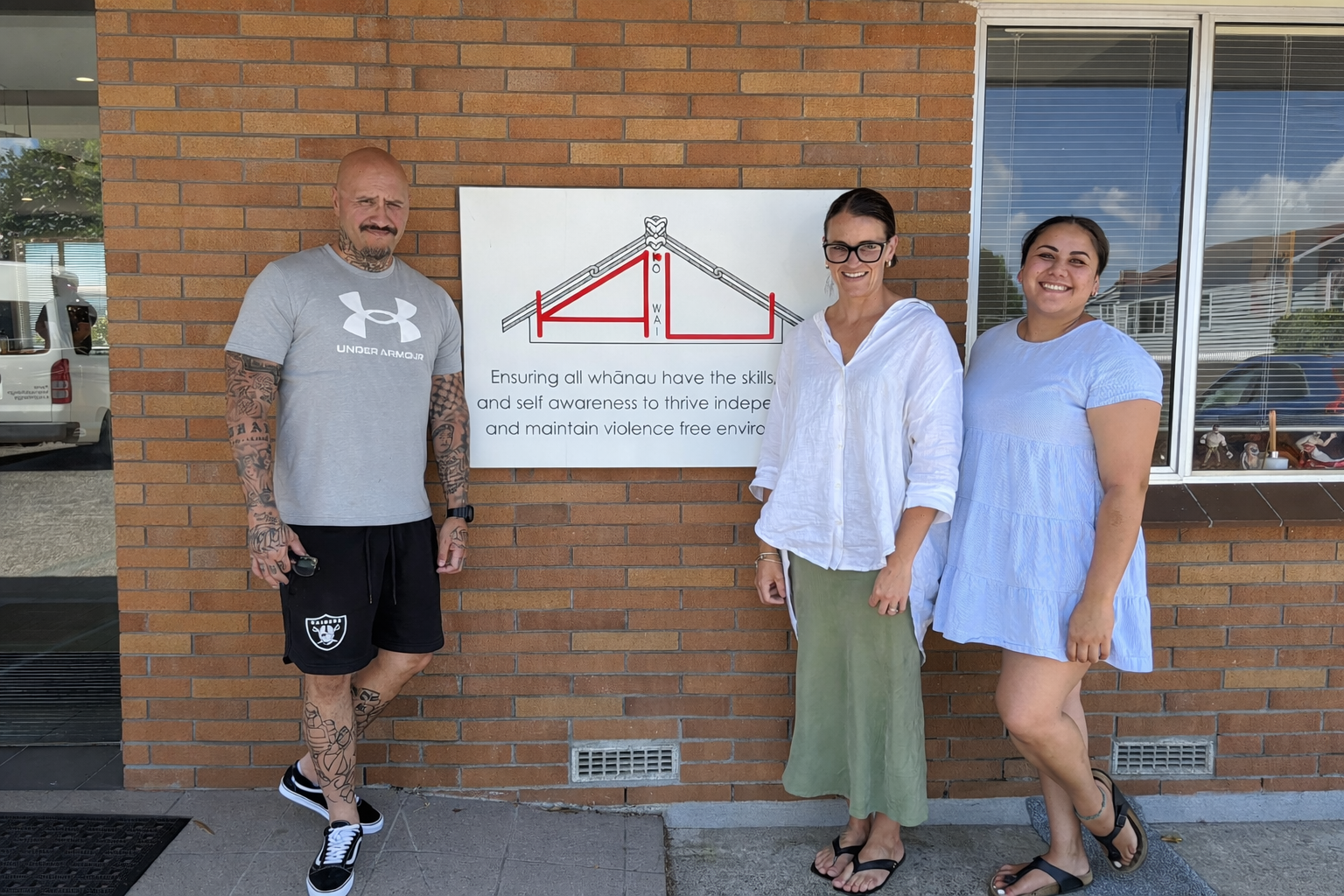
Changing rangatahi lives in Te Awamutu
Photo: Hauora Team Leader Vinnie Ngaruhe, General Manager Georgina Christie and Raven Torea of Whānau Voice.
Recently, our Whānau Voice kaimahi spent time with Ko Wai Au Trust, a kaupapa Māori rangatahi service grounded in the belief that when young people know who they are, where they belong, and are supported to shape their own futures, they can thrive.
Established in March 2023, Ko Wai Au has grown quickly in response to the needs of rangatahi aged 15 to 24 across Te Awamutu and surrounding communities. Guided by a clear vision to empower rangatahi to live confidently and independently, the Trust places strong emphasis on identity, belonging and practical pathways forward. Its Hauora service, launched under Pinnacle, reflects this by providing accessible, culturally safe health and wellbeing support for rangatahi and their whānau.
Ko Wai Au works closely with rangatahi in schools and in the wider community, often supporting young people who are navigating multiple challenges at once. Their approach centres on early support, strong relationships and walking alongside rangatahi over time. Kaimahi meet rangatahi where they are, building trust and creating space for honest conversations about what is getting in the way of wellbeing, learning or stability.
Support is holistic and rangatahi-centred. Advocacy and mentoring help rangatahi move into education, training and employment, while also supporting them to navigate health, social and justice systems when needed. The team includes youth workers and addiction counsellors who deliver one-to-one support, group programmes and health promotion initiatives that normalise conversations about mental health and reduce stigma.
Much of the mahi focuses on breaking “revolving door” cycles that can keep rangatahi stuck. Practical support with driver licensing, re-engaging in education, first aid certification, life skills and goal-setting helps young people build confidence and independence. Current programmes include Mana Whatu Ahu for rangatahi still engaged in schooling, Tama Ora Tama Tū for those not currently at school, Tu Mahi Toi, walking groups and kai education. Transport is also provided, removing a major access barrier for many rangatahi and whānau.
Strong relationships with local schools underpin the mahi of Ko Wai Au. Trusted partnerships with Cambridge High School, Te Awamutu College and Cambridge College enable early identification of need and coordinated support. Whānau engagement is another strength.
Many parents are working long hours, and a significant number of rangatahi come from low socio-economic households. Ko Wai Au estimates that around 75 percent of the rangatahi they support lack positive role models, making consistent mentoring and trusted adult relationships especially important.
Ko Wai Au also collaborates widely across the local system, including with Rural South mental health services, local GP practices, Cambridge Community Hub, Youth in Tech, and mana whenua partners Ngāti Korokī Kahukura and Maungatautari Marae. These relationships enable rangatahi to access the right support quickly and in ways that feel safe and culturally grounded.
Despite their impact, funding insecurity and housing instability remain significant challenges for rangatahi and for the service itself. From a Whānau Voice perspective, Ko Wai Au demonstrates what works. Kaupapa Māori, relationship-based support that strengthens identity, builds belonging and supports rangatahi to become confident contributors to their communities. Sustainable funding and fair access to commissioning will be critical to ensuring this mahi can continue into the future.
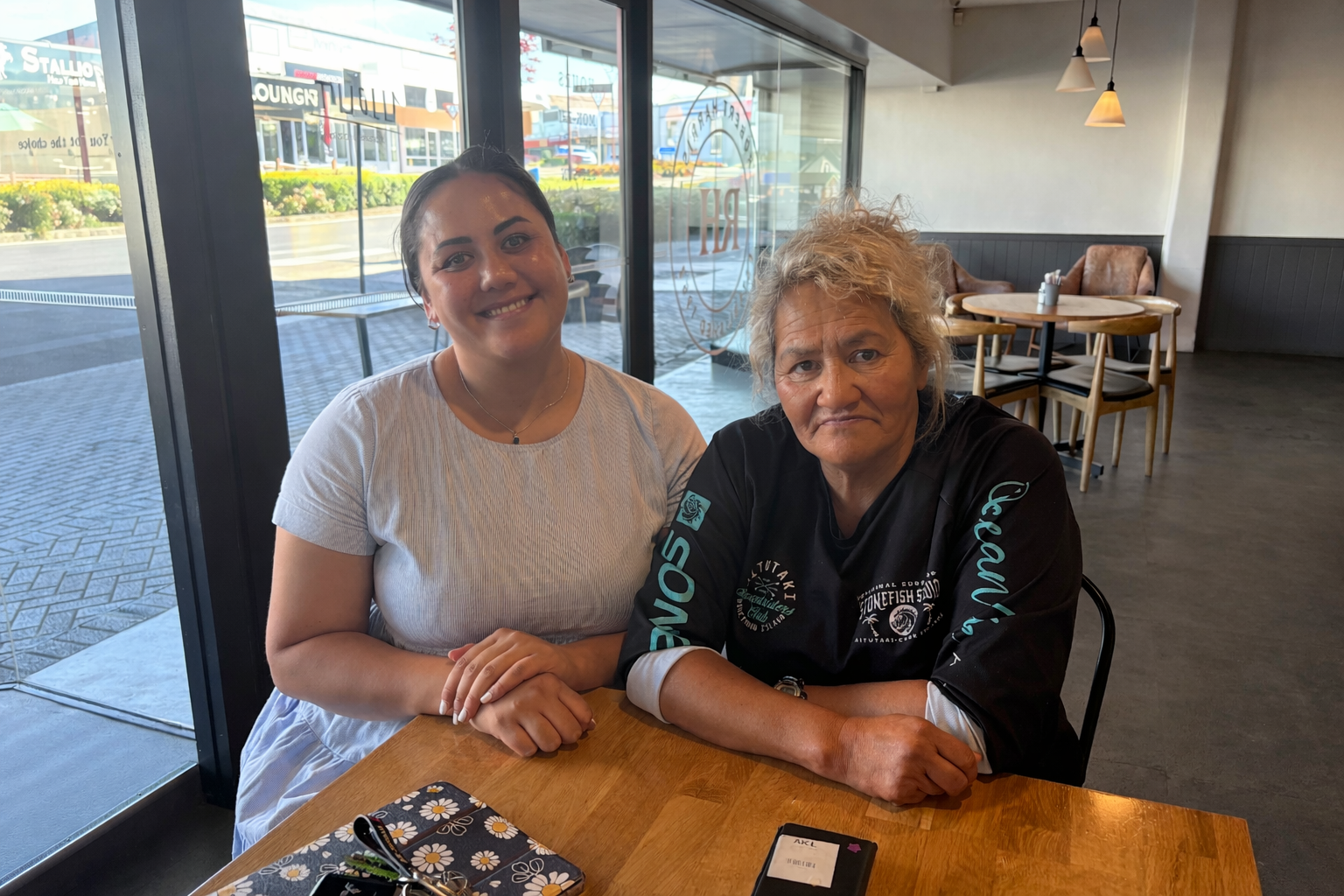
ACC-recognised rongoā in our rohe
Photo: Raven Torea with Whāea Lynette Stafford
Healing grounded in aroha and intention sits at the heart of rongoā Māori. As the whakataukī says, He ringa nā Rongo, he ringa nā te aroha, the hands that heal are guided by peace and care.
The Whānau Voice team recently spent time with rongoā Māori practitioner Lynette Stafford, gaining insight into a healing practice that weaves mātauranga Māori with contemporary therapeutic approaches.
Lynette, known to many as Whāea Lynette, is a rongoā practitioner working through her organisation Te Kora O Mahuika, a Waikato-based provider covering Te Awamutu, Kāwhia, Te Kūiti and Hamilton. Her work takes her across the rohe, and she is in high demand, supporting whānau with injury recovery and wellbeing.
Around 96 percent of Lynette’s mahi is funded through ACC referrals, reflecting growing recognition of rongoā Māori as a legitimate and effective pathway for healing. ACC currently supports rongoā as part of injury recovery, and Lynette is formally trained through Te Wānanga o Aotearoa, where she completed her rongoā qualification. She is also trained in the Emmett Technique, a specialist muscle release therapy that uses gentle finger pressure on specific points of the body to support physical recovery.
Lynette explained that the Emmett Technique is suitable for addressing a wide range of physical and non-physical injuries, and that practitioners must be formally trained to apply it safely. In her practice, this technique often sits alongside rongoā Māori, including rongoā rākau, where native botanicals are used as part of healing. These plants are carefully sourced and applied with knowledge handed down through generations.
For Lynette, rongoā is never “just one thing”. She shared that people sometimes think rongoā is only mirimiri or karakia, but in reality it is a holistic system of healing that includes different forms of treatment, spiritual care, physical techniques, plant knowledge, and deep connection to whenua and whakapapa. In Waikato alone, there are a small number of trained practitioners, each carrying distinct knowledge and approaches.
The visit was especially meaningful for Whānau Voice kaimahai, Raven, who is also a nursing student. Seeing how rongoā Māori and techniques like Emmett can sit alongside Western health practices was new to her and highlights the potential for truly complementary care that centres whānau needs and lived experience.
Time with Lynette reinforced the value of kaupapa Māori healing approaches and the importance of creating pathways where whānau can access care that feels culturally safe, effective, and grounded in who they are. For Te Tiratū and the Whānau Voice team, this visit was a powerful reminder that wellbeing is relational, holistic, and deeply connected to whenua, mātauranga, and whānau.
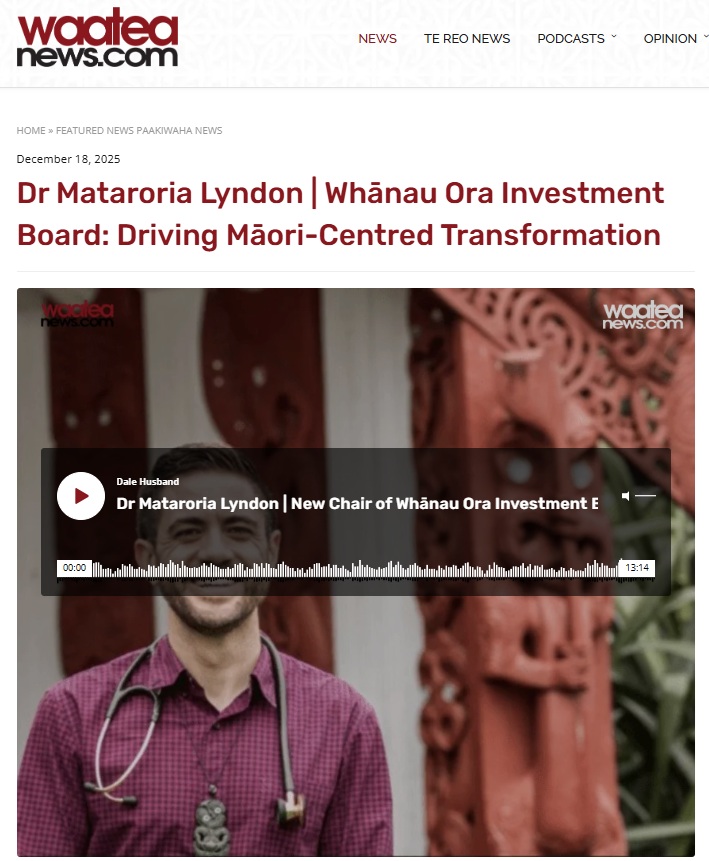
Te Tiratū Iwi Māori Partnership Board member named new chair
Our Board member and clinician, Dr Mataroria Lyndon (MBChB, MPH, PhD), is the newly appointed Chair of the Whānau Ora Investment Board for the Upper North Island. He speaks to Waatea about the Board’s vital role in directing government resources to support whānau wellbeing. Under her leadership, the Board will continue to champion locally driven, culturally aligned initiatives that deliver sustainable, long-term outcomes for whānau across Aotearoa.

Gaps remain in Māori health
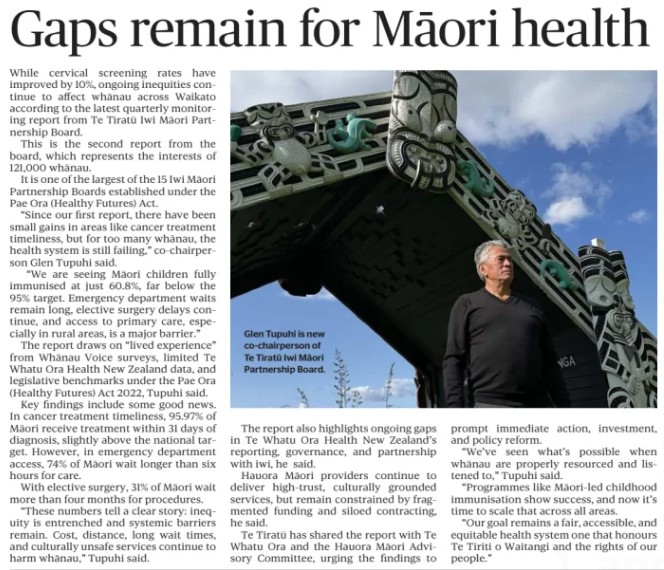
The Waikato Local has covered Te Tiratū Iwi Māori Partnership Board’s latest Quarterly Monitoring Report on the health system, which highlights persistent health inequities for Māori across the Tainui waka rohe. While small gains were seen in cervical screening and timely cancer treatment, major gaps remain: only 60.8% of Māori children are fully immunised at 24 months, long emergency department waits affect 74% of Māori, and nearly a third face elective surgery delays over four months. Co-Chair Glen Tupuhi calls for immediate action, investment, and scaling of Māori-led health initiatives.
Pinnacle PHO & Te Tiratū strengthen partnership
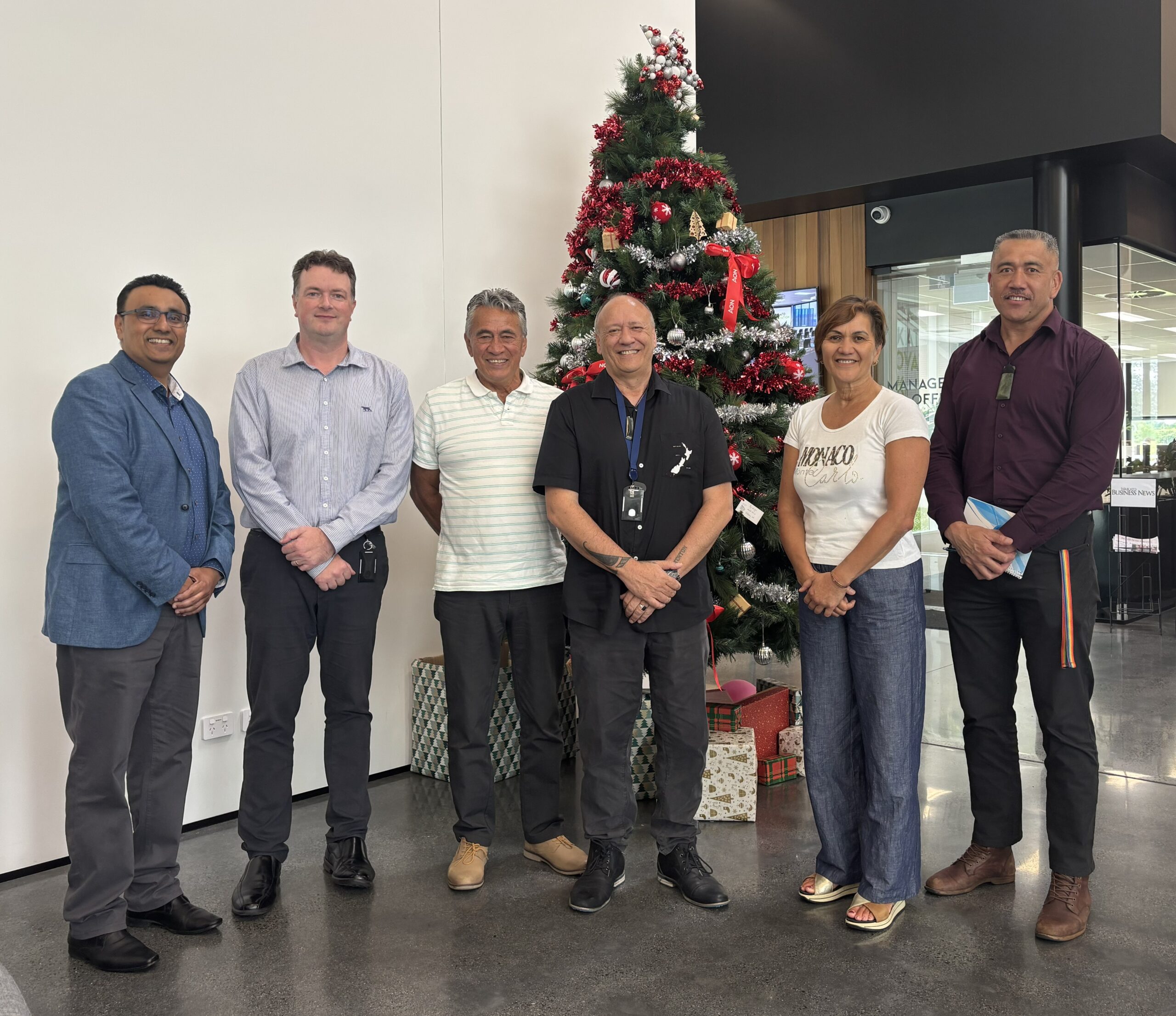
Photo: Amit Prasad, Justin Butcher, Glen Tupuhi co-chair Te Tiratū, Brandi Hudson Tumu Whakarae Te Tiratū and kaimahi Rawiri Blundell and Koro Samuels
With a shared commitment to improving Māori health, Te Tiratū Co-Chair and Tumu Whakarae met with Pinnacle Primary Health Organisation leaders Amit Prasad, Justin Butcher, and kaimahi Rawiri Blundell and Koro Samuels to strengthen collaboration on primary care in Waikato.
The kōrero emphasised the importance of all PHOs and Te Whatu Ora working together, particularly by aligning how health data is collected and reported, so decisions are based on accurate, timely information that truly reflects Māori communities at both regional and local levels.
Pinnacle PHO supported our Position Statements and concerns about vaping and its long-term impact on rangatahi and whānau, the critical role of school nurses in proactive healthcare, and the particular challenges faced by rural communities.
There was unanimous agreement that the high number of unenrolled Māori, and those enrolled but not receiving regular health checks or screenings, is an urgent issue that must be addressed collaboratively.
The discussion also highlighted shared pressures in the primary care workforce and the need for sustainable funding solutions. Expanding nurse-led models of care, including mobile services and workplace health checks, was seen as a practical way to reach Māori men and whānau, help address GP shortages, and reduce wait times for appointments.
Strengthening the link between primary care and specialist services was recognised as essential for managing long-term conditions such as cardiovascular disease, diabetes, respiratory illness, mental health, and gout, particularly improving access to prescribed medications. Greater use of Nurse Prescribers was identified as a key way to tackle this pressing equity challenge.
Both organisations acknowledged the importance of supporting whānau to navigate modifiable behaviours, including nutrition, exercise, alcohol use, smoking, and vaping, while ensuring health education resonates with young Māori.
They also recognised that many whānau cannot afford expensive healthy food options, and that solutions must be practical, affordable, and grounded in the lived experience of Māori communities. Lifting immunisation rates remains a shared priority, with a clear focus on closing Māori equity gaps before broader population initiatives.
To maintain momentum and deepen the partnership, a Board-to-Board hui will be scheduled in the New Year. This meeting will advance collaborative work on health data, strengthen advocacy, and guide future investment and planning to achieve better health outcomes for Māori across the Waikato.
Te Tiratū takes to the streets in Hīkoi for our Health
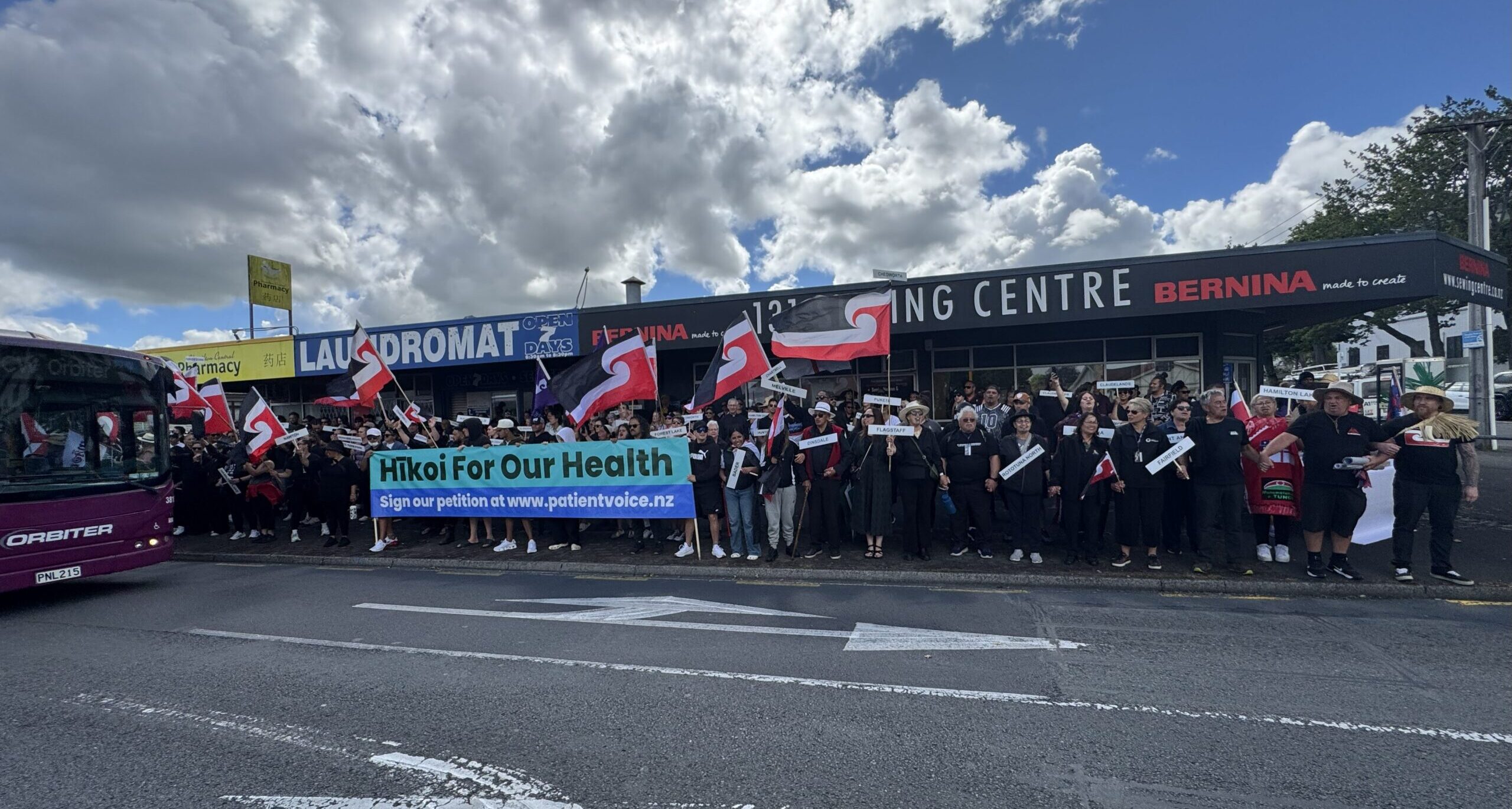
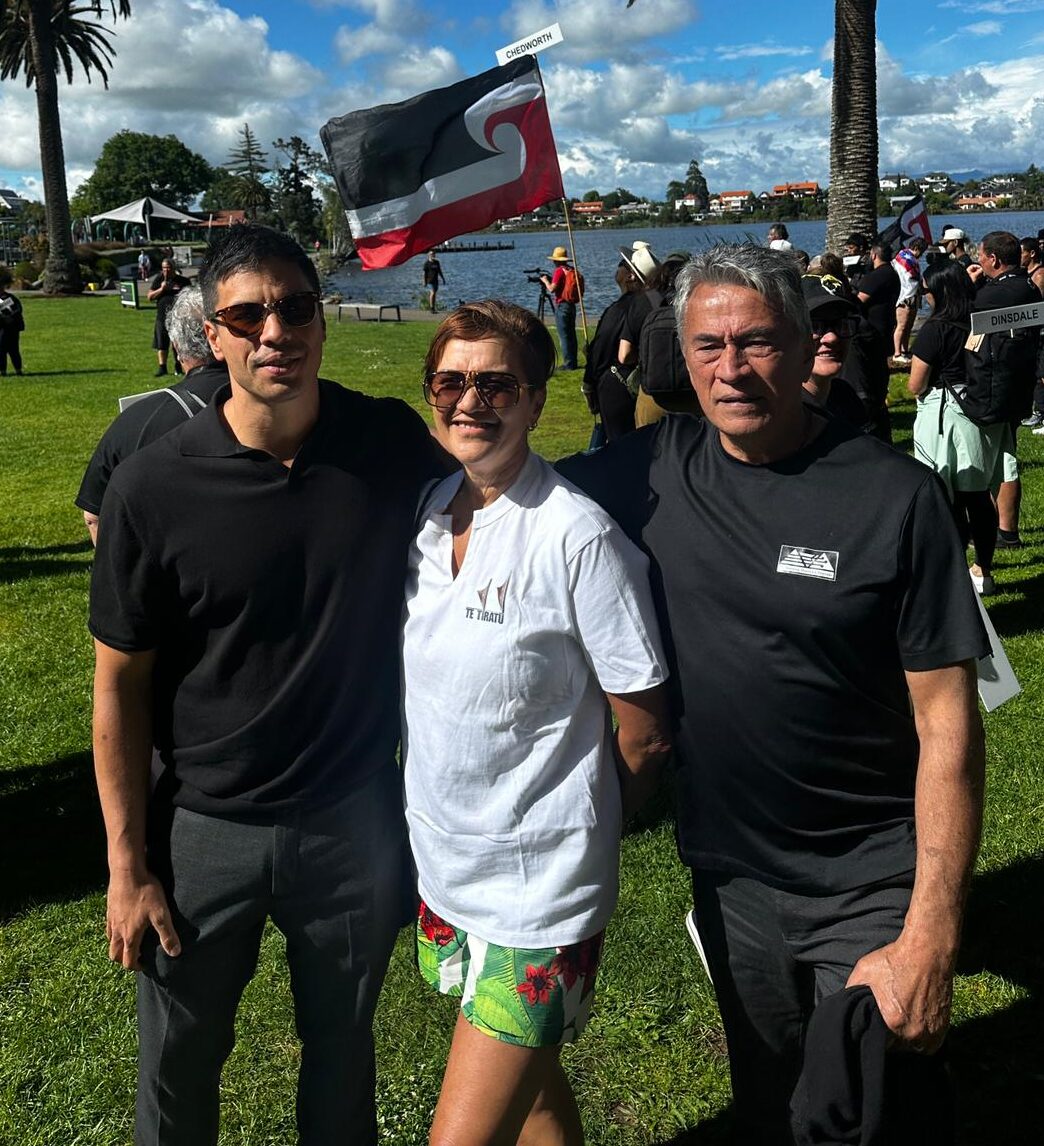
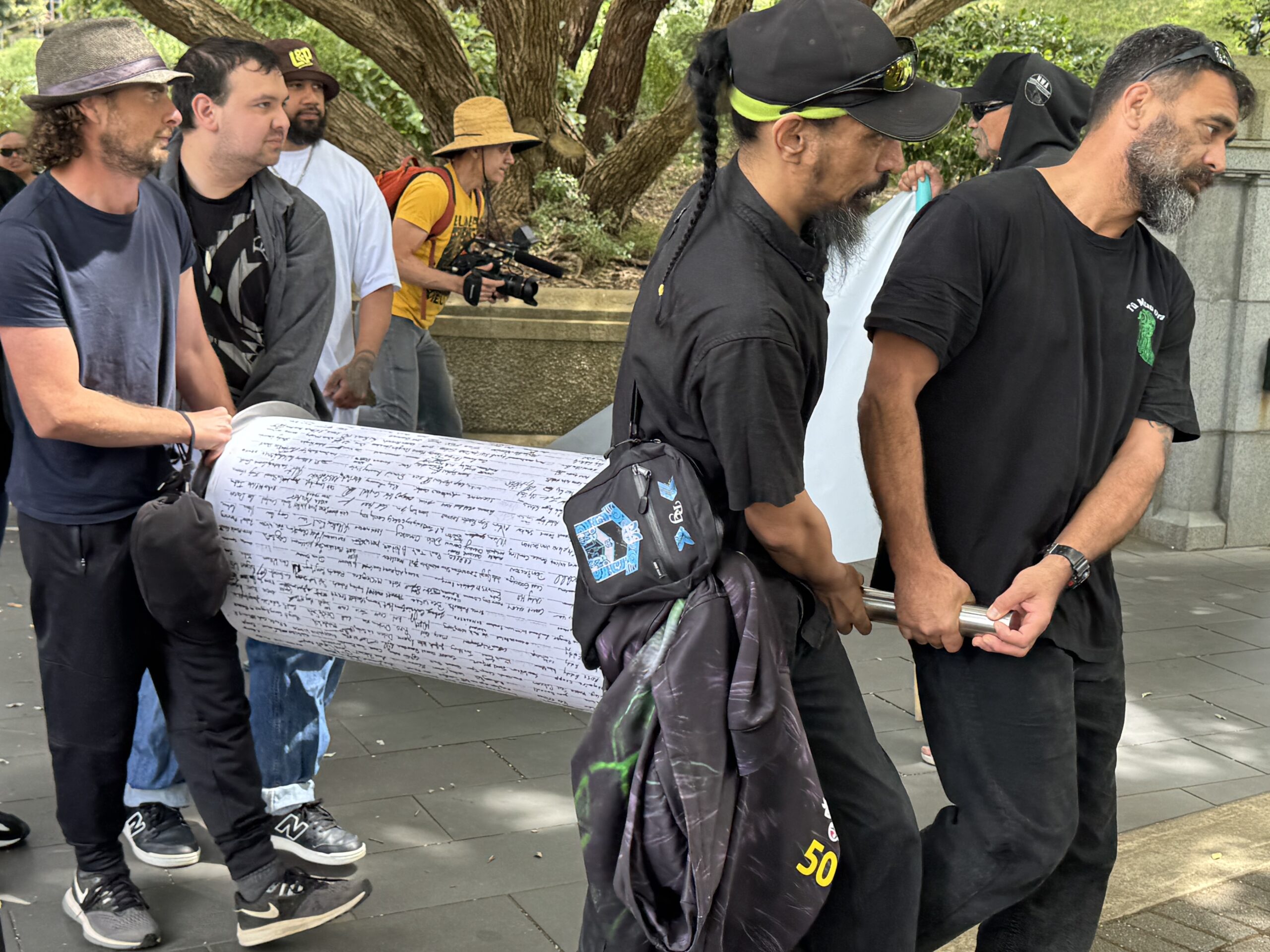
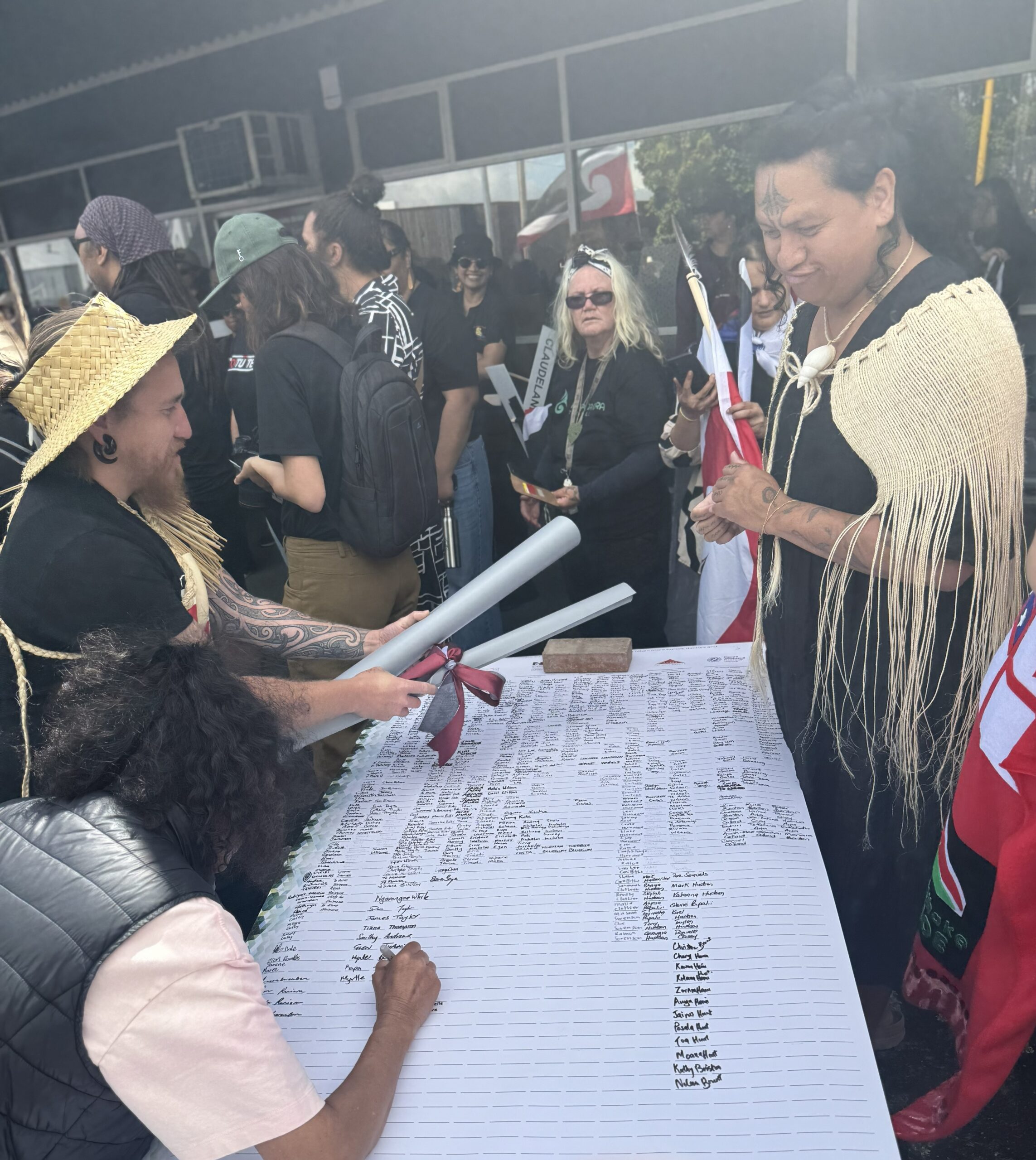
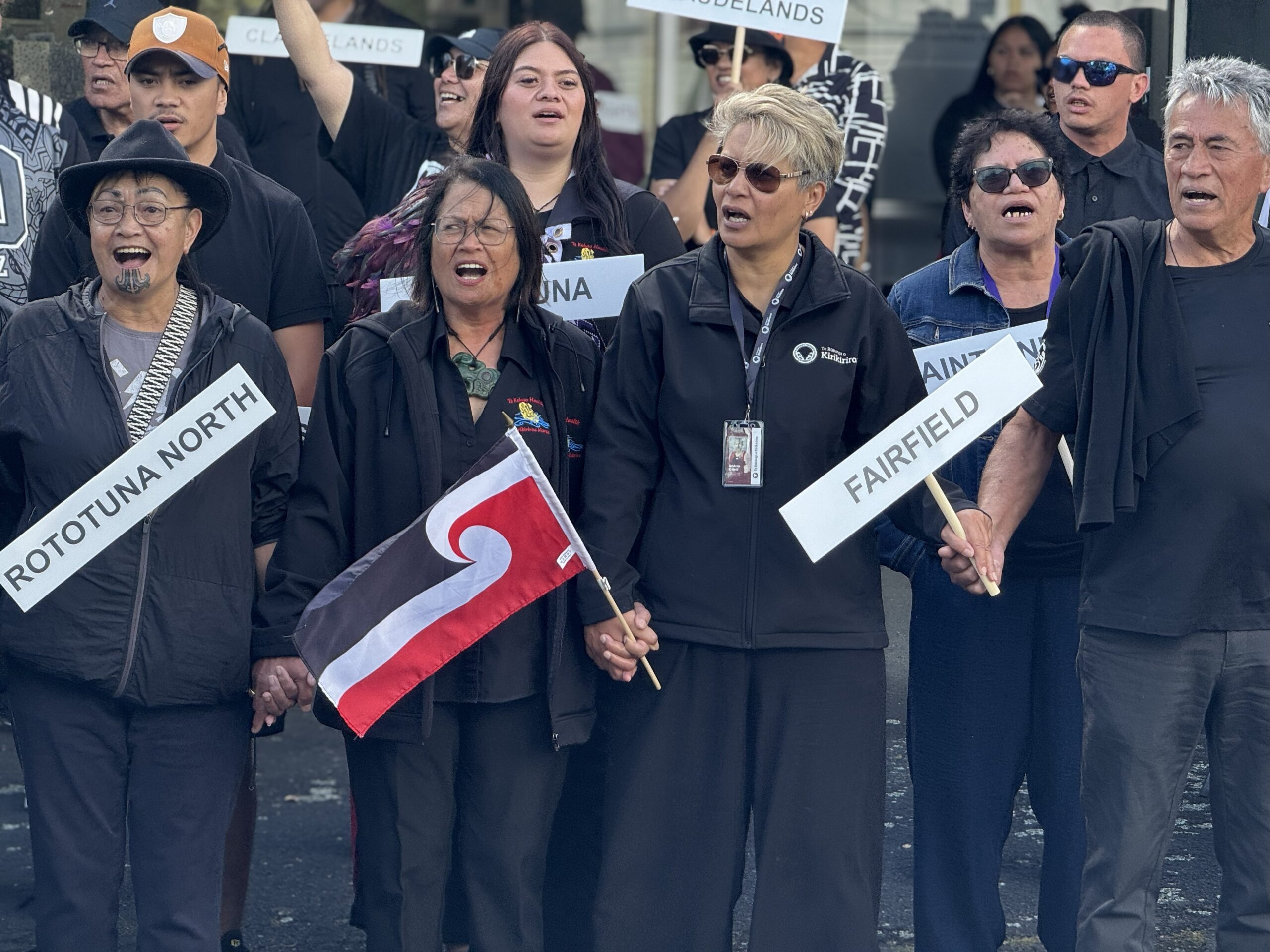
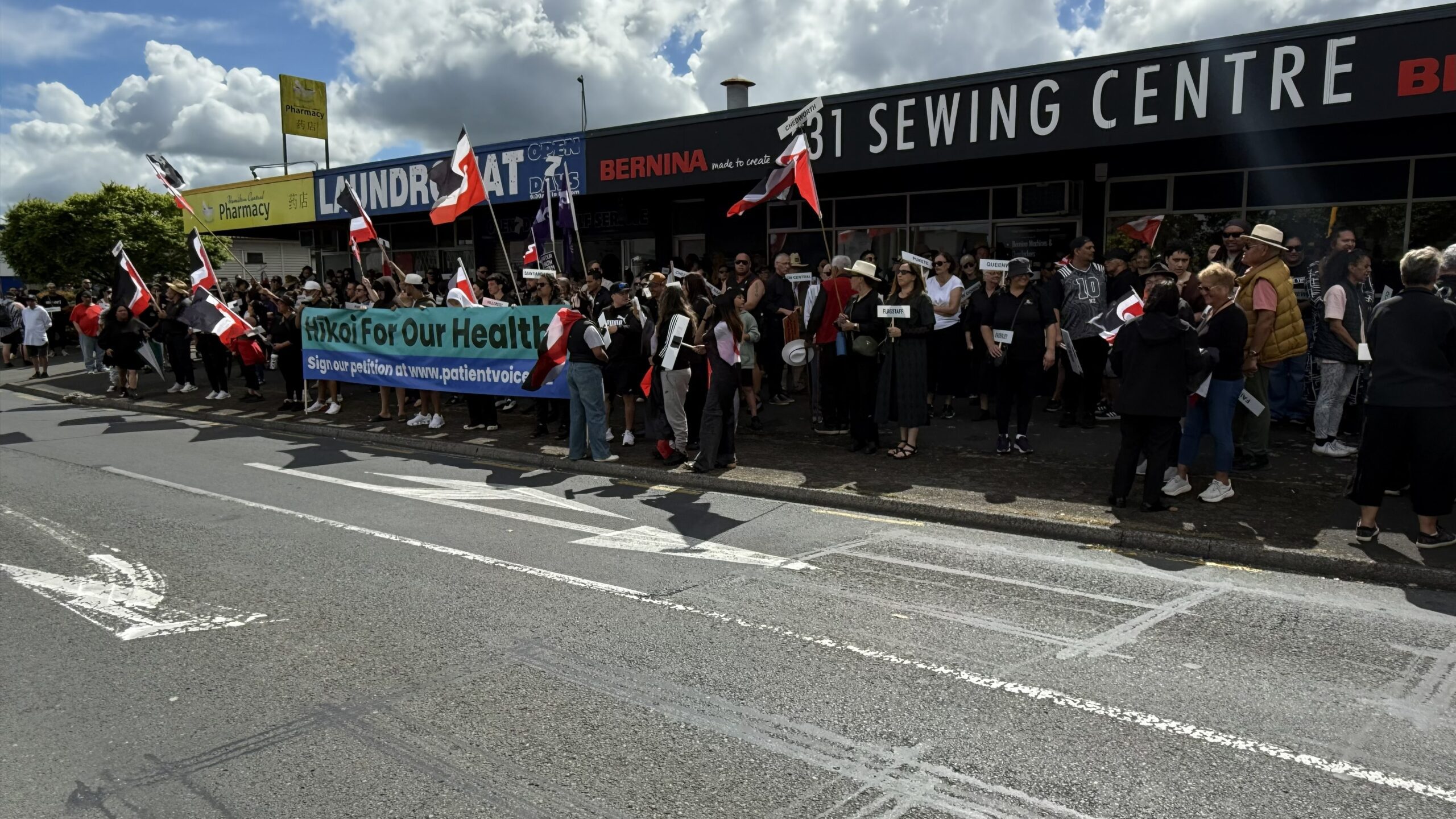
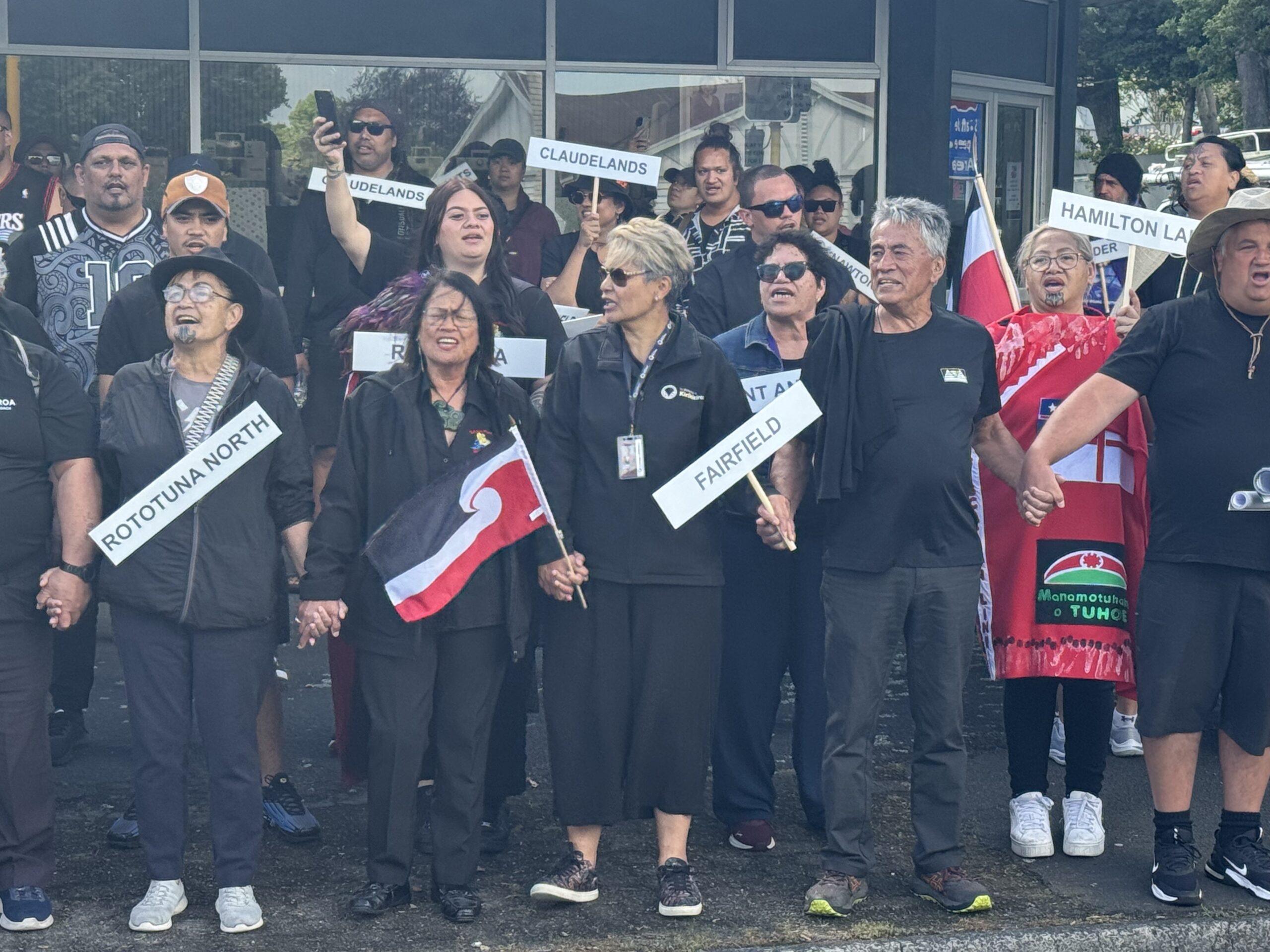
Several Te Tiratū board members with our senior executive walked in solidarity with hundreds of whānau in the Hamilton leg of the nationwide Hīkoi for Our Health, that’s calling for urgent government action to fix Aotearoa’s failing health system.
The march, led locally by Lady Tureiti Moxon, Managing Director of Te Kōhao Health, departed from Hamilton Lake Playground to Waikato Hospital carrying the Buller Declaration on the State of the New Zealand Health System, now signed by more than 95,000 people.
Our Co-chair Glen Tupuhi, reflected on the responsibility of older generations in protecting the health system.
“It’s very important when we look around and see the rangatahi, and also the baby boomers. It is us that are breaking down. It is us that are putting pressure on the health system, and it is us that really need to fight for the retention of services and not allow this creeping privatisation,” he said.
“Exposing health to free market forces is not going to be good for us, our children, or our tamariki. Our tupuna fought to build the welfare state, and we have inherited that. It’s up to us to ensure it is handed on to the next generation.”
Brandi Hudson, our Tumu Whakarae had a similar stance, “We are here because we want to celebrate the fact that Māori are leading the way with advocacy for better health services for our whānau. We thank Lady Tureiti Moxon today for working alongside the whānau or Kirikiriroa to highlight how the resources for Māori health are failing.”
The focus for Lady Tureiti Moxon is partnership and structural change.
“Te Tiriti o Waitangi is a blueprint for partnership and accountability. When the Crown makes decisions about Māori health without Māori, that is not partnership. We need structural change. This hīkoi is about calling the Government to honour Te Tiriti and build a system designed with, by, and for our people. We walk not just for ourselves, but for our tamariki and mokopuna. For our hauora. For our future,” she said.
Malcolm Mulholland, Chair of Patient Voice Aotearoa and the national organiser, said the hīkoi sends a clear message across the country.
“New Zealanders are united in saying our health system is in crisis. We walk for those behind the statistics, those waiting in corridors, those turned away, and the health workers holding the system together. This hīkoi is our call to those in power: fix it now, before more lives are lost.”
The month-long hīkoi, which began in Westport on 1 November, retraces the path of the original Buller march that sparked this national movement.
It will reach Parliament in Pōneke on Tuesday 18 November, where thousands are expected to gather to deliver the signed Declaration to Members of Parliament. Today in Kirikiriroa, the message was one of unity, mana motuhake, and hope for a health system that values people over bureaucracy and equity over excuses.