Crackdown on vaping – the call for regulation ahead of World Smokefree Day
MEDIA STATEMENT
FOR IMMEDIATE RELEASE
Thursday 25 May 2026, 5:00 PM
2 minutes to Read
Te Tiratū Iwi Māori Partnership Board is calling for urgent regulatory and public health action to curb the rising uptake of vaping products across the Waikato rohe, warning that current market practices are driving nicotine addiction among rangatahi Māori and undermining whānau wellbeing.
Released ahead of World Smokefree Day on 31 May 2026, Te Tiratū has worked with the Otago University Faculty of Medicine on a Vaping Position Statement.
Developed with expert technical advisor Associate Professor Andrew Waa it calls for vaping products to be restricted to regulated therapeutic settings only to protect rangatahi Māori from nicotine addiction.
Te Tiratū represents approximately 121,300 Māori across the Waikato rohe, a population that is both young and significantly rural, with 48% under the age of 25.
National data shows concerning trends among rangatahi Māori, with 16.5% of Māori Year 10 students vaping daily, 23.9% vaping regularly, and 53.2% having tried vaping, while Māori girls report the highest regular vaping rate at 28.7%.
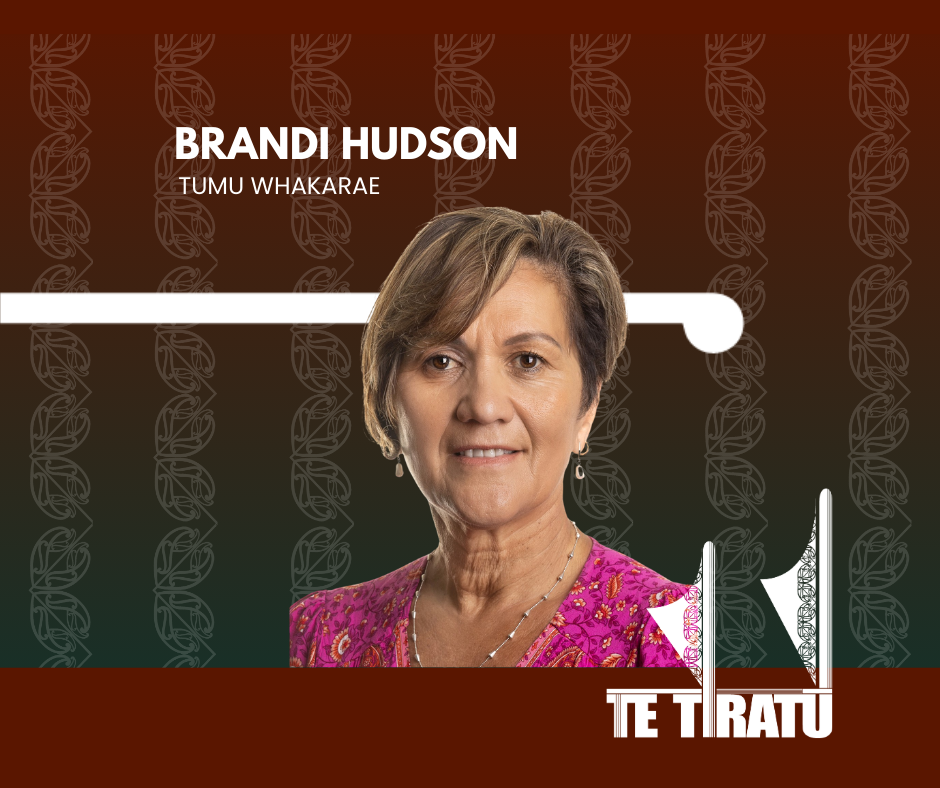
Tumu Whakarae of Te Tiratū IMPB, Brandi Hudson says the scale of harm being seen across the rohe requires urgent action and number of rangatahi vaping reinforces the need for stronger prevention-focused regulation.
“Te Tiratū is extremely concerned about the widespread uptake of vaping products and the predatory marketing strategies used to lure our whānau into nicotine addiction. To uphold our vision “Kia tupu, kia hua, kia puāwai”, we must protect our people especially rangatahi from exploitation by highly addictive products,” she said.
“Vaping is not a harmless lifestyle choice. It is a rapidly normalised pathway into nicotine dependency for our young people, and we cannot afford to ignore what we are seeing in our communities.”
As part of its statutory monitoring function, Te Tiratū has identified persistent respiratory inequities, including an average of 215 Māori children aged 14 and under being hospitalised for asthma each year between 2020 and 2023, at rates 1.9 times higher than non-Māori children.
These inequities are compounded by high levels of deprivation, damp and mould-affected housing, and reduced access to primary care, along with ongoing gaps in access to cessation support and youth health services. Together, these conditions intensify the respiratory risks faced by rangatahi Māori in the context of rising vaping uptake.
Associate Professor Andrew Waa says vaping must be understood within the broader history of commercial nicotine exploitation.
“Tobacco was introduced to Māori by Captain Cook and has since been aggressively promoted by an industry that profits from addiction,” he said.
“Vaping products are designed to be highly addictive, appealing, and easy to use particularly for rangatahi. While they may have a place as a cessation tool for people who smoke, they are not harmless, and they are being marketed in ways that undermine rangatahi wellbeing and tino rangatiratanga within whānau, hapū, and iwi.”
Te Tiratū supports Vaping as a regulated therapeutic product only backed by a strengthened regulatory framework in which vaping products are:
- Available only through accredited health services (pharmacies, cessation services, primary care)
- Subject to strict nicotine limits
- Sold in standardised packaging with reduced appeal features
- Limited to essential flavours for cessation purposes only
- Supported by stronger border and domestic enforcement of illicit supply chains
- Accompanied by accessible vaping cessation support services, including for rangatahi.
The position statement also warns that vaping has been normalised as a “lifestyle product” rather than a therapeutic tool, undermining tobacco control progress and exposing young people to nicotine addiction pathways.
It also highlights the need to prioritise rangatahi wellbeing in definitions of harm, not only adult smoking cessation outcomes.

Push back on Pharmac move to remove equity access criteria for lifesaving medicines
MEDIA STATEMENT
FOR IMMEDIATE RELEASE
Thursday 14 May 2026, 6:00 PM
2 minutes to Read
One of the largest Iwi Māori Partnership Boards in the country, Te Tiratū that represents 121,300 Māori is calling on Pharmac to immediately reconsider proposals to remove ethnicity equity criteria from access to SGLT2 inhibitors and GLP-1 receptor agonists that are internationally recognised treatments for type 2 diabetes, heart failure and chronic kidney disease.
Te Tiratū warns the proposal risks reversing one of the few medicines policy decisions in Aotearoa specifically designed to address entrenched inequities in diabetes, cardiovascular disease and chronic kidney disease for Māori.
Pharmac has opened public consultation today on proposals to remove Māori and Pacific ethnicity from Special Authority access criteria for these medicines – despite the criteria being introduced in 2021 following sustained advocacy from Māori clinicians, researchers and Indigenous health leaders.
The ethnicity criteria were implemented because evidence showed Māori and Pacific peoples were significantly less likely to receive modern diabetes and cardiovascular medicines, despite carrying a substantially higher burden of disease and experiencing earlier and more severe complications.
Te Tiratū Co-Chair, Glen Tupuhi says the proposal ignores the overwhelming evidence that Māori experience significantly higher rates of diabetes, cardiovascular disease and kidney disease, while continuing to face systemic barriers accessing medicines and treatment.
“These medicines save lives and prevent devastating complications for whānau,” he said. “Māori are diagnosed younger, become sicker earlier, and die sooner from preventable chronic illnesses. Equity pathways exist because the health system has not delivered equitable outcomes for Māori.”
Te Tiratū says the proposal is particularly concerning because the strongest emerging evidence for SGLT2 inhibitors is now in chronic kidney disease (CKD), including for people without diabetes.
They are around twice as likely to live with diabetes compared to non-Māori, experience cardiovascular disease at significantly higher rates, and face chronic kidney failure at disproportionately higher levels.
Diabetes often emerges around a decade sooner for Māori than in non-Māori populations, contributing to earlier onset of complications such as heart failure, kidney disease, amputations and premature death. Māori experience approximately 3.5 times higher mortality from diabetes-related causes and are significantly more likely to progress to end-stage renal failure, even when living with the same diagnosis.
The Waitangi Tribunal’s Health Services and Outcomes Inquiry (Wai 2575), including Wai 2919 filed by Associate Professor Leanne Te Karu, has documented “prescription inequity” within the New Zealand health system, including under-access to diabetes, cardiovascular and renal medicines for Māori.
Dr Leanne Te Karu, author of Te Tiratū’s recent position statement on 12-month prescriptions and claimant in Wai 2919 has consistently highlighted the impact prescription inequity has on Māori health outcomes.
Her research references the “missing million prescriptions” analysis, highlighting the scale of inequitable prescribing relative to Māori health need.
“Restricting equitable access to SGLT2 inhibitors and GLP-1 medicines risks widening the very inequities the health system has acknowledged for years,” said Dr Te Karu.
Te Tiratū says removing ethnicity equity criteria raises serious concerns about whether Pharmac is meeting its obligations to achieve equitable Māori health outcomes under Te Tiriti o Waitangi.
“Treating all universally in the system does not create fairness. It entrenches inequity,” said Glen Tupuhi.
The Iwi Māori Partnership Board is calling on Pharmac to:
•Retain ethnicity equity criteria for access to these medicines;
•Publicly release equity impact analysis before consultation proceeds;
•Demonstrate how Māori health outcomes will improve if the criteria are removed;
•Engage directly with Iwi Māori Partnership Boards, Māori clinicians and Māori health providers;
•Uphold Te Tiriti obligations in medicines policy and funding decisions.
Te Tiratū says any proposal affecting equitable access to medicines must be assessed against the reality that Māori continue to experience some of the highest rates of avoidable illness, preventable hospitalisation and premature death in Aotearoa.
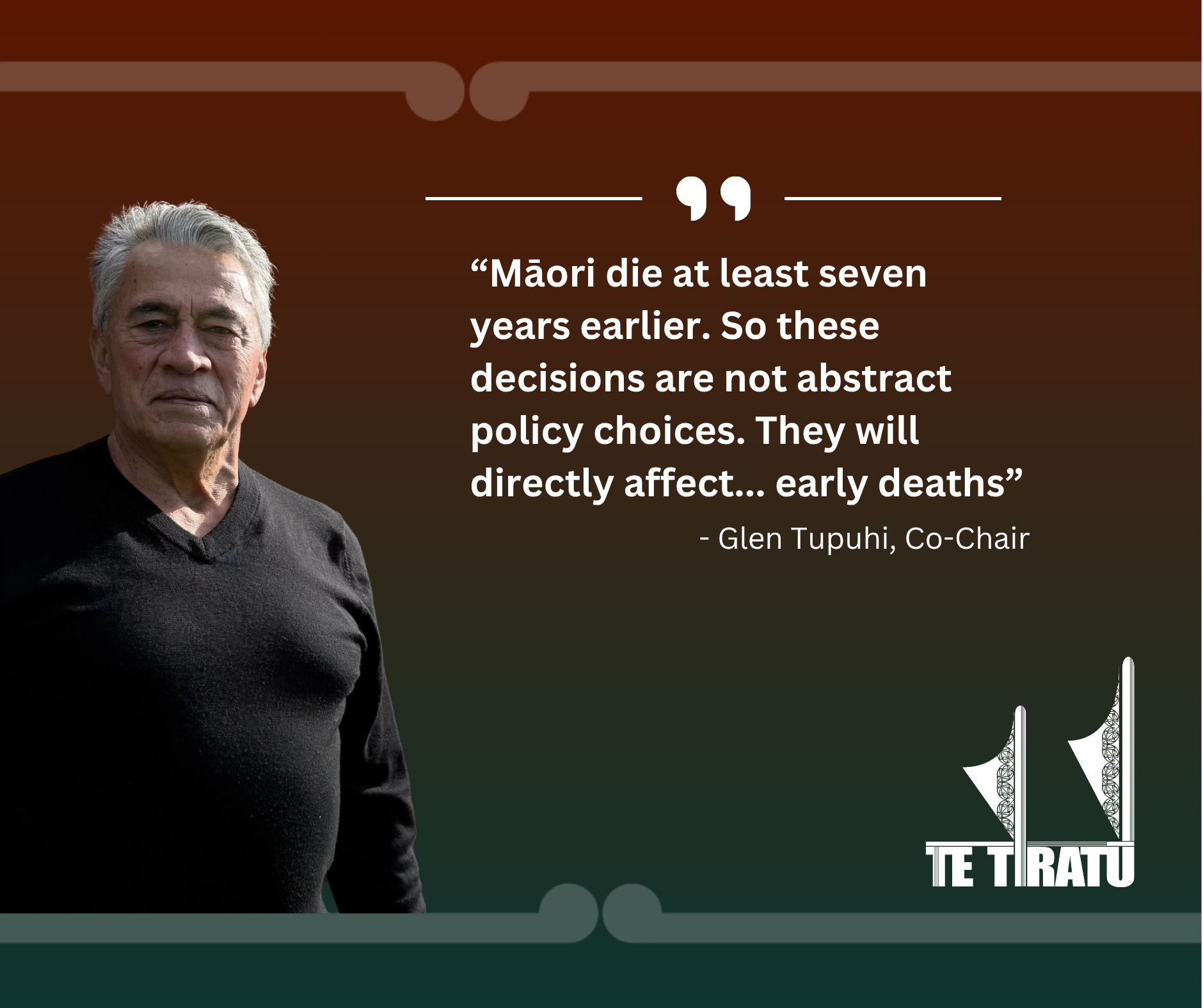
“Māori die at least seven years earlier.1 So these decisions are not abstract policy choices. They will directly affect whether whānau avoid dialysis, amputations, heart attacks and early death,” he said.
Te Tiratū is developing resources to support whānau, Māori health providers, clinicians and community leaders to make informed submissions ahead of the consultation deadline of 5:00pm, Thursday, 28 May, opposing the removal of equity access criteria.
It will also brief all 14 Iwi Māori Partnership Boards nationally, the Hauora Iwi Leaders Group within the National Iwi Leaders Forum, the Hauora Māori Advisory Committee to Minister Brown, the Attorney General, the Chief Ombudsman, the Human Rights Commission, and Members of Parliament on the adverse impact the proposal could have on Māori health outcomes.

Dr Leanne Te Karu
Iwi Māori Partnership Board calls for equity-led delivery in earlier bowel screening
MEDIA STATEMENT
FOR IMMEDIATE RELEASE
Monday 30 March 2026, 5:00 AM
2 minutes to Read
Te Tiratū Iwi Māori Partnership Board (IMPB), one of the largest in Aotearoa representing 121,300 whānau across the Tainui waka rohe, supports lowering the national bowel screening age to 58. It says the change will save lives, but only if equity for our Māori and Pacific whānau are central to how the programme is delivered.
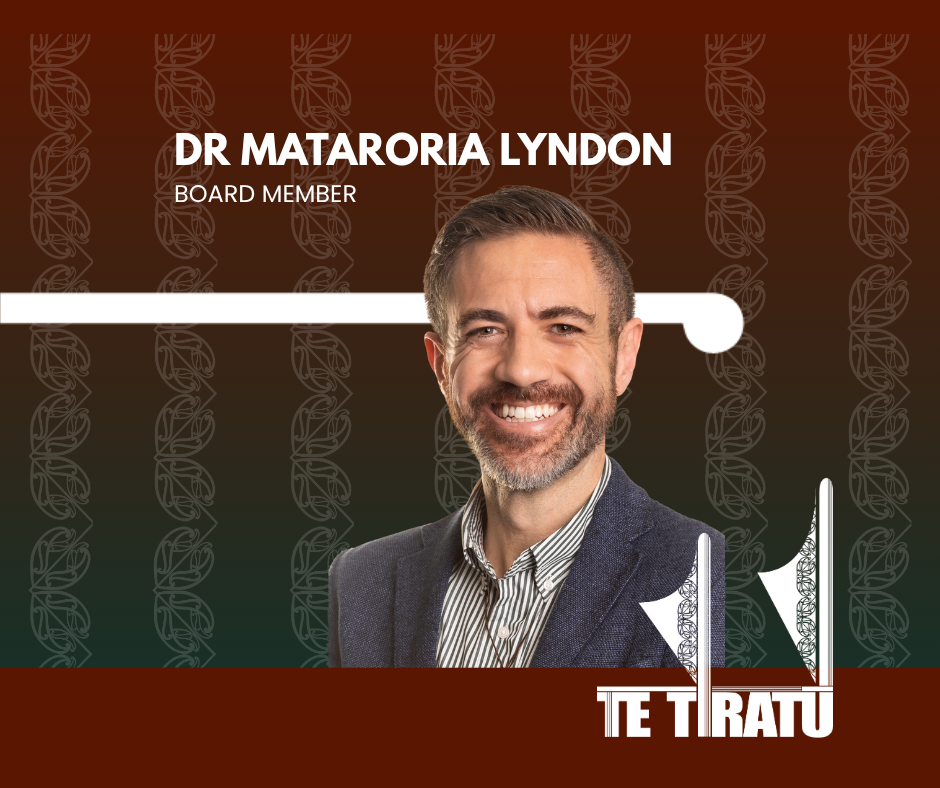
Board member and clinician, Dr Mataroria Lyndon says the expansion is a positive move, but the data shows Māori and Pacific peoples are still being left behind at every stage of the screening pathway.
“Lowering the screening age is progress because it will help catch more cancers earlier. But the reality is stark. Around 60% of wāhine Māori and 50% of tāne Māori with bowel cancer are diagnosed before age 60, compared with about 30% in non-Māori. That means that even with screening starting at 58, a substantial proportion of Māori bowel cancers are likely to develop before people become eligible for screening.”
“Screening at 58 is better than 60, but it is not enough. The earlier we can detect bowel cancers among whānau Māori and Pacific, the more lives we can save. Ideally, the screening age should be lowered further and paired with equity-focused outreach and support.”
Data from the Te Tiratū IMPB priorities summary report highlights the scale of the challenge in the Waikato rohe. As at June 2023, 40.6 percent of the eligible Māori population in Waikato District had been screened for bowel cancer, compared with 57.4 percent of non-Māori.[1] Screening rates are lowest in younger age groups, where the largest numbers of Māori stand to benefit from earlier detection.
An average of 161 Māori die from cancer each year in Waikato District, and Māori are around twice as likely as non-Māori to die from any cancer. Dr Lyndon says these inequities reinforce the need for screening programmes that are not only broader but better designed.
“Expanding eligibility on its own is not enough. Equity must be built into delivery. That means services must be accessible, culturally appropriate, and actively reach whānau who are currently missing out.”
He acknowledged the leadership of kaupapa Māori providers in the region, including Taakiri Tuu wellness and diagnostic centre built and operated by Te Kōhao Health, who are already working to improve early detection and outcomes through whānau-centred models of care within the community.
“What we are seeing locally is what works. Māori providers are engaging our people in ways the mainstream system often cannot. They are trusted, connected, and delivering services that reflect the realities of our people’s lives. That is where continued investment and support are critical.”
Dr Lyndon says younger Māori remain a key priority, particularly given the evidence that bowel cancer can present earlier and progress more rapidly.
“The evidence is clear. Māori are more likely to develop bowel cancer at younger ages and experience worse outcomes. That means earlier screening must be paired with proactive outreach and support, especially for those in younger age groups who are currently underrepresented in screening programmes.”
Lowering the screening age is consistent with what the evidence has been telling us. Rates of colorectal cancer before age 50 have been increasing, with Māori experiencing faster growth compared to non-Māori. Findings published in the New Zealand Medical Journal show Māori are more likely to be diagnosed before screening begins, highlighting the urgency of earlier, equity-focused intervention.
Te Tiratū IMPB says it will continue to work alongside iwi, Hauora providers and hapori across the Waikato to ensure the expansion of bowel screening delivers meaningful gains for Māori.
“This is an opportunity to do things differently. We support the intent to extend access, but success will be measured by whether it actually reduces inequity. That requires sustained focus, investment, and accountability.”
[1] Source: https://tetiratu.co.nz/2024/09/30/hauora-maori-priorities/
Ngāti Kahungunu and Māori health partners unite to shape new iwi health authority
MEDIA STATEMENT
FOR IMMEDIATE RELEASE
Thursday 19 March 2026, 10:00 AM
2 minutes to Read
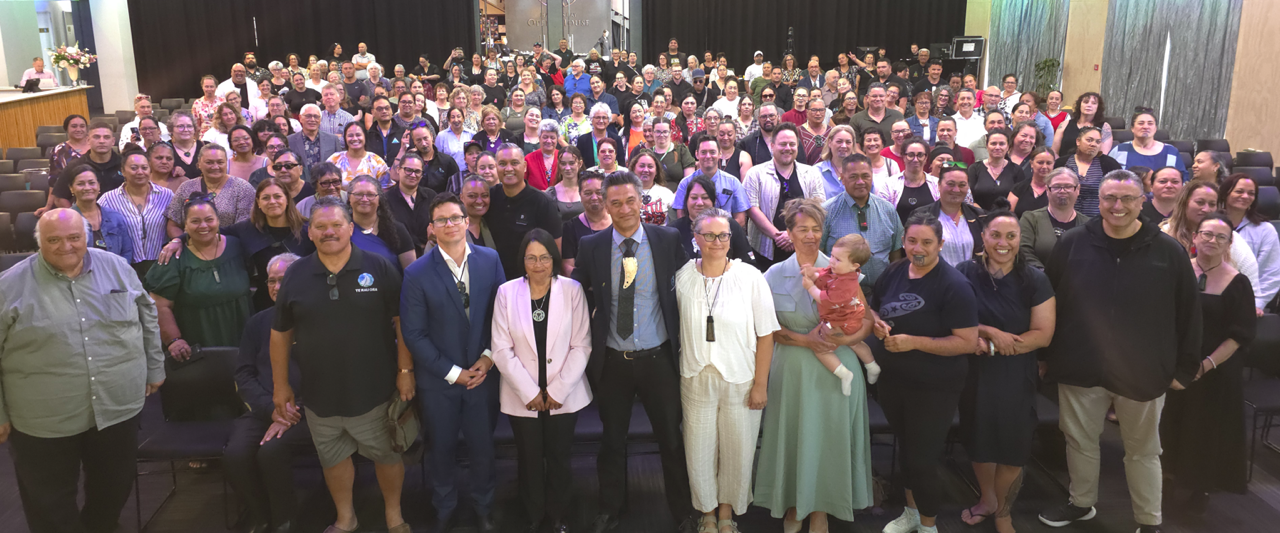
Ngāti Kahungunu Iwi Incorporated (NKII) is proud to announce a formal commitment to work collectively with Hauora Māori service providers, regional Taiwhenua, Post-Settlement Governance Entities (PSGEs), and the Tihei Takitimu Iwi Māori Partnership Board to advance the establishment of the Kahungunu Health Authority (KHA).
Since an initial announcement in September 2025, these parties have collaborated to bring clarity to how the KHA could operate as a separate, independent body designed to achieve better outcomes for whānau.
The KHA will be established to supplement, rather than duplicate, the work of the existing regional Māori health entities. While these entities work from within the public health system to support and deliver health services, and influence investment and accountability, the KHA sits outside the system.
This independence gives it strategic freedom to design and scale innovative models of care, partner with private sector operators, and mobilize iwi resources in a way the public sector system may be too risk-averse to adopt.
Bayden Barber, Chair of Ngāti Kahungunu Iwi Inc, emphasises the need for this dual-tiered approach.
“The health sector is in crisis, and our statistics continue to languish. By standing together with our regional partners, we’re creating a powerful political force grounded in rangatiratanga. NKII remains the constitutional voice for Treaty and cultural matters, while the KHA carries the technical expertise and political freedom to challenge the system and demand better opportunities and outcomes for our people.”
Central to this development will be a dedicated working group of twenty-five whānau members who expressed their commitment during recent wānanga to help drive the kaupapa forward. This group will ensure the design of the KHA remains rooted in the voices and aspirations of the people it serves.
Speaking on behalf of all parties, Tihei Takitimu Co-Chairs Kerri Nuku and Lewis Ratapu highlighted the critical importance of unity in the current climate.
“At a time when the rights and interests of Māori are being constantly challenged, kotahitanga is our greatest strength. We must move forward together to protect the health of our people.
Our role will be to ensure the public system lifts its performance and remains accountable, while the KHA pushes the horizon of what’s possible from the outside. Together, we create a ‘productive tension’ that ensures the system never settles for ‘good enough’.”
The parties will work on a robust governance structure that harnesses the deep knowledge and networks of Hauora providers and PSGEs to ensure all voices are amplified. This unified front positions Kahungunu as a leader shaping the future of Māori health on its own terms.
Pae Ora Bill weakens Māori voice, erodes accountability
MEDIA STATEMENT
FOR IMMEDIATE RELEASE
Wednesday 4 March 2026, 4:00 PM
2 minutes to Read
Te Tiratū Iwi Māori Partnership Board, representing over 121,000 Māori in the greater Waikato region, warns that the Pae Ora (Healthy Futures) Amendment Bill threatens to sideline Māori authority and strip Te Tiriti protections from New Zealand’s health system.
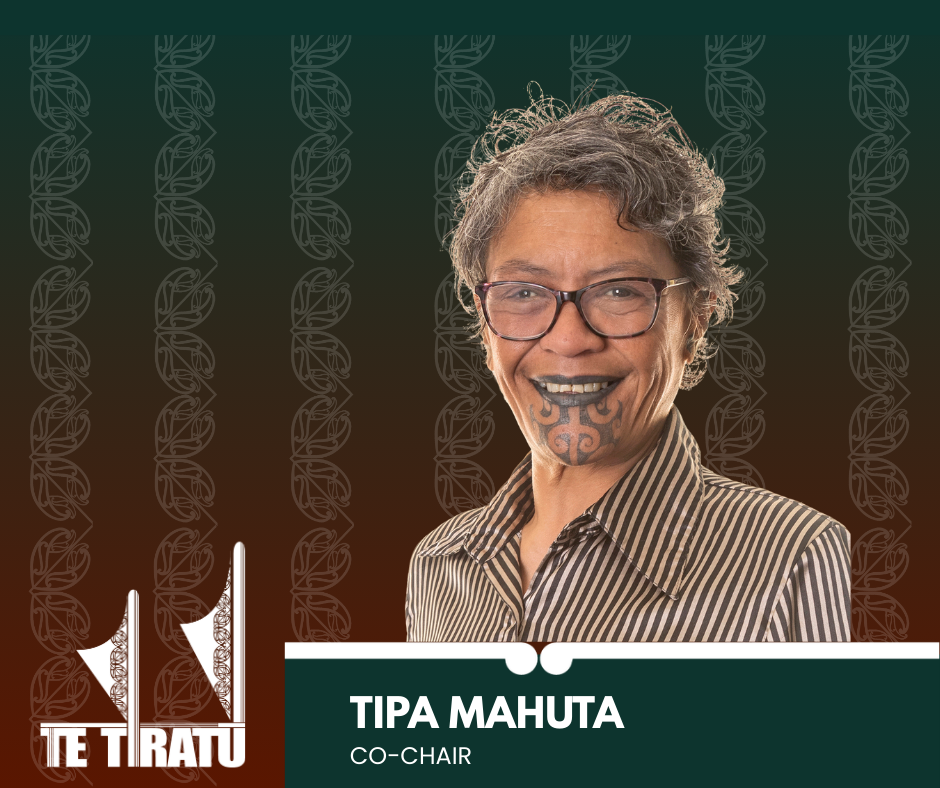
“This government talks about strengthening Māori voices, but these amendments sideline our authority. Iwi Māori Partnership Boards exist to ensure equity and accountability in health not just to provide advice when convenient. We need genuine power, not paper pathways,” said Te Tiratū Co-Chair Tipa Mahuta.
Drawing on the value of locality evidence from its Community Health Plan, Hauora Māori Priorities Summary, and Monitoring Reports on Te Whatu Ora, Te Tiratū believes weakening Section 30 of the Act reduces Māori decision-making, strip Te Tiriti protections, and deepen existing health inequities leading to poorer health outcomes for whānau.
“Our reports clearly show that iwi-led solutions improve access, outcomes, and efficiency across health services. From chronic disease management to cancer screening, the evidence demonstrates that local, Māori-led planning works. Yet the proposed reforms ignore this capability entirely.”
During last night’s debate, Te Pāti Māori MP Hana Maipi-Clark representing the Hauraki-Waikato Māori electorate warned that the Bill removes Māori influence and accountability from health governance.
“Iwi Māori Partnership Boards represent the community voice and Māori-led structures that ensure equity and accountability in our health system and this bill removes their influence.”
“Clause six removes the duty to maintain systems capable of understanding mātauranga Māori, kaupapa Māori services, and cultural safety and clause 33 strips equity and Te Tiriti expertise from public health advisory structures, including the Iwi Māori Partnership Boards. This is not tidying up legislation; it is dismantling accountability.”
Green MP Hūhana Lyndon added that IMPBs were originally designed to co-steer the system alongside Te Aka Whai Ora Māori Health Authority and Te Whatu Ora, but the amendments push them into the “back seat”:
While Labour argued “Why is the Government scared of local health services having to turn up to an iwi board and explain why they are not achieving outcomes for Māori? That is community accountability.”
Te Tiratū Iwi Māori Partnership Board point to the power of locally-led Māori responses during COVID-19 that were faster and more effective than centralised approaches.
“Our work shows the same principle applies across ongoing health inequities: whānau-led, evidence-driven governance delivers results,” Mahuta said.
Te Tiratū emphasises that Māori economic development depends on healthy, supported whānau. Empowered IMPBs drive workforce development, innovation, and local health infrastructure investment, aligning with Government economic goals.
“IMPBs play a critical role in ensuring Māori voices and mātauranga Māori shape health decision-making. Te Tiratū’s monitoring and priority reports provide actionable insights that improve outcomes and deliver stronger returns on taxpayer investment,” Mahuta said.
“The Crown’s duty to partner with iwi under Te Tiriti o Waitangi is non-negotiable. Reducing the role of the IMPBs risks repeating decades of systemic failure and wasted resources.”
12-Month prescriptions risk widening Māori health inequities without safeguards
MEDIA STATEMENT
FOR IMMEDIATE RELEASE
Friday 30 January 2026, 4:00 PM
2 minutes to Read
Te Tiratū Iwi Māori Partnership Board is warning that the introduction of 12-month prescriptions from 1 February 2026 risks increasing under-care, delayed diagnosis, and medicine-related harm for Māori unless strong equity and safety safeguards are put in place.
While Te Tiratū supports efforts to reduce barriers for whānau, Te Tiratū Tumu Whakarae, Brandi Hudson says affordability and convenience alone do not guarantee safe or equitable access to medicines.
“From a Hauora Māori perspective, access to medicines is not a single transaction, it is a continuous pathway of care,” she said. “Any policy change must actively uphold Te Tiriti o Waitangi obligations of partnership, equity and active protection.”
“Partnership means Māori are involved in designing and governing medicines access pathways, not just consulted after decisions are made. Equity requires ensuring Māori have the same access to subsidised medications and support services as others, addressing barriers like transport or culturally appropriate information. Active protection involves monitoring outcomes for Māori and adjusting policy to prevent under-care or delayed treatment,” she said.
The legislative change will allow prescribers to issue prescriptions covering up to 12 months for some medicines, with dispensing continuing in maximum three-monthly periods. Controlled drugs are excluded.
Māori already face significant barriers to accessing medicines. Despite higher rates of chronic conditions such as diabetes, cardiovascular disease, and respiratory illness, Māori are overall less likely to access dispensed medicines than non-Māori.
In some cases, prescriptions are not collected at all due to cost, access, and system barriers. These inequities mean that extending prescription duration alone will not ensure medicines safely reach whānau who need them most.
Dr Leanne Te Karu, expert advisor to Te Tiratū and author of its Tauāki Tū Position Statement on this policy change, says it carries significant risk if implemented without explicit safeguards.
“Māori already experience lower rates of monitoring, fewer proactive clinical reviews, and later diagnosis of chronic and complex conditions,” she said.
“Reducing prescribing touchpoints risks further decreasing opportunities to detect deterioration, review side effects, adjust treatment, or optimise medicines.”
Dr Te Karu warns that assumptions about “clinical stability” may be unsafe in contexts where care is fragmented, monitoring is inconsistent, and social and economic pressures affect medicine use.
“Prescriber discretion and unconscious bias can shape who is deemed ‘stable’.”
“Longer prescription intervals may be framed as empowerment when they instead reflect system withdrawal or under-service. Community pharmacists play a vital role, but they cannot replace comprehensive clinical review and diagnostic reassessment.”
Te Tiratū is calling on the Crown to ensure the implementation of 12-month prescriptions strengthens rather than weakens safety and equity, including through:
• Mandatory, equity-focused monitoring, with prescribing rates disaggregated by ethnicity, rurality, deprivation, disability, and continuity of care
• Transparent reporting of adverse events, hospitalisations, medicine changes, and wastage
• Māori-led evaluation of safety, trust, communication, and cultural safety
• Clear national guidance on who is not clinically appropriate for 12-month prescriptions
• A Te Tiriti-aligned medicines optimisation strategy, grounded in Pae Ora and mātauranga Māori
“Extending prescription duration alone will not improve health outcomes for Māori,” says Brandi Hudson.
“For a small number of whānau, longer prescriptions may be appropriate but only within a broader, equity-led system of care. Without strong safeguards, this policy risks entrenching, rather than reducing, inequity.”
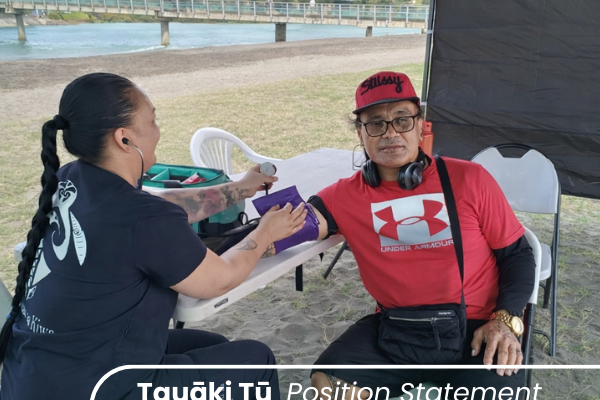
Policy changes to prescription medicines must not place Māori at higher risk of harm or delayed care.
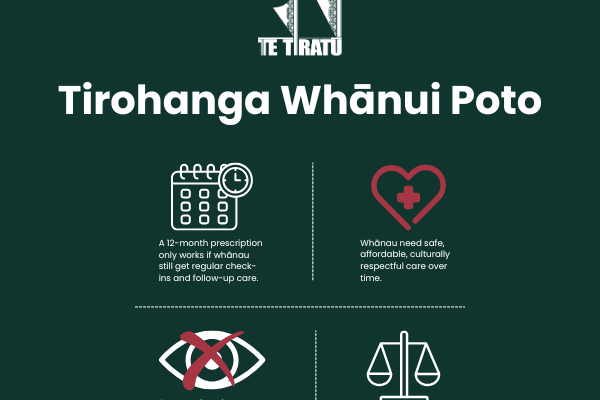
How this change to prescription medicine impacts our whānau from Tainui waka rohe.
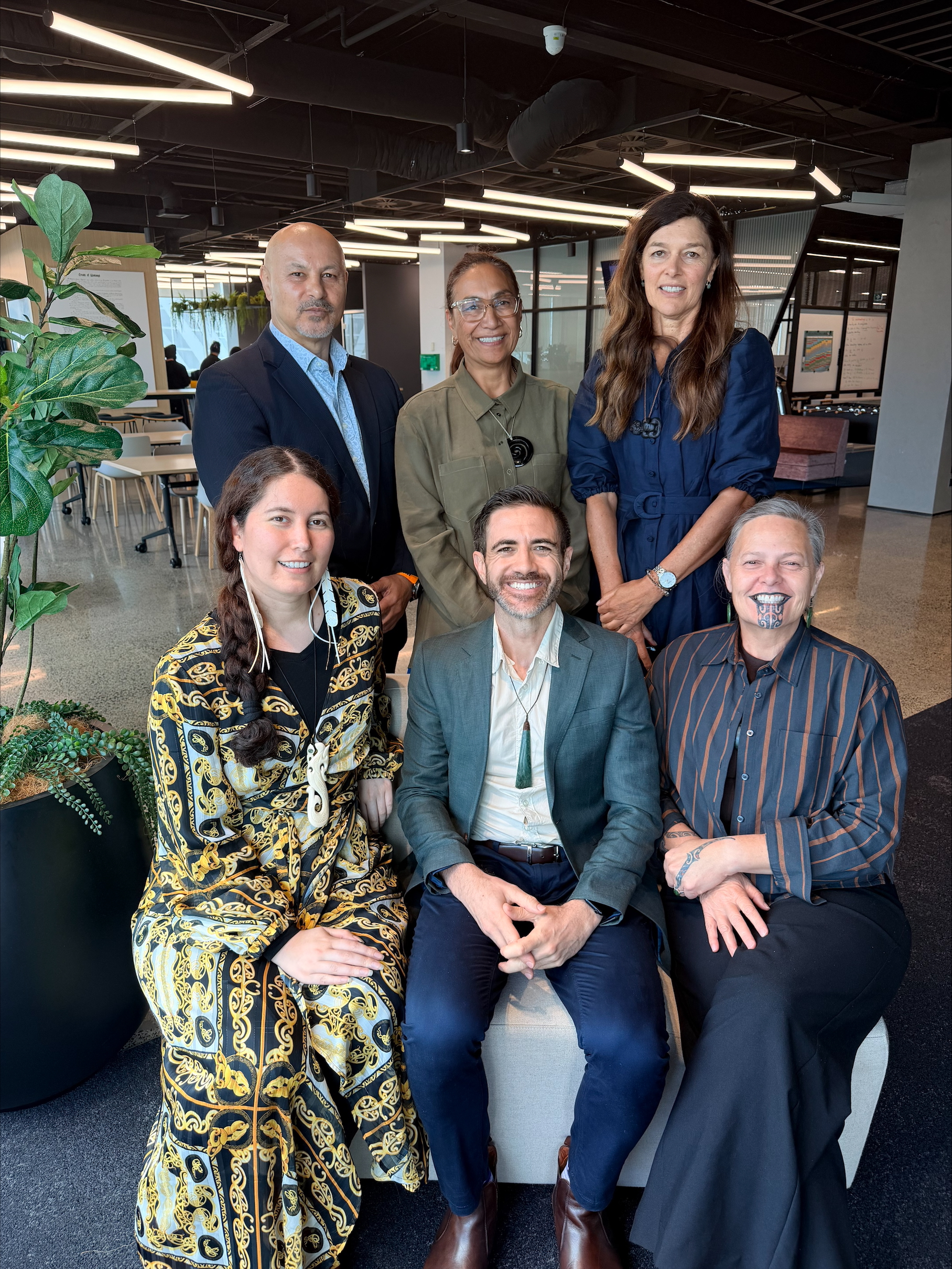
New chair of Whānau Ora investment board across Upper North Island
From left to right (Front): Ernestine Walsh, (Chair) Dr Mataroria Lyndon, Riana Manuel, (Back) Leon Wijohn, (CE) Te Rōpu Poa, Dr Leanne Te Karu.
Te Tiratū Iwi Māori Partnership Board warmly congratulates Dr Mataroria Lyndon, on his appointment as Chair of the Rangitāmiro Whānau Ora Commissioning Agency Investment Board in a region of 2.3 million across the upper North Island.
“Rangitāmōro reflects the collective strength and vision of Te Tiratū Iwi Māori Partnership Board, Ngā Pou Hauora o Tāmaki Makaurau, and the National Hauora Coalition (NHC) who are tripartite partners,” said Glen Tupuhi, co-chair of Te Tiratū Iwi Māori Partnership Board.
“The leadership under Mataroria alongside that of his fellow board members gives us confidence that Rangitāmiro will advance what matters most to our people. The oranga and mana motuhake of whānau living in Te Tai Tokerau to Tūwharetoa, including Tāmaki Makaurau, Waikato and Hauraki.”
This critical leadership role places Dr Lyndon at the centre of strategic investment and assurance for Whānau Ora commissioning in the largest Whānau Ora region of Aotearoa.
Rangitāmiro is one of four newly contracted agencies operating under the Government’s Whānau Ora commissioning model.
The Investment Board is a structural safeguard to provide independent investment advice on how to best distribute funding to meet regional need. It will provide data‑informed direction on priorities, needs analysis, workforce planning and allocative frameworks all designed to strengthen confidence in investment decisions and outcomes.
“What makes this Board particularly significant is the breadth of expertise it brings from across whānau wellbeing, economic development, Hauora, social investment, commercial governance and Mātauranga Māori,” Dr Lyndon said.
“We will provide advice that directly informs commissioning priorities, regional needs analysis and workforce planning – key inputs for disciplined, evidence‑grounded decision‑making.”
The Investment Board’s membership reflects deep regional representation and technical expertise, and includes:
- Dr Mataroria Lyndon, Chairperson (Ngāti Hine, Ngāti Wai, Ngāti Whātua, Waikato‑Tainui)
- Riana Manuel (Ngāti Pūkenga, Ngāti Maru, Ngāti Kahungunu, Ngāti Whanaunga)
- Leon Wijohn (Ngāpuhi, Te Rarawa, Ngāi Tūhoe, Ngāti Tahu‑Ngāti Whaoa)
- Dr Tristram Ingham, KSO, MNZM (Ngāti Kahungunu, Ngāti Porou)
- Ernestynne Walsh (Ngāti Porou,Te Whānau‑a‑Apanui)
- Dr Leanne Te Karu (Ngāti Rangi, Te Ati Haunui-a-Pāpārangi, Muaūpoko)
The Investment Board sets investment priorities that are informed by whānau aspirations and evidence and guides allocative frameworks across the region to maximise both impact and equit
The Board provides strategic advice on a wide range of planning and investment activities, including the three-year Regional Needs Analysis, Investment Plans, and Regional Workforce Plans, while monitoring impact and performance to ensure that public investment delivers real value for whānau and communities.
Rangitāmōro has already contracted 301 kaimahi, including 120 new roles, to meet growing needs across its rohe from Tuwharetoa to the Far North, supported by a Government‑signalled Whānau Ora funding envelope of up to NZ$66,552,000 million per year for region 1 in 2025/26 and beyond.
Dr Lyndon brings significant governance and commercial experience to the role across health, research and governance sectors. He serves on multiple boards, including Rangitāmiro, and Te Tira Tū Iwi Māori Partnership Board, co-founding Tend Health, lecturing at the University of Auckland, and advocating for cultural safety to improve health outcomes, holding degrees from Harvard and Auckland.
His leadership underscores the commitment of Rangitāmiro to rigorous investment planning and assurance processes, in line with TPK’s commissioning model and expectations of arm’s‑length independence.
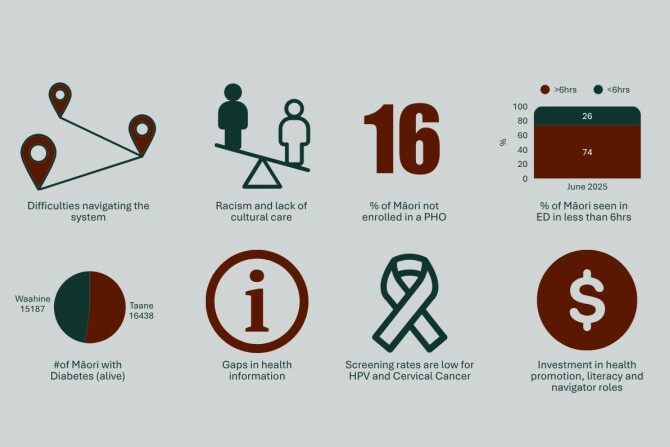
Some gains, many gaps remain for Māori health - System monitoring report
MEDIA STATEMENT
FOR IMMEDIATE RELEASE
Wednesday 3 December 2025, 9:00 AM
2 minutes to Read
Te Tiratū Iwi Māori Partnership Board has released its latest Quarterly Monitoring Report, the second this year reviewing health system performance across the Tainui waka rohe in Waikato.
It builds on its inaugural report from June 2025 representing the interests of 121,000 whānau. While cervical screening rates have improved by 10%, ongoing inequities continue to affect whānau across the rohe.
“Since our first report, there have been small gains in areas like cancer treatment timeliness, but for too many whānau, the health system is still failing,” says Co-Chair Glen Tupuhi of one of the largest of the 15 Iwi Māori Partnership Boards established under the Pae Ora (Healthy Futures) Act.
“We are seeing Māori children fully immunised at just 60.8% far below the 95% target. Emergency department waits remain long, elective surgery delays continue, and access to primary care, especially in rural areas, is a major barrier.”
The report draws on lived experience from Whānau Voice surveys, limited Te Whatu Ora Health New Zealand data, and legislative benchmarks under the Pae Ora (Healthy Futures) Act 2022. Key findings include:
• Cancer treatment timeliness: 95.97% of Māori receive treatment within 31 days of diagnosis, slightly above the national target.
• Elective surgery: 31% of Māori wait more than four months for procedures.
“These numbers tell a clear story: inequity is entrenched and systemic barriers remain. Cost, distance, long wait times, and culturally unsafe services continue to harm whānau,” Tupuhi says.
The report also highlights ongoing gaps in Te Whatu Ora Health New Zealand’s reporting, governance, and partnership with iwi. Hauora Māori providers continue to deliver high-trust, culturally grounded services, but remain constrained by fragmented funding and siloed contracting.
Te Tiratū has shared the report with Te Whatu Ora and the Hauora Māori Advisory Committee, urging the findings to inform immediate action, investment, and policy reform.
“We’ve seen what’s possible when whānau are properly resourced and listened to,” Tupuhi says.
“Programs like Māori-led childhood immunisation show success, and now it’s time to scale that across all areas. Our goal remains a fair, accessible, and equitable health system one that honours Te Tiriti o Waitangi and the rights of our people.”
Background
Locality of Te Tiratū Iwi Māori Partnership Board represents the local Māori voice from:
1. Waikato – Central North Island, extending from the west coast (Raglan) inland to Hamilton and south towards Taupō.
2. Hauraki – Northern Waikato and the Coromandel Peninsula, bordering the Firth of Thames.
3. Maniapoto – Western-central North Island, covering the King Country, including Te Kūiti and Ōtorohanga.
4. Raukawa – South Waikato and central North Island, including Tokoroa, Putāruru, and Tirau.
5. Ngāti Hāua – Western-central North Island, around Taumarunui and the western Ruapehu district.
Rangatahi Māori mental health in rural Waikato is in crisis
MEDIA STATEMENT
FOR IMMEDIATE RELEASE
Tuesday 23 September 2025, 4:00 PM
2 minutes to Read
Despite the government’s ambitious July 2024 mental health and addiction targets, rangatahi Māori in rural Waikato are falling through the cracks. Te Whatu Ora Health New Zealand data with evidence from Te Tiratū Iwi Māori Partnership Board and local whānau voices shows that services are under-resourced, overstretched, and failing to meet the standards set by the government to monitor of health system performance by the Ministry.
National government targets include:
- Faster access to services: 80% of individuals to reach primary mental health and addiction services within one week, and mental health specialist services within three weeks.
- Emergency department efficiency: 95% of mental health-related ED presentations admitted, discharged, or transferred within six hours.
- Workforce development: Train 500 new mental health professionals annually.
- Prevention and early intervention: Allocate 25% of mental health funding to prevention.
Reality on the ground in rural Waikato:
- Over 200 tamariki/rangatahi have open referrals, with waitlists rising steadily since 2023 including 10 per month waiting for ADHD assessments and 21 for other mental health services.
- Frequent crises: Average of 10 crisis contact days per month, with 79 under-25s admitted to Henry Rongomai Bennett Centre since 2021 (average stay 14 days).
- Rural workforce gaps: Schools and providers rely on Police, St John, and Women’s Refuge to manage crises, far beyond their scope. Psychiatrists, psychologists, and counsellors are largely unavailable locally.
- Prevention funding gaps: Iwi- and whānau-led programmes like Hauora Waikato, Te Awhi Whānau, and Puāwai Project are underfunded despite proven success in building resilience and wellbeing.
“Our rangatahi are simply falling through the cracks,” says Brandi Hudson, Te Tumu Whakarae of Te Tiratū IMPB.
“The government has set clear targets, yet in rural Māori communities we are seeing long waits, repeated crises, and preventable hospitalisations. Immediate, targeted, and culturally grounded investment is not optional, it is urgent. I will be raising these issues directly with Minister Doocey when he visits Te Kūiti on Wednesday as part of his Rural Roadshow.”
Te Tiratū is calling on the government to prioritise early intervention and prevention for rural Māori youth, expand workforce capacity in King Country and other rural areas, fully resource iwi- and whānau-led programmes that are already proving effective, and ensure funding reaches the communities most at risk, not just metropolitan centres.
Without urgent action, the mental health crisis among rangatahi Māori will worsen, with devastating long-term consequences for whānau, communities, and the health system.
The Te Tiratū Iwi Maori Partnership Board represents the interests of 121,000 whānau Māori in the Tainui waka rohe and encompasses iwi from Waikato, Pare Hauraki, Raukawa, Te Nehenehenui (Maniapoto), Ngāti Hāua (Taumarunui), and Te Rūnanga o Kirikiriroa (Mātāwaka).
Minister Doocey will be at the Les Munro Centre in Te Kūiti for the Rural Roadshow from 12pm-1.30pm tomorrow.

Our strong warning that rangatahi Māori in rural Waikato are facing a mental health crisis.
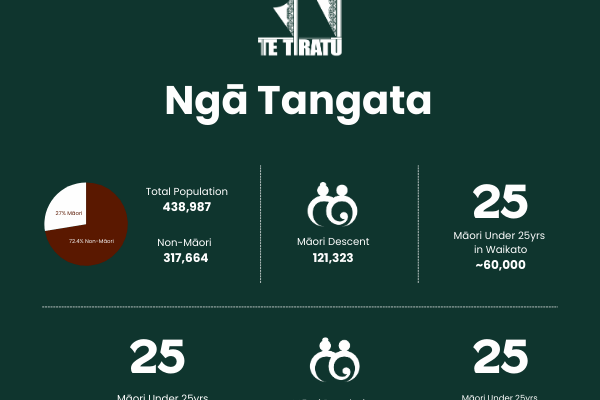
Read the statistics Te Tiratū has gathered specifically for our Tainui waka rohe.
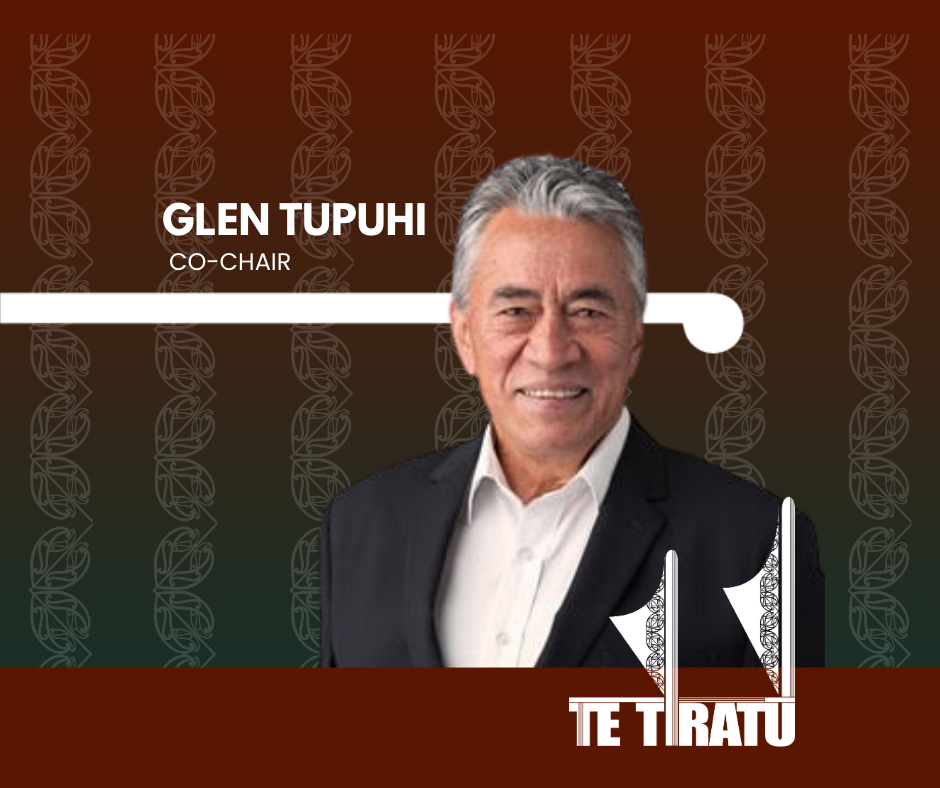
Glen Tupuhi appointed Co-Chair of Te Tiratū Iwi Māori Partnership Board
MEDIA STATEMENT
FOR IMMEDIATE RELEASE
Tuesday 23 September 2025, 9:00 AM
2 minutes to Read
Te Tiratū Iwi Māori Partnership Board (IMPB) representing 121,000 whānau across the Tainui waka region and one of the largest of the 15 Iwi Māori Partnership Boards established under the Pae Ora (Healthy Futures) Act is pleased to announce the appointment of Glen Tupuhi as Co-Chair.
He replaces Hagen Tautari, who has provided strong leadership and guidance governing to date. Tipa Mahuta, current Co-Chair, expressed her gratitude for Hagen’s service.
“On behalf of Te Tiratū IMPB, we sincerely thank Hagen Tautari for his dedication and commitment to the kaupapa, our whānau, and the wider Māori community. We are delighted to acknowledge Glen Tupuhi as our new Co-Chair and look forward to his leadership in guiding the Board forward,” she said.
From his time as chair of the Murihiku Māori Health Committee of the Southland Area Health Board in the mid 1980’s Glen brings over 35 years of governance experience across the Māori development, health, education, and justice sectors. His extensive background includes Iwi Hapuu Marae leadership roles as well as managerial roles in Oranga Tamariki, Corrections, Health Waikato, Hauora Waikato, and Te Rūnanga o Kirikiriroa. He has also served on the Auckland Council Independent Māori Statutory Board and the Māori Economic Development Panel.
Currently, he holds multiple governance roles, including:
- Independent Director, Winton Lands Ltd
- Board Member, Te Korowai Hauora o Hauraki and the Hauraki PHO
- Chair, Hauraki Localities Alliance
- Until recently Trustee of Ecoquest Education Foundation PTE and chair, Ngaa Muka Development Trust
A seasoned leader in integrating cultural perspectives with commercial decision-making, as chair of Ngaa Muka Glen has successfully guided iwi partnerships in projects across North Waikato such as Cobb Vantress chicken breeding plant, Lakeside development in Te Kauwhata and the initial establishment of the Sleepyhead Estate at Ohinewai, a $1.2 billion mixed-use industrial and residential development in North Waikato.
Glen’s iwi affiliations include Ngāti Pāoa ki Waiheke, Tamaki Makaurau, Hauraki, Waikato, Ngāti Hine, Ngāti Naho o Waikato, Ngāti Rangimahora, and Ngāti Apakura. His leadership philosophy emphasizes collaboration, strategic oversight, and creating sustainable opportunities for whānau and communities.
In addition to his professional and governance work, Glen continues to support whānau trusts and philanthropic initiatives, including the Whakatupu Aotearoa Foundation, fostering system-level change for communities and the environment in Aotearoa.
His appointment reflects Te Tiratū IMPB’s ongoing commitment to strong, culturally-informed governance, and the Board looks forward to the expertise, guidance, and leadership he will bring in advancing the aspirations of iwi and whānau across the region.
The Board encompasses iwi from:
- Waikato
- Pare Hauraki
- Raukawa
- Te Nehenehenui (Maniapoto)
- Ngāti Hāua (Taumarunui)
- Te Rūnanga o Kirikiriroa (Mātāwaka)