MEDIA STATEMENT
FOR IMMEDIATE RELEASE
Monday 28 September 2026, 10:00AM
2 minutes to Read
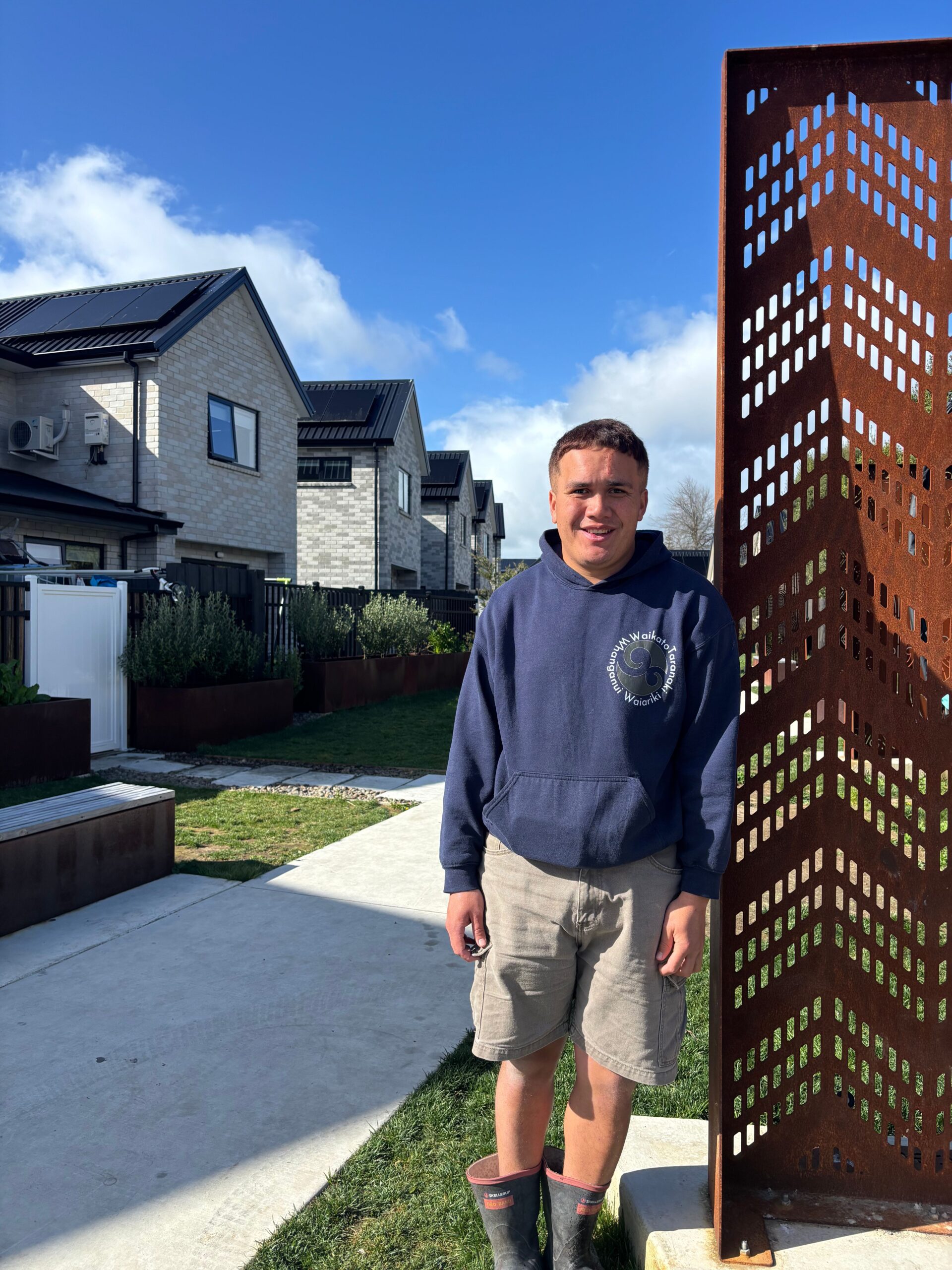
Photo: Sammo Hall, Te Rūnanga O Kirikiriroa Kaitiaki Grounds Keeper Enderley Papapakainga
Te Tiratū Iwi Māori Partnership Board representing 121,000 Māori in Tainui waka rohe challenges political leaders to put healthy homes and Māori-led housing at the centre of the next government’s agenda.
It is calling on political leaders across the House to recognise housing as a fundamental health issue and commit to practical action to ensure whānau across the Waikato, Hauraki, Maniapoto, Raukawa and Ngāti Hauā rohe have safe, affordable and secure homes.
Releasing its Tauāki Tū Position Statement on Housing today, the paper shows where whānau live, the quality of their home and their ability to afford it directly affects their health and wellbeing.
“A decent home is not simply a roof over someone’s head. It is health infrastructure,” says Wayne Knox, an experienced technical expert engaged by Te Tiratū to produce the analysis.
“Cold, damp, overcrowded and unaffordable housing creates pressure on whānau and the health system. If we are serious about improving health outcomes, housing has to be part of the solution.”
The latest data reveals almost one in four Māori report living in crowded housing, compared with 8.8 percent of non-Māori. Forty-five percent report living in damp housing and 37.2 percent report mould in their home.
An estimated 4,311 Māori in the Waikato Region are severely housing deprived or homeless, while Māori accounted for 64 percent of Housing Register applications in the HUD Waikato operational region as at September 2025.
At the same time, housing supply is not keeping pace with demand. The Waikato Region had an estimated housing shortfall of 7,240 homes in 2023, with average annual housing demand projected at 2,860 homes through to 2043.
Te Tiratū says these figures should not be treated simply as housing statistics.
“When whānau have to choose between paying the rent, keeping the power on, buying food, getting to work or seeing a doctor, housing becomes a health issue,” says Knox.
The position statement calls for action across six strategic pou Knox has devised. They include: reducing housing insecurity, ensuring safe housing for whānau in greatest need, improving the health and quality of existing homes, addressing rural isolation, improving affordability and pathways to Māori home ownership, and enabling Māori-led kāinga development.
Te Tiratū wants greater recognition by policymakers of the needs of rural whānau. Around 38 percent of Māori in the former Waikato DHB area live rurally, where distance, transport and limited access to services can compound housing and health pressures.
Māori-led housing must also be central to the response. The Government’s current housing framework recognises Māori-led housing through the MAIHI approach and identifies Māori-led local solutions, housing supply and the removal of systemic barriers as priorities. Government funding since December 2023 has included $426 million approved for Māori-led delivery of around 1,000 homes.
The challenge now, according to Te Tiratū is to deliver policy that reflects local needs.
“Iwi, hapū, Māori landowners and Māori providers are best placed to develop kāinga that reflect the realities of whānau, cultural identity and connection to whenua,” Knox says.
“We tautoko iwi and Māori organisations that are already delivering effective housing solutions. What is needed now is the investment and resources to scale that work and house the many whānau who have spent generations in unhealthy homes, or who have been displaced by extreme weather events.”
“Government needs to work with Māori to remove the barriers that prevent that happening, including infrastructure, planning, consenting and financing barriers.”
With approximately 365,992 hectares of Māori freehold land and land held by post-settlement governance entities within the wider Waikato rohe, Te Tiratū says there is significant potential for Māori-led housing and whenua development, provided the infrastructure and enabling investment are available.
As political parties set out their priorities ahead of the 7 November general election, one of the largest Iwi Māori Partnership Boards is calling for housing and health to be considered together, rather than as separate policy portfolios.
“It’s not simply how many houses will be built. It’s whether the homes being delivered will enable whānau to be healthy, secure and connected, and whether Māori will have the ability to lead solutions on their own whenua.”
The paper calls for sustained, coordinated action across central and local government, the health and housing sectors, iwi, hapū, Māori providers and communities.