MEDIA STATEMENT
FOR IMMEDIATE RELEASE
Friday 3 July 2026, 10:00AM
2 minutes to Read
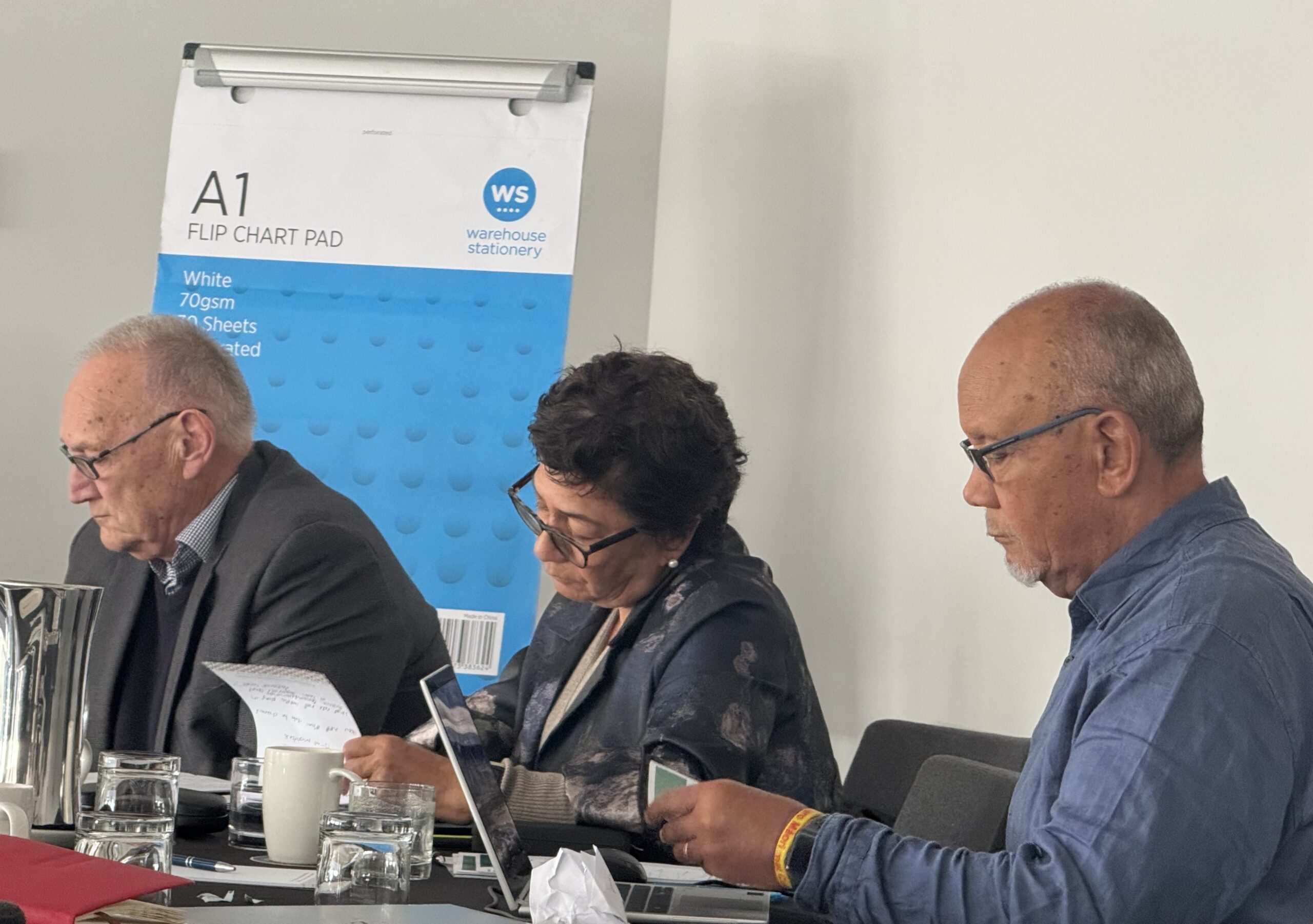
Photo, left to right: Hauora Māori Advisory Committee Chair Tā Mark Solomon, Amohaere Houkamau and Te Ururoa Flavell.
Iwi Māori Partnership Boards (IMPBs) and the Hauora Māori Advisory Committee (HMAC) have agreed to reset their working relationship following changes to the Pae Ora legislation, with IMPBs pushing for system responsiveness to whānau voice to become a formal, monitored measure.
The move follows a shared frustration. IMPBs say they are generating strong evidence and community health plans, but that this isn’t consistently translating into system decisions.
“Whānau Voice is our core asset. We are capturing it, codifying it and presenting it clearly through our community health plans and engagement systems, but too often it is not reflected back in system decisions,” IMPB representatives said.
One account by a kaumātua from Te Wai Pounamu on long-term travel for dialysis captured the human cost of the gap between evidence and action. “The treatment won’t kill me, but the travel will,” he said pointing to the cumulative burden of distance and cost on whānau in remote communities.
IMPBs said in some areas whānau cannot be confident they will be born or die on their own whenua, due to service access gaps. Boards across all regions raised consistent barriers: access to services, rurality, workforce shortages, and travel costs.
They also flagged contracting uncertainty as urgent, delays in signed agreements, no assurance for the new financial year, and repeated cancellations of engagement processes and called for longer, more stable multi-year contracts for Hauora Māori providers.
Data sovereignty was another flashpoint, with boards investing in their own data systems and demanding clearer governance and ownership of Māori data. IMPBs also warned that the system’s shift toward deprivation-based measures risks making Māori health inequities less visible.
HMAC, whose influence runs through direct engagement with the Health Minister and the Health New Zealand Board, acknowledged the gap and conceded it needs to sharpen how it packages advice for decision-makers and close the loop back to IMPBs.
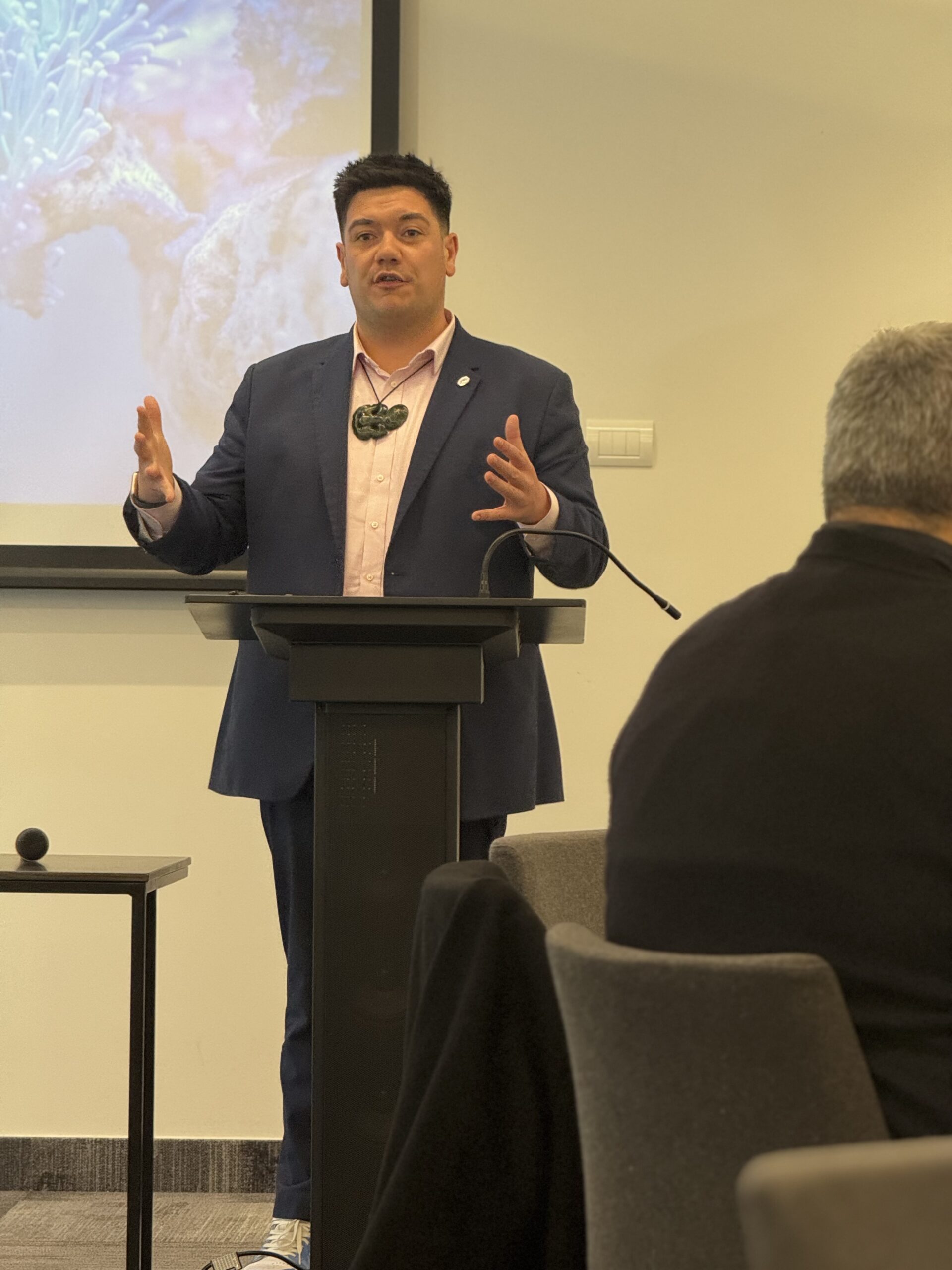
Photo: Elijah Pue, Tumu Whakarae of Te Mātuku Iwi-Māori Partnership Board, a Whanganui rohe iwi-Māori Partnership Board.
“We have heard clearly that there is strong alignment across IMPBs, but we also recognise we need to be sharper in how we translate that into advice that lands, and how we report back on what happens as a result,” HMAC members said.
Both parties agreed to make system responsiveness to whānau voice a formal monitoring focus. Four models for structuring the relationship were discussed, a kawenata (formal covenant), a board-to-board mechanism, a regional reflection-based approach, and regionally tailored arrangements, with HMAC to engage regionally on which model boards prefer rather than imposing one.
A practical first step was agreed. That HMAC will spend a dedicated day in each region, combining collective and one-on-one sessions with individual boards, backed by a planned engagement calendar.
Three enablers were identified as necessary: a national secretariat and policy function (funding and governance still to be settled), strategic national hui timed to influence decisions particularly budget cycles, rather than serve as updates, and a predictable reporting cadence with advance notice to IMPBs ahead of HMAC’s engagements with the Minister.
“We are on the same side of this mahi,” IMPB representatives said. “The measure of success over the next 12 months will be whether Whānau Voice is clearly reflected in decisions and whether the system responds in ways that can be seen and felt in communities.”
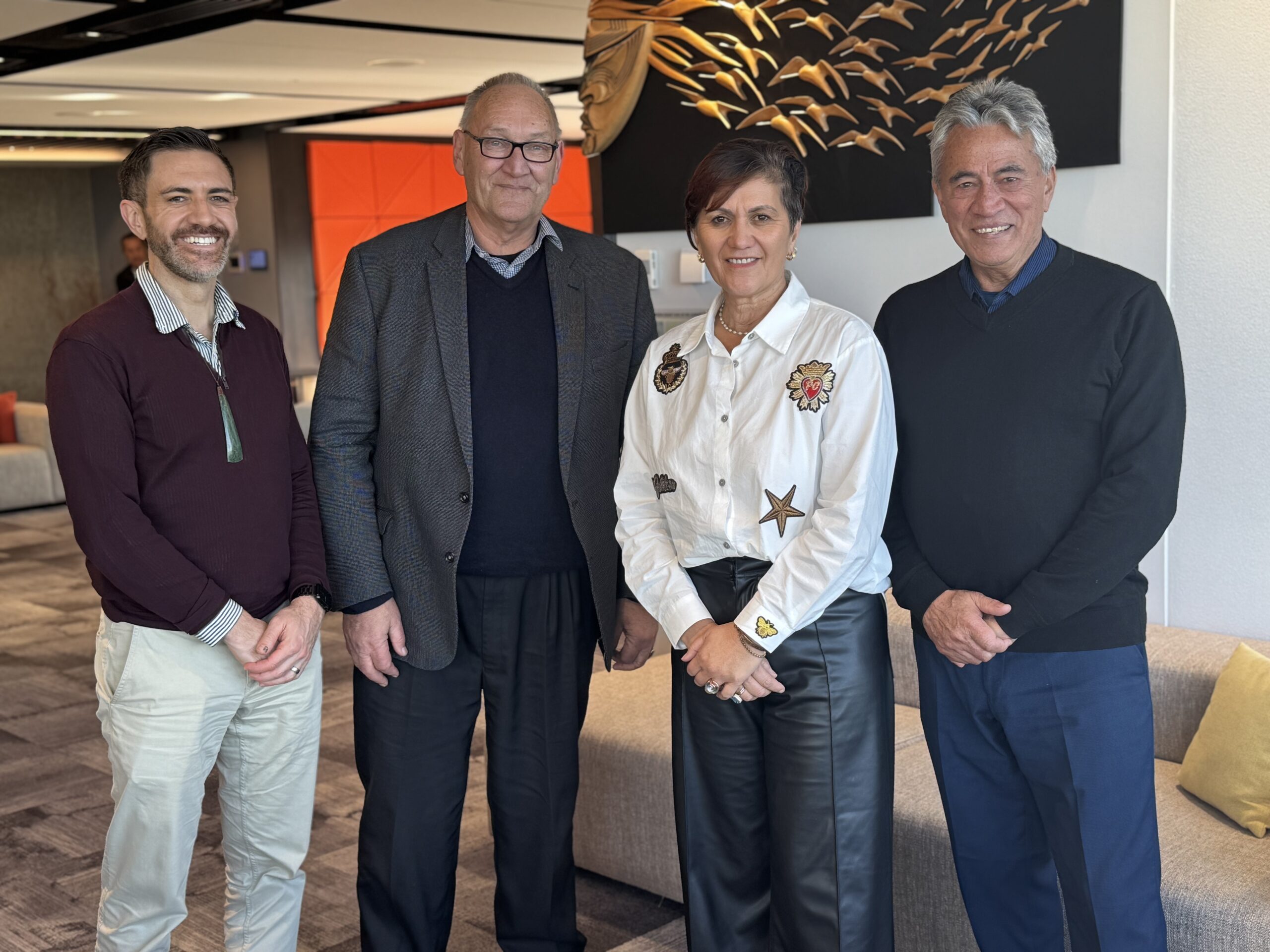
Photo, left to right: Te Tiratū Iwi Māori Partnership Board member Dr Mataroria Lyndon, Hauora Māori Advisory Committee Chair Tā Mark Solomon, Te Tiratū Iwi Māori Partnership Board Tumu Whakarae Brandi Hudson, and Te Tiratū Iwi Māori Partnership Board Co-chair Glen Tupuhi.