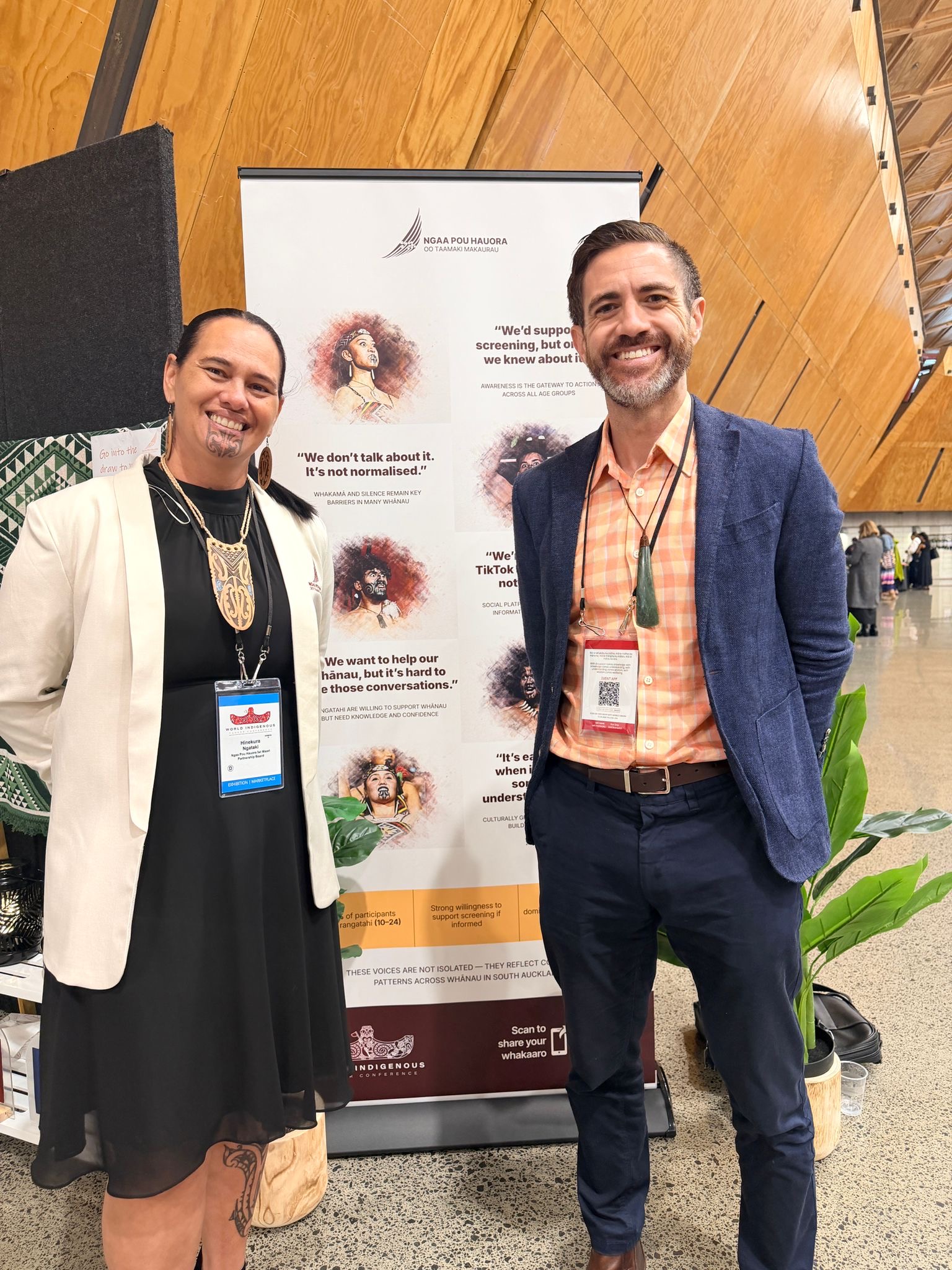
Photo: Hinekura Ngataki, Principal Lead Health Sector and Clinical Engagement Kaitohutohu Clinical Advisor at Ngaa Pou Hauora oo Taamaki Makaurau Iwi Maaori Partnership Board with Dr Mataroria Lyndon, board member of Te Tiratū Iwi Māori Partnership Board.
Indigenous leaders, clinicians, researchers, community voices and Iwi Māori Partnership Boards, including Te Tiratū, have gathered in Tāmaki Makaurau for the 2026 World Indigenous Cancer Conference, hosted by Hei Āhuru Mōwai Māori Cancer Leadership Aotearoa.
It is the first time the global event has been held in Aotearoa. It brings a clear and urgent message, that the solutions to cancer inequities already exist and now it is time to act on them consistently to change our health system.
For Māori, the urgency is clear. We are more likely to be diagnosed with cancer and twice as likely to die from it. These inequities are long-standing and well understood. What is needed now is not more evidence of the problem, but commitment to implementing solutions.
One of our board members, Dr Mataroria Lyndon, attended the opening day. “The kaupapa goes beyond cancer. It is about equity, rangatiratanga and ensuring whānau are not left behind. The challenge is no longer identifying what needs to change but having the courage and accountability to make it happen.”
He believes we need to turn global learning into local action so that our next generation experiences a system that works for them, not against them.
Lived experiences shared at the conference reinforced how the system continues to fail whānau. Professor Jackie Kidd spoke about her Stage 4 bowel cancer diagnosis, highlighting how delayed screening and policy settings contributed to late detection. Sir Collin Tukuitonga also shared how difficult it was to navigate the system, despite decades of experience in health. Both stories pointed to the same issue: a system that is not designed around whānau needs.
A clear direction emerged. Stop researching barriers. Start implementing what works. That means placing mātauranga Māori at the centre of care, recognising rongoā Māori as part of prevention and wellbeing, and designing services that are whānau-centred and culturally grounded. It also means ensuring information is accessible and delivered in ways that connect with communities.
Practical examples showed what this can look like. Mobile screening services demonstrated how care can be brought closer to communities, removing access barriers. A dedicated rongoā Māori space reflected a more holistic approach to health that supports both prevention and healing.
International experience showed that change is possible. In Australia, Indigenous-led smoking programmes have significantly reduced smoking rates and helped tens of thousands of people quit. Across the Pacific, HPV vaccination programmes are showing early success.
However, many communities still face high tobacco use, limited screening access and increasing cancer rates, particularly where poverty and food environments are driving poor health outcomes.
Indigenous data sovereignty was also identified as critical, ensuring communities control how their data is used to shape better outcomes.
“Lasting change depends on genuine partnerships. These must be built on trust, shared decision-making and Indigenous leadership, not short-term or transactional approaches,” Dr Lyndon said.
“This conference comes at a critical time, as the Cancer Action Plan reaches its midpoint. Ongoing issues, such as screening age thresholds for Māori, highlight where equity has not yet been achieved and where action is needed.”