

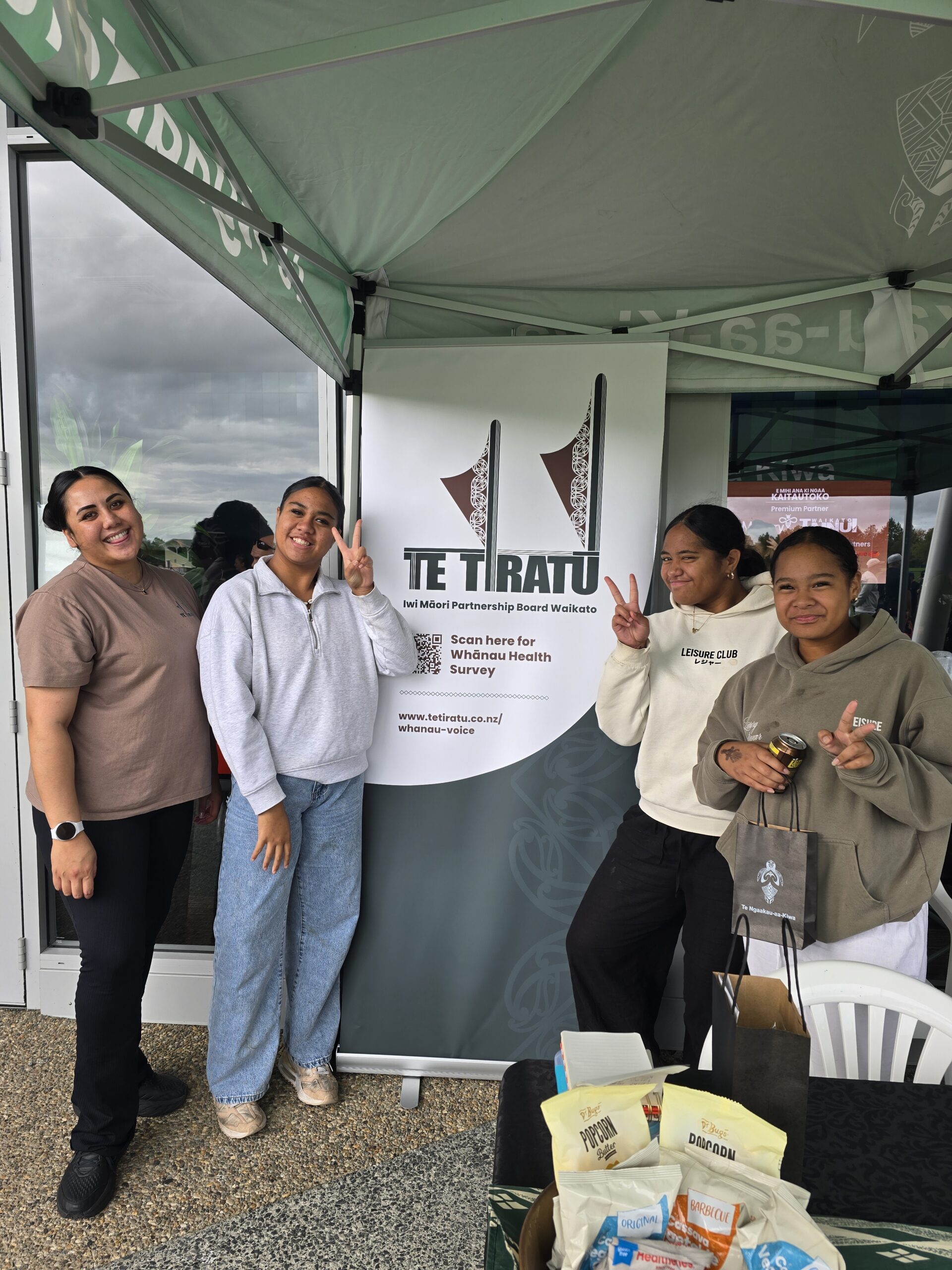
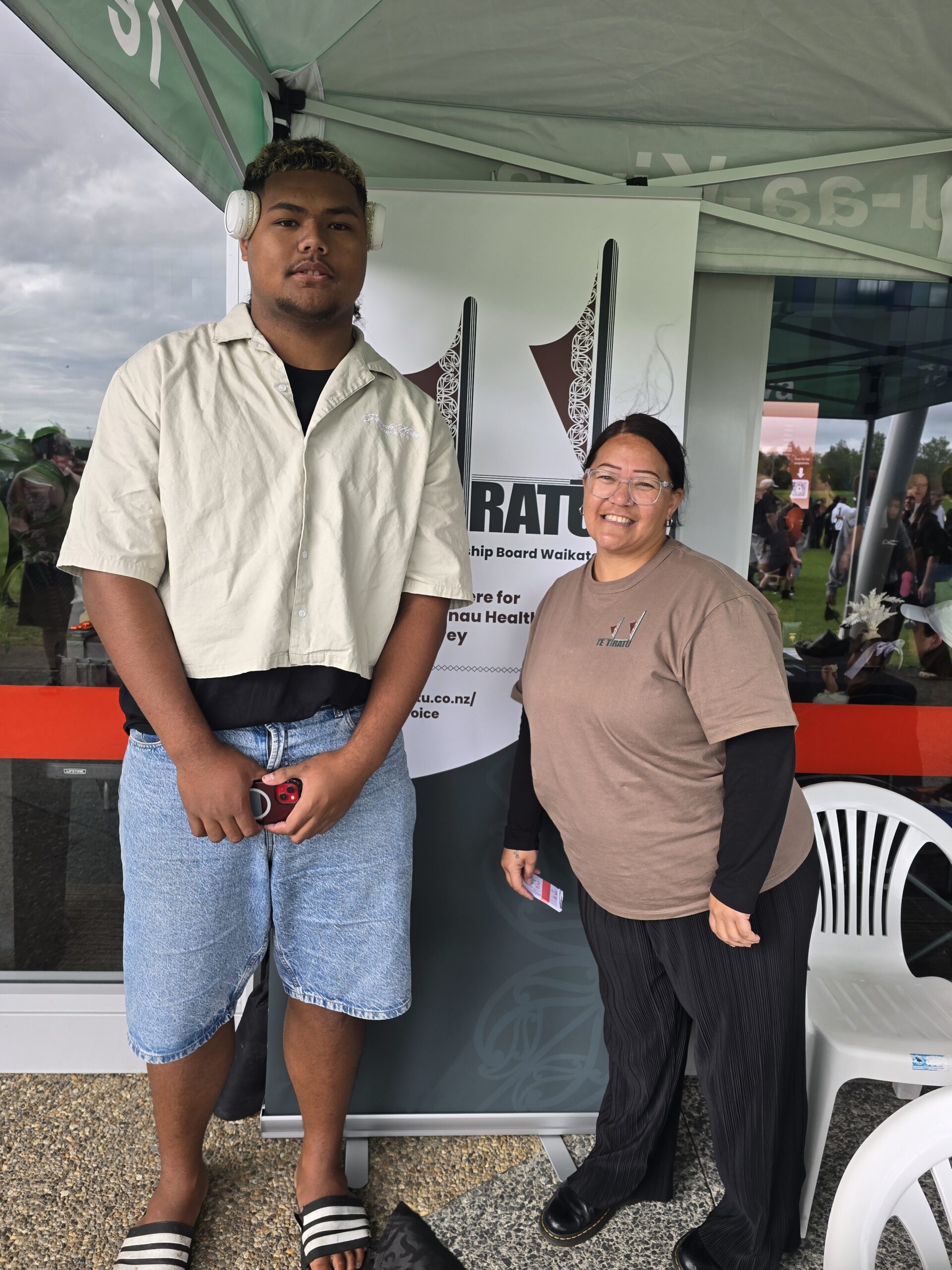
Across two days at the Tainui Senior Regional Kapa Haka Competition at Claudelands, our Whānau Voice team stood alongside our people, kanohi ki te kanohi, listening to the lived realities behind the performances.
Whānau showed up not just to tautoko their rōpū, but to share their experiences. Our Whānau Voice team completed more than 80 surveys across the two days, including rangatahi voices. Most who engaged were wāhine, with strong representation from Kirikiriroa and across the wider rohe, all connected through whakapapa to Tainui and many other iwi. Beneath the numbers were honest kōrero about what it takes to stay well right now.
Across both days, the same pressures came through clearly. The cost of living and transport are shaping everyday decisions for whānau. Whānau spoke about the difficulty of affording petrol just to get to appointments, and the rising cost of kai making it harder to feed their families well. These pressures are constant, and they are directly affecting access to care.
At the same time, whānau were clear about what is working. Our local Kaupapa Māori provider services, especially Te Kōhao Health in Kirikiriroa and Ngā Miro Health Centre in Ngāruawāhia, were spoken about with real appreciation.
Whānau described care that is affordable, accessible and grounded in respect. They spoke about being able to get appointments, about manageable costs, and about clinicians who take time to understand and treat the issue properly. There was a strong sense of trust and cultural safety. Other providers such as Ngaa Ringa Āwhina and Tui Medical were also valued, though wait times were more of a challenge, particularly for those outside of Hamilton, where delays of several weeks were common.
Delays Stretch into Years
Even with these positives, system pressures were clear. Wait times for specialist appointments and elective surgeries came through as one of the biggest barriers. For some, these delays stretch into years, particularly for procedures like hip and knee replacements. Whānau also spoke about not always understanding the advice they receive, showing that access alone is not enough.
Health concerns reflected what many communities are facing. Respiratory conditions, type 2 diabetes, cardiovascular issues, cancer, dental health, addiction and mental health were all raised. Tamariki and rangatahi wellbeing featured strongly, as did the health of māmā and pēpi. Most whānau said they were able to access care, but the pathway to get there was often difficult.
The stories behind the surveys brought these realities into focus. One Kuia shared her experience of waiting two years for surgery, followed by more than a year for proper follow up care. By the time she was seen again, infection and nerve damage had set in, leaving her without feeling in her foot and unable to work after decades as a truck driver. Her story reflects the cost of delay, where health impacts extend into every part of life.
Another young Māmā spoke about raising her pēpi in damp transitional housing that is difficult to keep warm and poorly ventilated. One of her children is immunocompromised and living with kidney failure, yet the home itself is contributing to ongoing illness. Despite raising concerns, she has been told to accept the situation or leave. For her, the system meant to support her is adding to the burden she carries.
The Lengths Whānau Go to for Treatment
A further kōrero highlighted the lengths whānau are going to in order to access timely care. One wahine diagnosed with kidney cancer withdrew nearly $50,000 from her KiwiSaver to access surgery privately within weeks, rather than wait months in the public system. She spoke about how complex the system was to navigate and how critical it was to have her sister, a nurse, alongside her to help guide each step.
Another tāne shared that he continues to travel long distances to see his doctor in another region, rather than transfer closer to home, out of fear of losing his place on a surgical waitlist. His experience reflects a system where certainty cannot be taken for granted.
Housing also came through as a key issue. One wahine spoke about living in a cold, damp home where she cannot afford to run the heat pump, relying instead on layers and hot water bottles. These everyday realities sit directly alongside health outcomes.
There were also stories of resilience, alongside a loss of trust. One Māmā described feeling judged by hospital staff when repeatedly seeking care for her pēpi. That experience led her to turn to rongoā Māori, which she now uses to care for her tamariki. At the same time, she is navigating her daughter’s mental health journey with support from a school-based social worker, learning to listen and support in new ways.
Rangatahi voices added another layer. Many spoke about the importance of sport, kapa haka and whānau connection in supporting their wellbeing. At the same time, their biggest concerns were having enough kai at home, mental health, feeling safe and education. While most felt able to access health services, their priorities reflect the broader conditions shaping their lives.
Across both days, whānau were clear about what is working, and they know where the system is falling short. They are navigating barriers with resilience, but they are also clear about what needs to change.
The Whānau Voice team will continue to gather and uplift these kōrero to decisionmakers, ensuring that the voices of our whānau are heard loud and clear.