
MEDIA STATEMENT
FOR IMMEDIATE RELEASE
Friday 30 January 2026, 4:00 PM
2 minutes to Read

Te Tiratū Iwi Māori Partnership Board is warning that the introduction of 12-month prescriptions from 1 February 2026 risks increasing under-care, delayed diagnosis, and medicine-related harm for Māori unless strong equity and safety safeguards are put in place.
While Te Tiratū supports efforts to reduce barriers for whānau, Te Tiratū Tumu Whakarae, Brandi Hudson says affordability and convenience alone do not guarantee safe or equitable access to medicines.
“From a Hauora Māori perspective, access to medicines is not a single transaction, it is a continuous pathway of care,” she said. “Any policy change must actively uphold Te Tiriti o Waitangi obligations of partnership, equity and active protection.”
“Partnership means Māori are involved in designing and governing medicines access pathways, not just consulted after decisions are made. Equity requires ensuring Māori have the same access to subsidised medications and support services as others, addressing barriers like transport or culturally appropriate information. Active protection involves monitoring outcomes for Māori and adjusting policy to prevent under-care or delayed treatment,” she said.
The legislative change will allow prescribers to issue prescriptions covering up to 12 months for some medicines, with dispensing continuing in maximum three-monthly periods. Controlled drugs are excluded.
Māori already face significant barriers to accessing medicines. Despite higher rates of chronic conditions such as diabetes, cardiovascular disease, and respiratory illness, Māori are overall less likely to access dispensed medicines than non-Māori.
In some cases, prescriptions are not collected at all due to cost, access, and system barriers. These inequities mean that extending prescription duration alone will not ensure medicines safely reach whānau who need them most.
Dr Leanne Te Karu, expert advisor to Te Tiratū and author of its Tauāki Tū Position Statement on this policy change, says it carries significant risk if implemented without explicit safeguards.
“Māori already experience lower rates of monitoring, fewer proactive clinical reviews, and later diagnosis of chronic and complex conditions,” she said.
“Reducing prescribing touchpoints risks further decreasing opportunities to detect deterioration, review side effects, adjust treatment, or optimise medicines.”
Dr Te Karu warns that assumptions about “clinical stability” may be unsafe in contexts where care is fragmented, monitoring is inconsistent, and social and economic pressures affect medicine use.
“Prescriber discretion and unconscious bias can shape who is deemed ‘stable’.”
“Longer prescription intervals may be framed as empowerment when they instead reflect system withdrawal or under-service. Community pharmacists play a vital role, but they cannot replace comprehensive clinical review and diagnostic reassessment.”
Te Tiratū is calling on the Crown to ensure the implementation of 12-month prescriptions strengthens rather than weakens safety and equity, including through:
• Mandatory, equity-focused monitoring, with prescribing rates disaggregated by ethnicity, rurality, deprivation, disability, and continuity of care
• Transparent reporting of adverse events, hospitalisations, medicine changes, and wastage
• Māori-led evaluation of safety, trust, communication, and cultural safety
• Clear national guidance on who is not clinically appropriate for 12-month prescriptions
• A Te Tiriti-aligned medicines optimisation strategy, grounded in Pae Ora and mātauranga Māori
“Extending prescription duration alone will not improve health outcomes for Māori,” says Brandi Hudson.
“For a small number of whānau, longer prescriptions may be appropriate but only within a broader, equity-led system of care. Without strong safeguards, this policy risks entrenching, rather than reducing, inequity.”
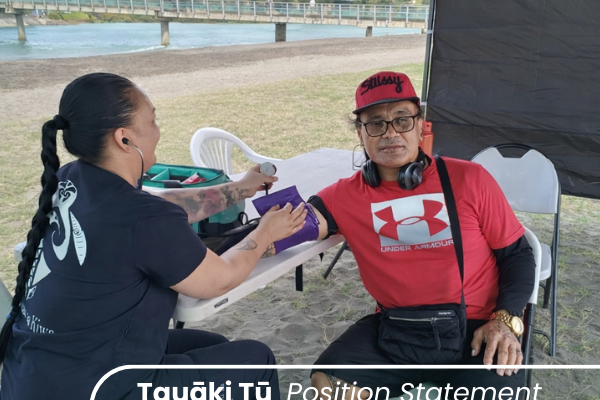
Policy changes to prescription medicines must not place Māori at higher risk of harm or delayed care.
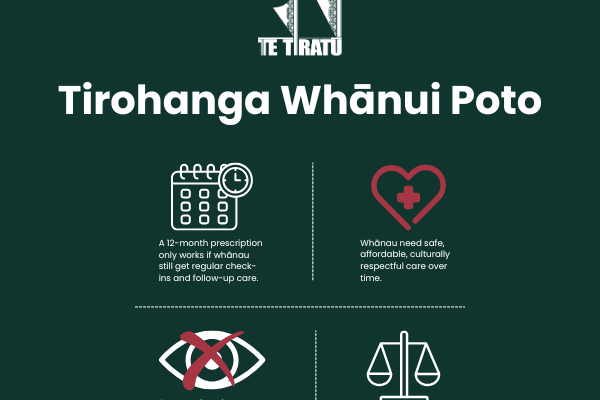
How this change to prescription medicine impacts our whānau from Tainui waka rohe.