MEDIA STATEMENT
FOR IMMEDIATE RELEASE
Wednesday 3 December 2025, 9:00 AM
2 minutes to Read
Te Tiratū Iwi Māori Partnership Board has released its latest Quarterly Monitoring Report, the second this year reviewing health system performance across the Tainui waka rohe in Waikato.
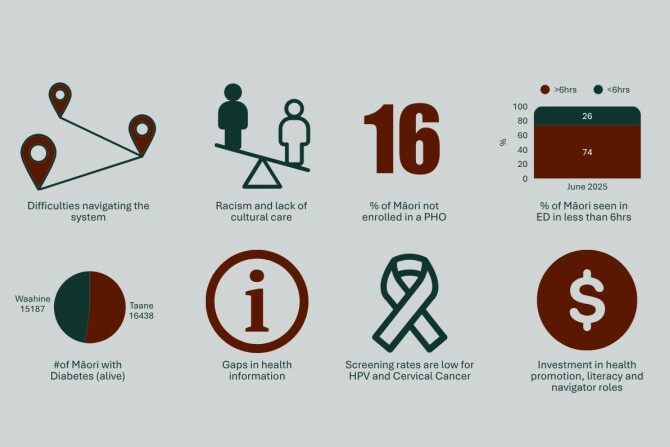
It builds on its inaugural report from June 2025 representing the interests of 121,000 whānau. While cervical screening rates have improved by 10%, ongoing inequities continue to affect whānau across the rohe.
“Since our first report, there have been small gains in areas like cancer treatment timeliness, but for too many whānau, the health system is still failing,” says Co-Chair Glen Tupuhi of one of the largest of the 15 Iwi Māori Partnership Boards established under the Pae Ora (Healthy Futures) Act.
“We are seeing Māori children fully immunised at just 60.8% far below the 95% target. Emergency department waits remain long, elective surgery delays continue, and access to primary care, especially in rural areas, is a major barrier.”
The report draws on lived experience from Whānau Voice surveys, limited Te Whatu Ora Health New Zealand data, and legislative benchmarks under the Pae Ora (Healthy Futures) Act 2022. Key findings include:
• Cancer treatment timeliness: 95.97% of Māori receive treatment within 31 days of diagnosis, slightly above the national target.
• Elective surgery: 31% of Māori wait more than four months for procedures.
“These numbers tell a clear story: inequity is entrenched and systemic barriers remain. Cost, distance, long wait times, and culturally unsafe services continue to harm whānau,” Tupuhi says.
The report also highlights ongoing gaps in Te Whatu Ora Health New Zealand’s reporting, governance, and partnership with iwi. Hauora Māori providers continue to deliver high-trust, culturally grounded services, but remain constrained by fragmented funding and siloed contracting.
Te Tiratū has shared the report with Te Whatu Ora and the Hauora Māori Advisory Committee, urging the findings to inform immediate action, investment, and policy reform.
“We’ve seen what’s possible when whānau are properly resourced and listened to,” Tupuhi says.
“Programs like Māori-led childhood immunisation show success, and now it’s time to scale that across all areas. Our goal remains a fair, accessible, and equitable health system one that honours Te Tiriti o Waitangi and the rights of our people.”
Background
Locality of Te Tiratū Iwi Māori Partnership Board represents the local Māori voice from:
1. Waikato – Central North Island, extending from the west coast (Raglan) inland to Hamilton and south towards Taupō.
2. Hauraki – Northern Waikato and the Coromandel Peninsula, bordering the Firth of Thames.
3. Maniapoto – Western-central North Island, covering the King Country, including Te Kūiti and Ōtorohanga.
4. Raukawa – South Waikato and central North Island, including Tokoroa, Putāruru, and Tirau.
5. Ngāti Hāua – Western-central North Island, around Taumarunui and the western Ruapehu district.