
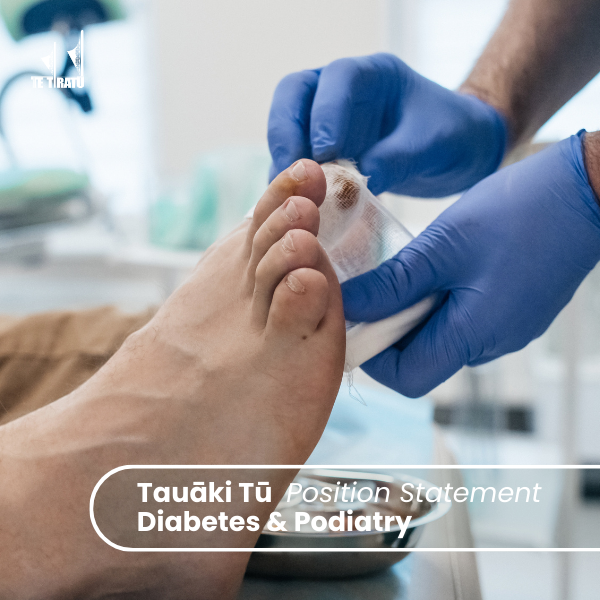
Te Tiratū Iwi Māori Partnership Board believes Diabetes-related foot disease is costing Māori their limbs, independence, and lives and driving millions in avoidable hospital costs. In the Waikato and wider Te Tiratū rohe, Māori are losing limbs at rates far higher than non-Māori.
Te Tiratū Iwi Māori Partnership Board calls for urgent action: expanding access to podiatry as both a Te Tiriti obligation and a smart investment that prevents amputations, restores mobility, and strengthens mana motuhake for whānau Māori.
Limiting high-risk patients to four funded podiatry visits per year falls short of international best practice and directly contributes to inequitable outcomes. Te Tiratū proposes funding up to eight annual visits, embedding kaupapa Māori delivery, and piloting a local pathway to demonstrate improved health and economic outcomes.
References:
• Ihaka, B., Rome, K., & Came, H. (2022). Diabetes podiatry services for Māori in Aotearoa: A step in the right direction? Journal of Foot & Ankle Research, 15(1). https://doi.org/10.1186/s13047-022-00564-1
• NICE. (2015). Diabetic foot problems: Prevention and management (NG19). https://www.nice.org.uk/guidance/ng19
• International Working Group on the Diabetic Foot (IWGDF). (2023). Guidelines on the prevention and management of diabetic foot disease. https://iwgdfguidelines.org
• Waitangi Tribunal. (2019). Hauora: Report on Stage One of the Health Services and Outcomes Kaupapa Inquiry (WAI 2575).
• University of Otago & PwC. (2016). The economic and social cost of type 2 diabetes.
• Taupua Waiora. (2010). Feet for Life: An intervention trial for Māori at risk of diabetes-related lower limb pathology. AUT University.
• Patel, S., et al. (2022). The economic value of podiatry service in limb salvage alliance. Journal of Vascular Surgery, 75(4).
• CDC. (2023). Foot care for people with diabetes.
• StatPearls. (2023). Diabetic foot examination and management.
• PwC. (2020). The social and economic impact of improved oral health.