

Position Statement – Housing
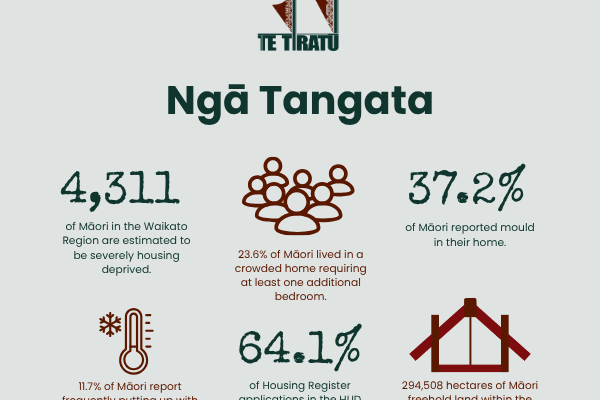
A healthy, affordable and secure home in a caring, connected community is a foundation for whānau wellbeing. The Tauāki Tū position statement sets out the significant housing-related health challenges facing Māori across the Waikato, Hauraki, Maniapoto, Raukawa and Ngāti Hauā rohe, including housing insecurity, cold, damp and mouldy homes, overcrowding, affordability pressures, homelessness and rural isolation. The evidence shows that inadequate housing can contribute to respiratory illness, financial and mental stress, disrupted education, whānau strain and avoidable hospitalisation. Health and housing are therefore inseparable, requiring coordinated action across both sectors.
Te Tiratū calls for sustained action across six strategic pou, underpinned by mana motuhake for whānau, hapū, iwi and Māori communities: alleviating housing insecurity, ensuring safe housing and support for whānau in greatest need, improving the health and resilience of existing kāinga, addressing rural isolation and access to essential services, improving affordability and pathways to Māori home ownership, and enabling Māori-led kāinga and whenua development. This includes stronger early support to prevent homelessness, investment in healthy and energy-efficient homes, better rural services and connectivity, affordable rental and home-ownership pathways, and greater support for Māori-led housing and whenua development. Te Tiratū is committed to working with iwi, Māori providers and relevant agencies to advance these strategies so that all whānau have a home that enables them not simply to survive, but to thrive.


Making healthcare easier for Te Awamutu whānau
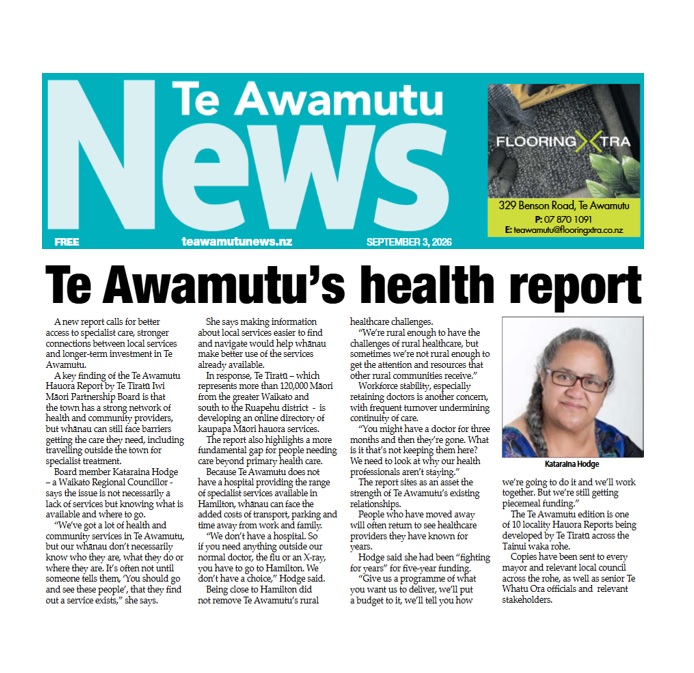
Te Awamutu News has highlighted the findings of our Te Awamutu Hauora Report, which looks at what’s working well for whānau and where more support is needed.
Te Tiratū Iwi Māori Partnership Board member Kataraina Hodge says Te Awamutu has many health and community services, but whānau don’t always know what is available or where to go.
That’s why Te Tiratū is developing an online directory of kaupapa Māori hauora services, making it easier for whānau to find the right support.
The report also highlights the challenges of travelling to Hamilton for specialist care, including the extra costs of petrol, parking and time away from work and whānau.
For Te Tiratū, whānau need healthcare that is accessible, connected and responsive to the needs of our communities.
The Te Awamutu report is one of 10 locality Hauora Reports being developed by Te Tiratū across the Tainui waka rohe, ensuring whānau voices help shape the future of hauora.
Supporting smokefree and vapefree communities across our rohe
Creating healthier futures for our tamariki, rangatahi and whānau is a shared responsibility. One way we can all contribute is by helping ensure tobacco and vaping laws are followed in our communities.
Health New Zealand has developed a range of resources to help people recognise and report illegal smoking and vaping activity under the Smokefree Environments and Regulated Products Act 1990. By raising concerns when the law is not being followed, communities can help reduce harm and protect future generations from nicotine addiction.
Why this matters for our Tainui waka rohe
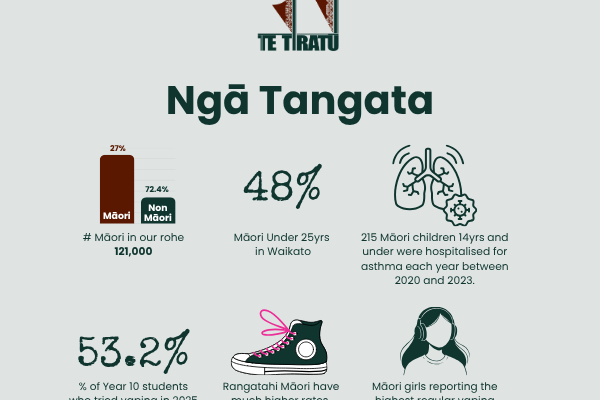
Te Tiratū represents more than 121,000 Māori across the Waikato. Despite significant progress in reducing smoking over recent decades, tobacco use continues to have a disproportionate impact on Māori health and contributes to preventable illness, chronic disease and premature mortality.
Nationally, Māori adults are more than twice as likely to smoke daily as the overall population (15.0% compared with 6.8%). Daily vaping is also significantly higher among Māori adults (27.5%), highlighting the importance of supporting evidence-based prevention and cessation initiatives while protecting young people from developing lifelong nicotine dependence.
The picture is particularly important for rangatahi. While youth smoking has declined to historically low levels, vaping remains common among secondary school students, with Māori rangatahi continuing to experience the highest rates. Preventing access to tobacco and vaping products by those under 18 is an important step towards improving long-term health outcomes and reducing inequities experienced by Māori.
Healthy communities are built when tamariki can grow up in environments that support wellbeing, reduce exposure to harmful substances and make healthy choices easier.
What can be reported?
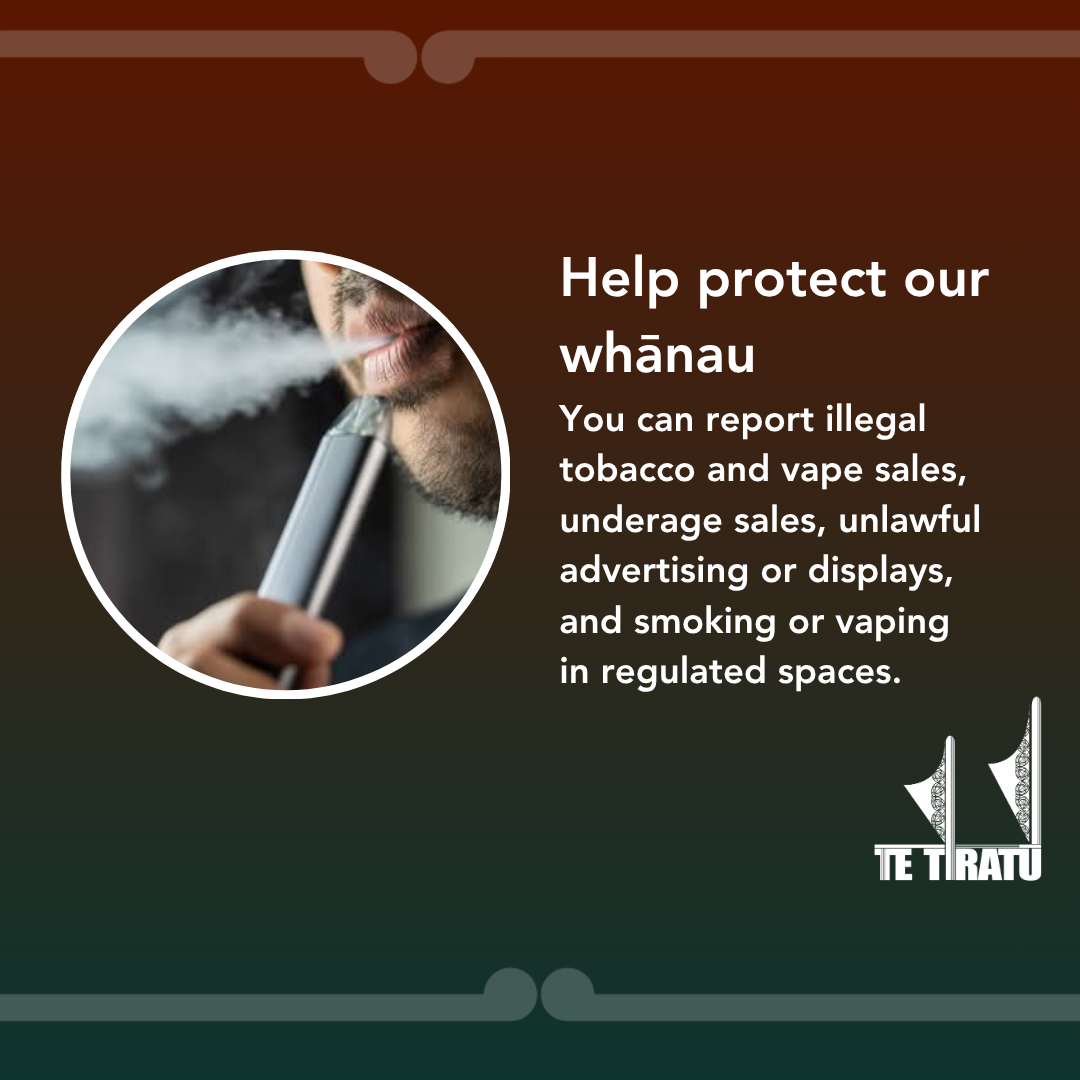
Anyone can report concerns about businesses or individuals who may be breaching New Zealand’s smokefree and vaping legislation, including:
- Selling tobacco or vape products to people under 18 years of age.
- Selling illegally imported or illicit tobacco products.
- Selling prohibited disposable vaping products.
- Displaying or advertising tobacco or vaping products unlawfully.
- Smoking or vaping in smokefree workplaces, restaurants, bars or other regulated public spaces.
- Retailers not complying with the requirements of the Smokefree Environments and Regulated Products Act 1990.
- Community reporting helps Health New Zealand investigate potential breaches, improve compliance and strengthen protections for everyone.
How to make a complaint
If you are concerned about illegal smoking or vaping activity in your community, you can make a report directly here: https://healthnz.govt.nz/TellUs

We need to curb the rising uptake of vaping products across the Waikato rohe.
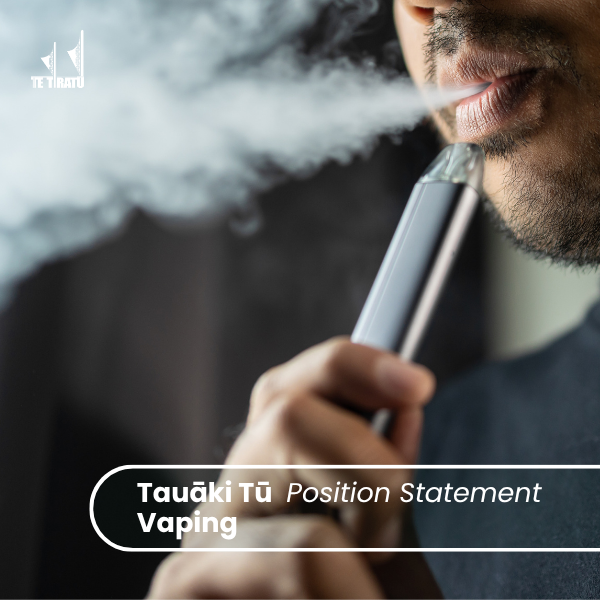
Position Statement – Vaping
Te Tiratū is extremely concerned about the widespread uptake of vaping products and the use of predatory marketing strategies used to lure our whānau and to push harmful and addictive products.
To uphold our vision Kia tupu, kia hua, kia puaawai (To grow, prosper and sustain) we must protect our people, in particular rangatahi, from exploitation by highly addictive vaping products.
References:
[1] Baldassarri SR. Electronic Cigarettes: Past, Present, and Future: What Clinicians Need to Know. Clin Chest Med. 2020;41(4):797–807.
[2] Edwards R, Hoek J, Waa A, Ball J. What is happening with vaping among adolescents and young adults in Aotearoa? Public Health Expert Briefing [Internet]. 2023 12 May 2026. Available from: https://www.phcc.org.nz/briefing/what-happening-vaping-among-adolescents-and-young-adults-aotearoa.
[3] Hammond D, Reid JL, Burkhalter R, Rynard V, D’Mello K. Trends in smoking and vaping among young people: Findings from the ITC Youth & Young Adult Tobacco and Vaping Survey, 2017-2024. Waterloo: University of Waterloo; 2026.
[3] American Lung Association. What’s in an E-Cigarette? Chicago: American Lung Association; 2026 [Available from: https://www.lung.org/quit-smoking/e-cigarettes-vaping/whats-in-an-e-cigarette.
[4] Eng A. Vaping Regulatory Authority response to the reclassification of nicotine in liquid preparations – 67th meeting of the Medicines Classification Committee. In: Authority VR, editor. Wellington: Ministry of Health; 2022.
[5] Āti Awa Toa Hauora Partnership Board. Āti Awa Toa Hauora Partnership Board opposes moves to push vaping on Māori providers as rangatahi harm escalates Te Whanganui a Tara: Āti Awa Toa Hauora Partnership Board; 2026 [Available from: https://atiawatoaimpb.nz/2025/12/12/ati-awa-toa-hauora-partnership-board-opposes-moves-to-push-vaping-on-Māori-providers-as-rangatahi-harm-escalates/.
[6] Ball J, Christie G, Hoek J, Waa A, Edwards R. Youth vaping addiction: How it happens and why it matters. Public Health Expert Briefing [Internet]. 2024 13 May 2026. Available from: . https://www.phcc.org.nz/briefing/youth-vaping-addiction-how-it-happens-and-why-it-matters.
[7] Beaglehole R, Bonita R, Pang T. Smoke-free nicotine products can accelerate the end of the smoking epidemic. Nature Health. 2026.
[8] New Zealand Drug Foundation. What is Harm Reduction? Wellington: Te Puna Whakaiti Pāmamae Kai Whakapiri: The New Zealand Drug Foundation 2026 [Available from: https://drugfoundation.org.nz/topics/policy-and-practice/harm-reduction/what-is-harm-reduction.
[9] Waa A, Maddox R, Nez Henderson P. Big tobacco using Trojan horse tactics to exploit Indigenous peoples. Tobacco Control. 2020;29(e1):e132–e3.
[10] Cohen J. Big tobacco is trying to hide its greed behind ‘harm reduction’. The Hill [Internet]. 2024 13 May 2026. Available from: https://thehill.com/opinion/healthcare/4524685-big-tobacco-is-trying-to-hide-its-greed-behind-harm-reduction/.
[11] Te Tiratū IMPB Monitoring Report to March 2025, p. 22-23 – Respiratory disease section. Contains Waikato Māori asthma, COPD, bronchiectasis and premature respiratory death data.
[12] Cure Kids, State of Child Health in Aotearoa New Zealand 2026, respiratory conditions section, p. 5-13 – national child respiratory burden, asthma/wheeze, bronchiolitis, risk factors including tobacco smoke and vape exposure.
[13] Te Tiratū IMPB Health Profile Vol. 1, public summary – Waikato Māori housing and primary care risk context: damp housing, mould, overcrowding, no heating, primary care enrolment gap.
[14] Ministry of Health, Tatau Kahukura: Māori Health Chart Book 2024 – national Māori respiratory inequity context: Māori aged 5-34 were more than twice as likely as non-Māori to be hospitalised for asthma, and Māori aged 45+ had around four times the COPD hospitalisation rate of non-Māori.
We need to curb the rising uptake of vaping products across the Waikato rohe.
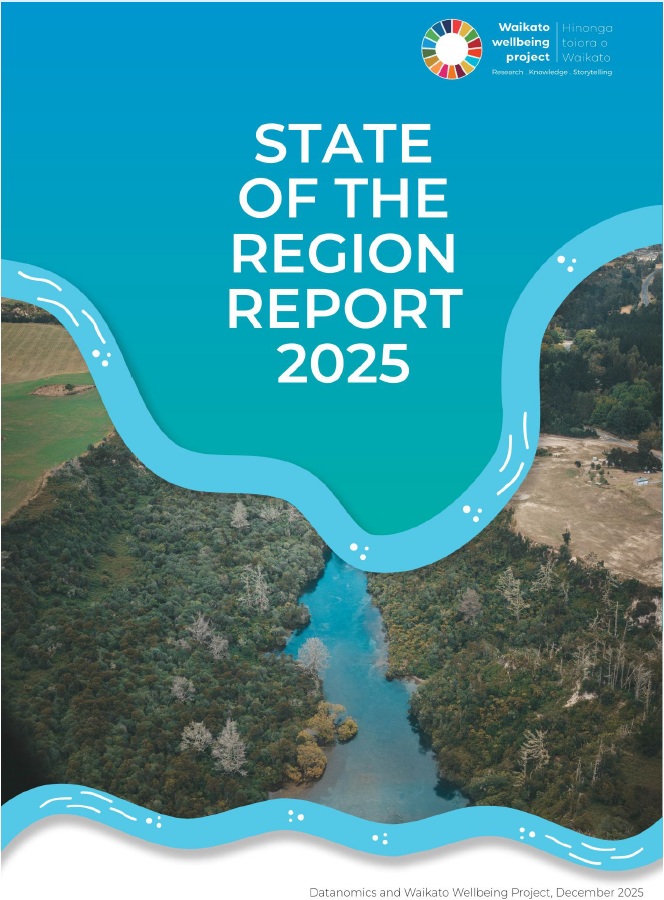
Waikato Wellbeing Project: State of the Region Report
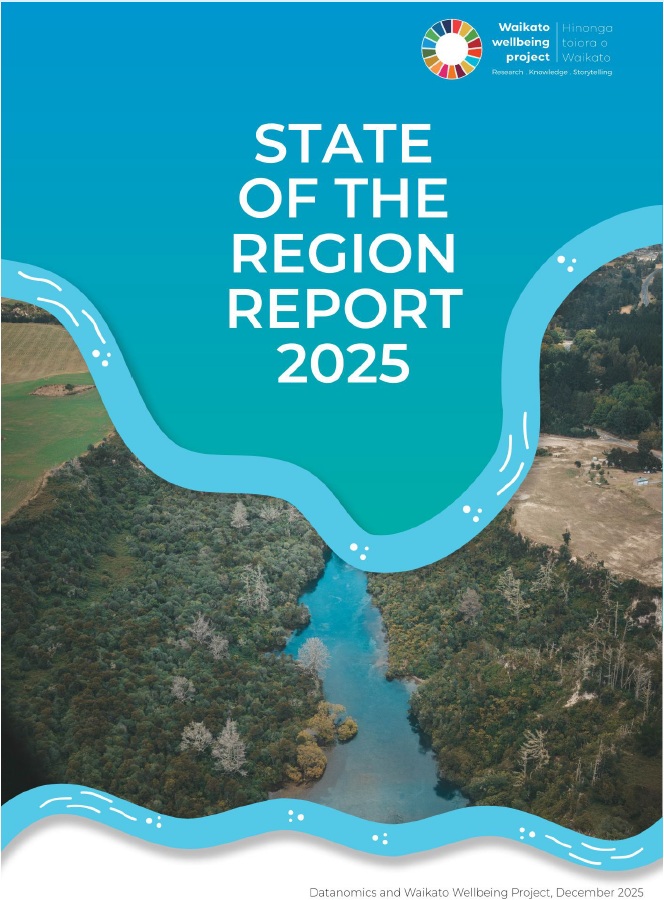
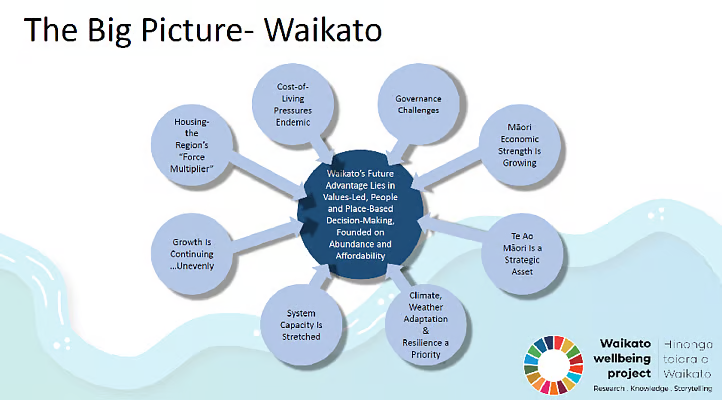
The Waikato Wellbeing Project , a regional initiative to achieve a more environmentally sustainable, prosperous and inclusive Waikato region by 2030 has released a report on our rohe.
Te Tiratū Iwi Māori Partnership Board contributed feedback to this State of the Region Report that offers a snapshot of wellbeing in the Waikato region through a household and whānau lens.
Our recommendations that were published according to the specific statutory authority of Te Tiratū under the Pae Ora Act included the following:
- Making the statutory authority of Te Tiratū visible
- Disaggregating every indicator by Māori status
- Embedding Te Tiriti and data sovereignty
- Strengthening kaupapa Māori health pathways
- Adding cultural and environmental hauora metrics
- Reframing civic trust as Te Tiriti accountability
- Treating digital access as equity infrastructure
- Integrating housing and safety as health determinants
Refer to Section 12 (Health | Hauora, Community, and Quality of Life) and particularly the column ‘Te Tiratū IMPB Influence / Action’ in Table 8.
Te Tiratū Iwi Māori Partnership Board wishes to congratulate Executive Director, Harvey Brookes and his team on the completion of this overview of our region’s progress towards greater wellbeing and all the reports to date.
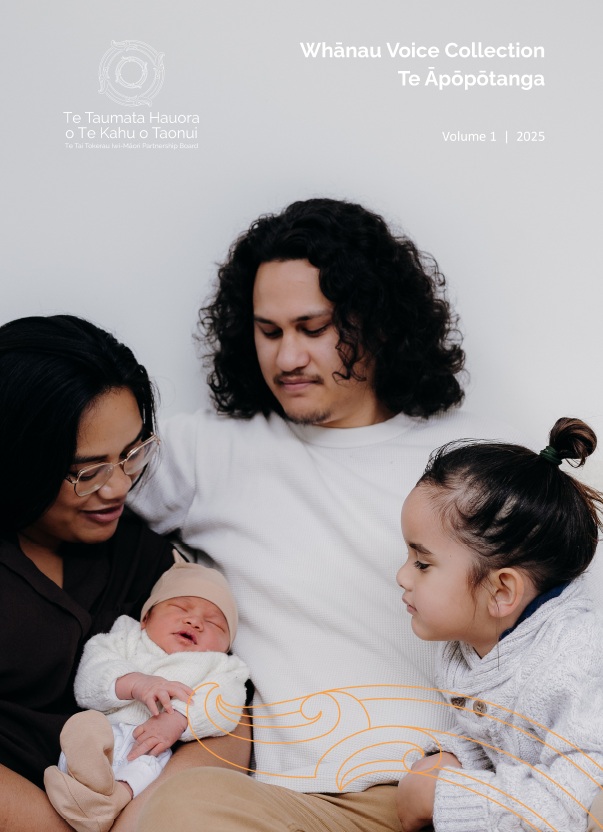
Te Apōpōtanga Whānau Voice Collection: Māmā & Pēpi
Te Tiratū Iwi Māori Partnership Board supports the release of this landmark report by fellow IMPB, Te Taumata Hauora o Te Kahu o Taonui.
Te Āpōpōtanga – Māmā Voice ki Taitokerau–Tāmaki Makaurau is a call to action for leaders, policymakers, and agencies to move with urgency, courage, and partnership to create conditions where Māmā and Pēpi can truly thrive.
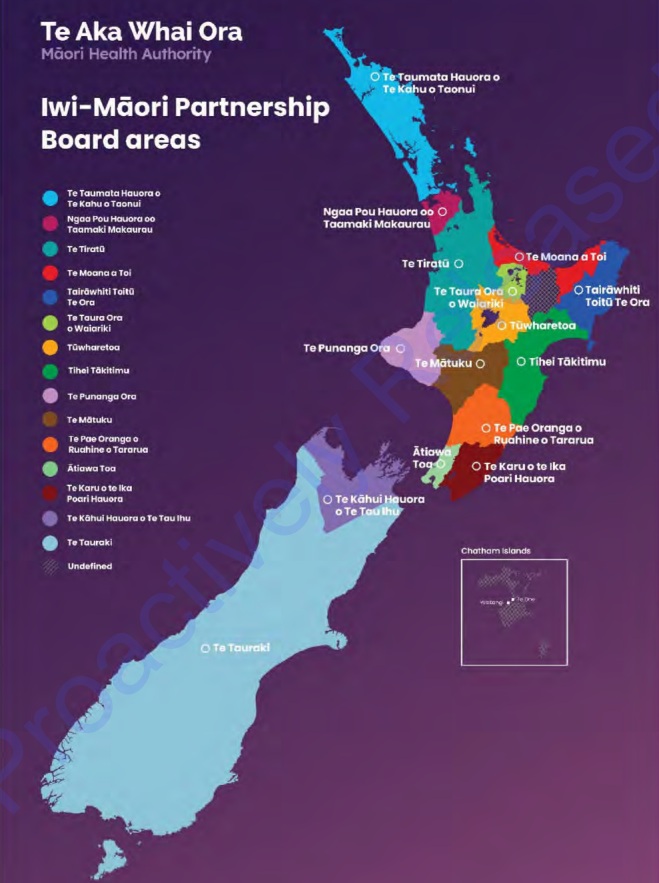
The national collective of Iwi Māori Partnership Boards includes:
- Te Taumata Hauora o Te Kahu o Taonui (Tai Tokerau/Northland)
- Ngaa Pou Hauora oo Taamaki Makaurau (South Auckland)
- Te Tiratū (Waikato-Tainui)
- Te Moana a Toi (Bay of Plenty)
- Tairāwhiti Toitū Te Ora (Tairāwhiti/East Coast)
- Te Taura Ora ō Waiariki (Te Arawa)
- Tūwharetoa (Tūwharetoa)
- Te Punanga Ora (Various regions)
- Te Mātuku (Various regions)
- Tihei Tākitimu (Various regions)
- Te Pae Oranga o Ruahine o Tararua (Various regions)
- Te Karu o te Ika Poari Hauora (Various regions)
- Ātiawa Toa (Wellington/Porirua area)
- Te Kāhui Hauora o Te Tau Ihu (Nelson/Marlborough)
- Te Tauraki (Ngāi Tahu)
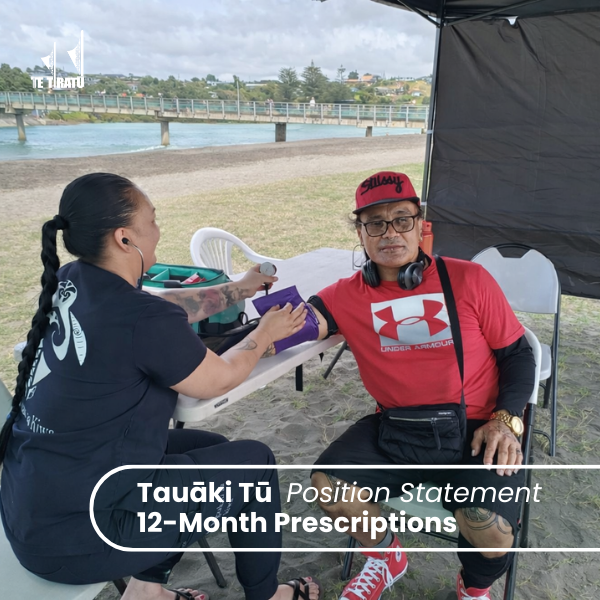
Position Statement – 12-Month Prescriptions
Te Tirātū Iwi Māori Partnership Board believes that extending prescriptions to 12 months, without strong safeguards, risks deepening medicines-related inequities for Māori. While longer prescriptions may benefit a small number of clinically stable patients, Māori already face under-diagnosis, reduced monitoring, fragmented care, and culturally unsafe prescribing. Prescription duration alone cannot address barriers such as cost, transport, limited continuity of care, and systemic bias, and may increase under-care, delayed treatment, and medicine-related harm.
Te Tirātū calls on the Crown to implement 12-month prescriptions only within a Te Tiriti-aligned, equity-led framework. This must include mandatory monitoring of access and clinical safety, Māori-led evaluation, culturally safe practice, clear standards for review and prescribing, and formal recognition of rongoā Māori. Without these measures, long-duration prescriptions risk entrenching inequities rather than improving the safety, mana, and wellbeing of whānau Māori.
References:
[1] Te Karu, L. (2021). Restoration of the health system must not neglect medicines – but who has the power of reform? Journal of Primary Health Care, 13(2), 96–101.
[2] Te Karu, L , Bryant, L., Harwood, M., & Arroll, B. (2018). Achieving health equity in Aotearoa New Zealand: The contribution of medicines optimisation. Journal of Primary Health Care, 10(1), 11–15.
[3] Horsburgh, S., & Norris, P. (2013). Ethnicity and access to prescription medicines. The New Zealand Medical Journal, 126(1384), 7–11.
[4] Metcalfe, S., Beyene, K., Urlich, J., Jones, R., Proffitt, C., Harrison, J., & Andrews, Ā. (2018). Te Wero tonu-the challenge continues: Māori access to medicines 2006/072012/13 update. The New Zealand Medical Journal, 131(1485), 27–47.
[5] Waitangi Tribunal. (2019). Hauora. Report on Stage One of the Health Services and Outcomes Kaupapa Inquiry. WAI 2575. Waitangi Tribunal Report 2019. Waitangi Tribunal. https://www.waitangitribunal.govt.nz/news/report-on-stage-one-of-healthservices-and-outcomes-released/
Policy changes to prescription medicines must not place Māori at higher risk of harm or delayed care.
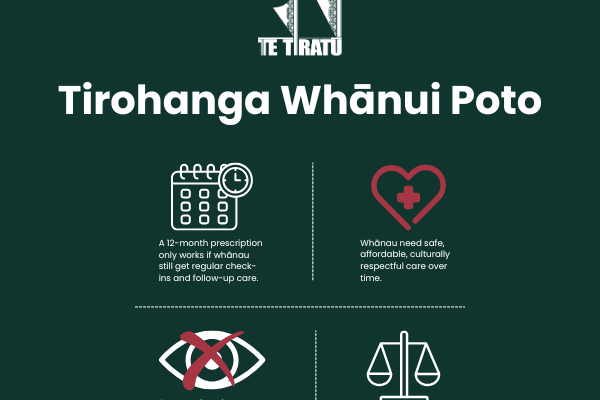
How this change to prescription medicine impacts our whānau from Tainui waka rohe.

Te Tiratū IMPB quarterly monitoring report on Te Whatu Ora | Q4
Te Tiratū Iwi Māori Partnership Board has released its latest Quarterly Monitoring Report, the second this year reviewing health system performance across the Tainui waka rohe in Waikato.
It builds on its inaugural report from June 2025 representing the interests of 121,000 whānau. While cervical screening rates have improved by 10%, ongoing inequities continue to affect whānau across the rohe.
Te Tiratū Iwi Māori Partnership Board quarterly report
Click the button to download a PDF version.

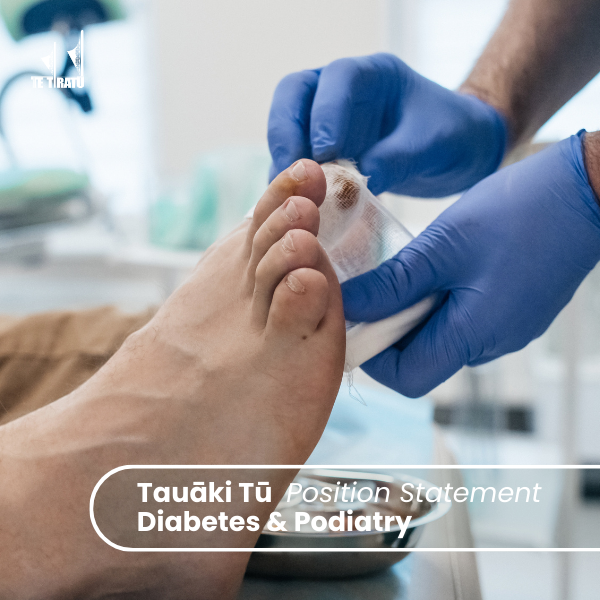
Position Statement – Diabetes & Podiatry
Te Tiratū Iwi Māori Partnership Board believes Diabetes-related foot disease is costing Māori their limbs, independence, and lives and driving millions in avoidable hospital costs. In the Waikato and wider Te Tiratū rohe, Māori are losing limbs at rates far higher than non-Māori.
Te Tiratū Iwi Māori Partnership Board calls for urgent action: expanding access to podiatry as both a Te Tiriti obligation and a smart investment that prevents amputations, restores mobility, and strengthens mana motuhake for whānau Māori.
Limiting high-risk patients to four funded podiatry visits per year falls short of international best practice and directly contributes to inequitable outcomes. Te Tiratū proposes funding up to eight annual visits, embedding kaupapa Māori delivery, and piloting a local pathway to demonstrate improved health and economic outcomes.
References:
• Ihaka, B., Rome, K., & Came, H. (2022). Diabetes podiatry services for Māori in Aotearoa: A step in the right direction? Journal of Foot & Ankle Research, 15(1). https://doi.org/10.1186/s13047-022-00564-1
• NICE. (2015). Diabetic foot problems: Prevention and management (NG19). https://www.nice.org.uk/guidance/ng19
• International Working Group on the Diabetic Foot (IWGDF). (2023). Guidelines on the prevention and management of diabetic foot disease. https://iwgdfguidelines.org
• Waitangi Tribunal. (2019). Hauora: Report on Stage One of the Health Services and Outcomes Kaupapa Inquiry (WAI 2575).
• University of Otago & PwC. (2016). The economic and social cost of type 2 diabetes.
• Taupua Waiora. (2010). Feet for Life: An intervention trial for Māori at risk of diabetes-related lower limb pathology. AUT University.
• Patel, S., et al. (2022). The economic value of podiatry service in limb salvage alliance. Journal of Vascular Surgery, 75(4).
• CDC. (2023). Foot care for people with diabetes.
• StatPearls. (2023). Diabetic foot examination and management.
• PwC. (2020). The social and economic impact of improved oral health.