Te Tiratū Iwi Māori Partnership Board hosts inaugural forum with Waikato health providers
Today marks a pivotal milestone for Māori health in the Waikato as the Te Tiratū Iwi Māori Partnership Board (IMPB) holds its first-ever forum with specific regional health providers both mainstream and Māori.
It has brought together those specifically focussed in the area of primary care and cancer to align with current reporting topics that Te Tiratū is canvassing in the community.
The hui is a vital step in realising the aspirations of the Pae Ora (Healthy Futures) Act, which mandates IMPBs to bring the voices of whānau directly into the heart of Te Whatu Ora Health New Zealand planning and decision-making.
At the heart of the discussions are insights gathered through the Whānau Voice initiative — a culturally grounded approach led by Te Tiratū kaimahi using surveys, hui, kanohi ki te kanohi kōrero, and existing research and data.
This powerful community feedback tool paints a sobering picture of the current health landscape for Māori in Waikato.
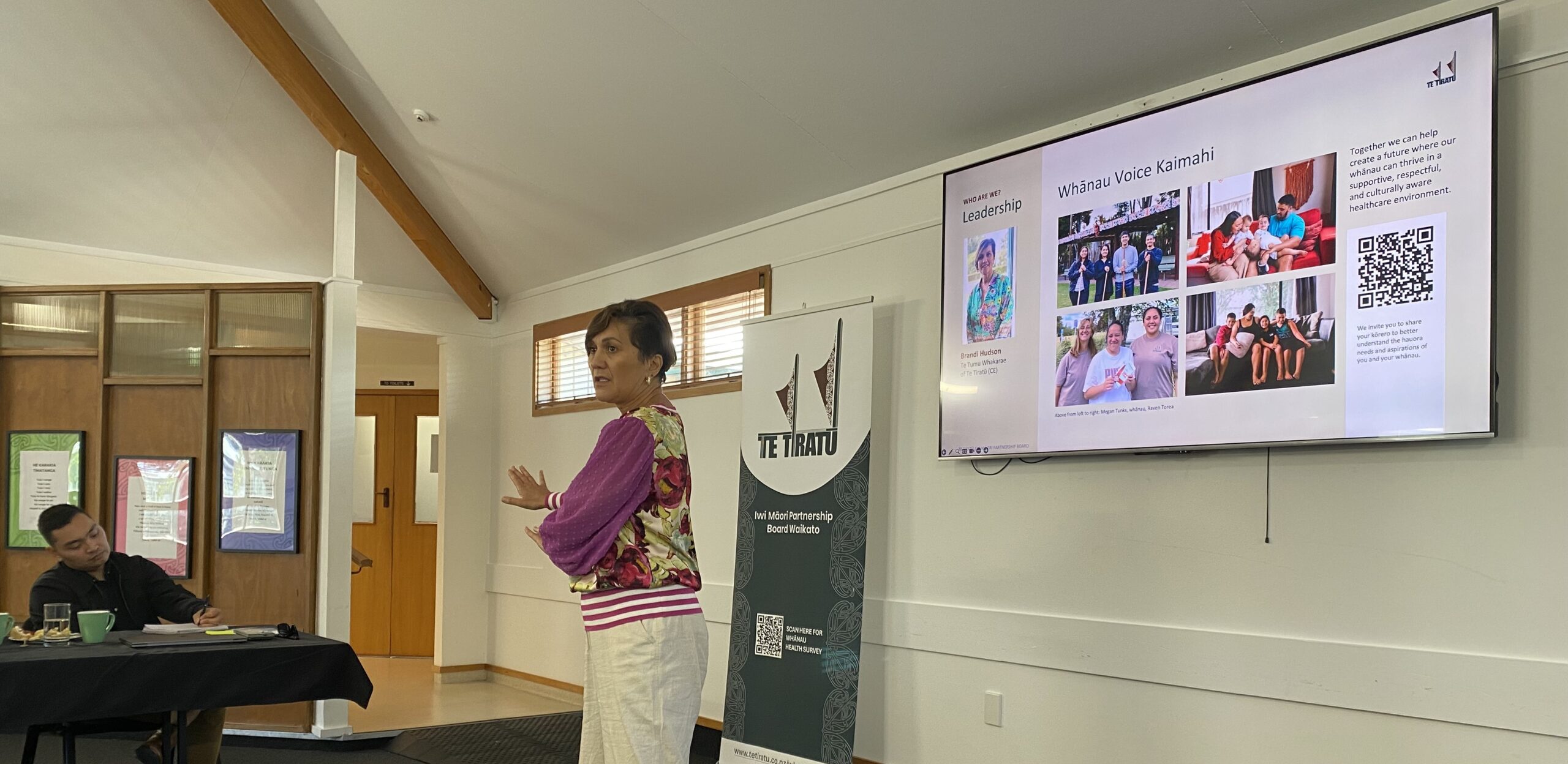
Photo: Te Tiratū Tumu Whakarae, Brandi Hudson presenting to the providers.
Key Challenges Raised by Whānau Voice:
Access & Availability
-
- Long wait times for appointments.
- Shortage of Māori-led, tamariki-focused, and mental health services.
- Disrupted continuity in GP care and low trust in the system.
- Health Navigation
- Strong call for more health and whānau navigators.
- Confusion around available services and support pathways.
- Lack of follow-up and poor communication post-diagnosis.
- Cancer Journeys
- Late diagnoses, particularly lung and prostate cancers.
- Emotional and financial strain on kaumātua caregivers.
- Gaps in transport, spiritual care, and access to rongoā Māori.
- System Gaps
- Fragmented care and poor integration between hospitals, PHOs, and services.
- Limited awareness of entitlements like travel support and Cancer Society aid.
“These stories are a clear call to action,” says Brandi Hudson, Te Tumu Whakarae of Te Tiratū.
“Whānau are asking for a system that listens, responds, and restores trust. Today’s forum is a first step in reshaping that system together with these providers who understand the lived realities of our people.”
“It’s only the start as we intend to proactively meet with many diverse stakeholders in the system operating in our regional area – Māori providers, mainstream providers, NGOs – to zero in on specific areas of interest we’re monitoring.”
Demographic Realities Driving the Urgency:
The Te Tiratū region has a youthful and growing Māori population, projected to rise from 25% in 2023 to 29% by 2043. Nearly half (48%) of Māori are under 25, demanding proactive and youth-focused planning.
At the same time, the Māori population aged 65+ is set to grow by 40% by 2043, increasing the need for age-friendly, culturally safe services for kaumātua and kuia — who already face greater financial barriers to care than their non-Māori counterparts.
Health Priorities Set by Te Tiratū IMPB:
As part of its Community Health Plan, Te Tiratū has tabled three immediate priorities with Te Whatu Ora:
- Pepe and Māmā – First 100 Days
- Māori infants face 1.5x higher rates of avoidable hospital admissions and are almost twice as likely to die as non-Māori infants.
- Hauora Hinengaro – Mental Wellbeing
- Psychological distress among Māori adults is climbing (from 11% to 18%), with 18% of the region’s 47,000 mental health-related GP visits involving Māori.
- Ngā Kaumātua me Ngā Kuia – Elders’ Health Equity
- While older Māori may delay care less frequently, they report more hardship accessing services than non-Māori peers.
Today’s forum is the first of many to come facilitated by Te Tiratū IMPB uniting health system stakeholders to explore and respond to the latest Whānau Voice insights.
“Whānau Voice is not just a report — it’s a relationship,” says Hudson.
“The insights shared come from trust built kanohi ki te kanohi. That’s what our health system needs more of: trust, connection, and commitment to Māori solutions.”

Largest iwi Māori partnership board calls for Māori-focused equity in access
Te Tiratū Iwi Māori Partnership Board that serves 114,000 Māori in the Waikato rohe welcomes the Government’s decision to lower the eligibility age for free bowel cancer screening from 60 to 58 announced today.
“Screening is an essential tool for prevention and early detection, and expanding access will definitely save lives,” said Hagen Tautari, co-chair Te Tiratū Iwi Māori Partnership Board.
“However, what we don’t want is to leave our people who are high-risk behind as they face substantially poorer health outcomes. What we need is an easier diagnostic process that removes systemic barriers.”
Published tested evidence shows that Māori are twice as likely to die from all types of cancer compared to non-Māori.
Research shows the rate of colorectal cancer diagnoses among young Māori under 50 years has increased by an average of 36 percent per decade.
In the rohe Te Tiratū operates Māori cancer numbers are some of the highest in the country.
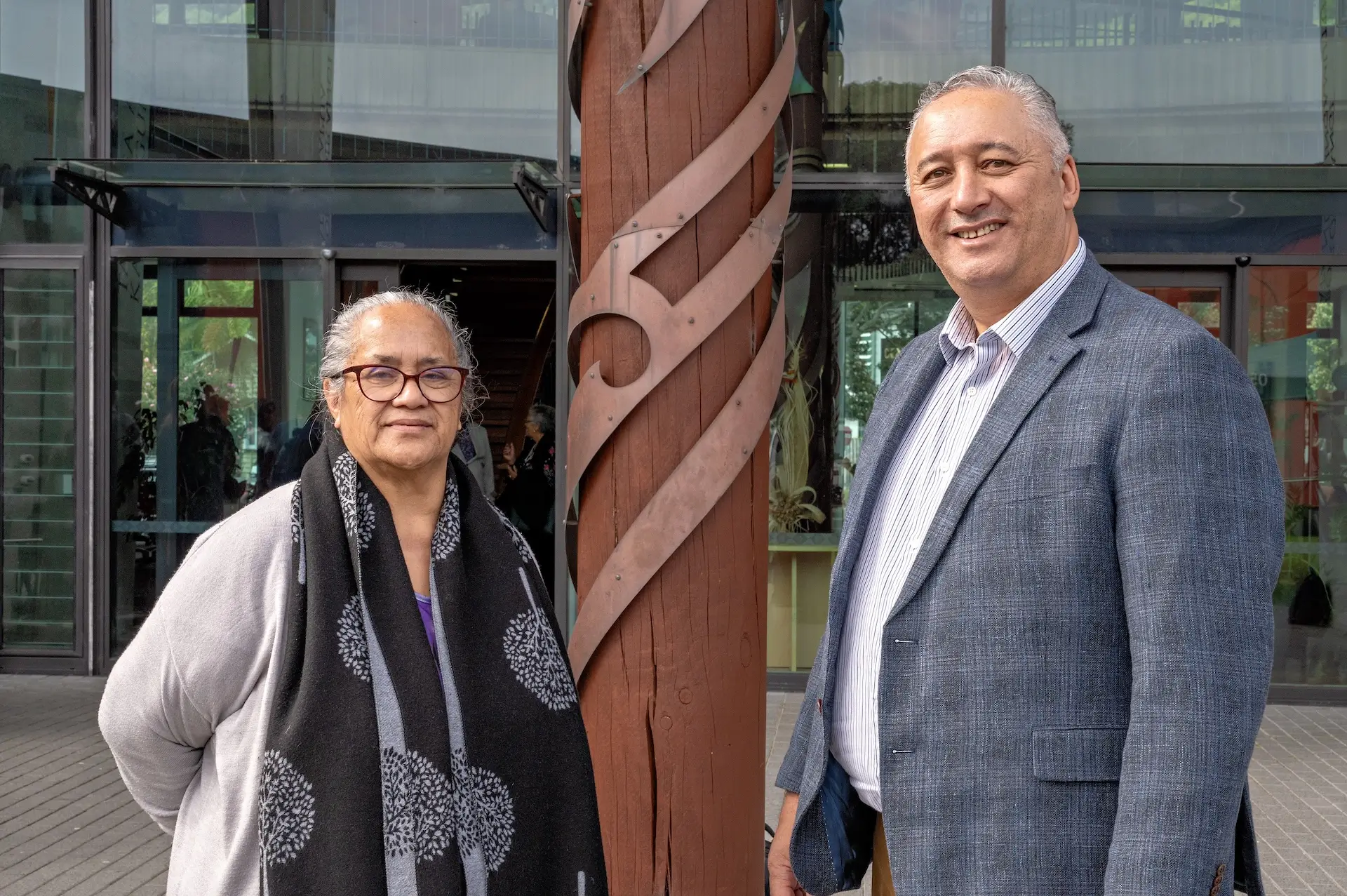
Photo: Co-chairs of Te Tiratū Iwi Māori Partnership Board Kataraina Hodge and Hagen Tautari
While Māori continue to face grave Māori health inequities and significantly lower cancer screening rates, Te Tiratū prioritises prevention as a fundamental step toward improving outcomes.
This adjustment in funding, which moves away from a previously targeted approach for Māori and Pacific communities discontinued in December, raises concerns about whether the expansion will effectively reach and benefit those most at risk.
Pae Tū, the Hauora Māori Strategy is currently being redesigned, following extensive public consultation. Te Tiratū expects it will reflect the needs and expectations of the region to better address the specific needs of Māori and ensure more effective, equitable health outcomes – access to screening being one of them.
Te Tiratū advocates strongly that cancer screening must be culturally appropriate and properly resourced to ensure Māori participation over a lifetime.
It acknowledges that the solutions lie in true partnership between the community and Te Whatu Ora. A prime example is the Taakiri Tuu Wellness and Diagnostic Centre, established in 2024 by Māori health provider Te Kōhao Health in a high-deprivation area, specifically designed to serve whānau Māori.
Kataraina Hodge, co-chair of Te Tiratū Iwi Māori Partnership Board, believes that without targeted strategies, partnerships in community and resourcing for high need populations existing disparities could be reinforced rather than reduced.
Te Tiratū Iwi Māori Partnership Board invites clear commitments by Te Whatu Ora to support:
• Resourcing Māori-led, community-driven promotion of screening.
• Accessible screening locations, particularly in rural areas where services are often out of reach for our whānau.
• Investment in workforce and resources to support increased demand without creating further barriers to timely diagnosis and treatment.
“Te Tiratū remains committed to advocating for hauora solutions that reflect the needs of our people. We urge the Government to engage with Hauora Māori providers and leaders to ensure that screening programmes deliver equitable outcomes—not just increased numbers,” Tautari said.
The Te Tiratū Iwi Māori Partnership Board given their legislative responsibility under the Act monitor and represent local Māori perspectives on the design and delivery of services and public health interventions.
The Board represents the whānau of Pare Hauraki, Waikato, Raukawa, Te Nehenehenui, Ngāti Hāua (Taumarunui) and Te Rūnanga o Kirikiriroa from the localities of Waikato, Hauraki, Maniapoto, Raukawa, Ngāti Hāua.
Sources of Statistics:
Pg 49 Waitangi Tribunal Hauora Report
University of Otago 2024 Early onset cancer on the rise
Pg 17 Te Tiratū Iwi Māori Partnership Board Hauora Priorities Summary Report
Pg 14 Waitangi Tribunal Hautupua Report