Maniapoto rising: “We know what works”
Our Whānau Voice kaimahi and Tumu Whakarae attended a recent hui held at Te Kūiti, hosted by Maniapoto Marae Pact Trust where a strong and heartfelt kōrero unfolded about the state of hauora for whānau across the Maniapoto rohe.
Frontline kaimahi, whānau navigators, and community leaders — including CEO Shirley Turner — came together to shine a light on what’s working, what whānau are asking for, and where the system is falling short.
“Our people know what works — we just need the system to back us,” Shirley said.
Maniapoto Marae Pact Trust offers a suite of integrated health and social services designed to walk alongside whānau, ensuring every door is the right door. These include:
- Kaiārahi Services – placing whānau at the centre, helping them define and lead their own goals across multiple service areas.
- Whānau Direct – offering fast, flexible support when whānau need it most.
- Disability support and mental health services, including social workers in schools.
- Tamariki Ora – a standout success story. The Tamariki Ora nurse and whānau navigator work together in the community, achieving strong immunisation rates despite not receiving equitable funding.
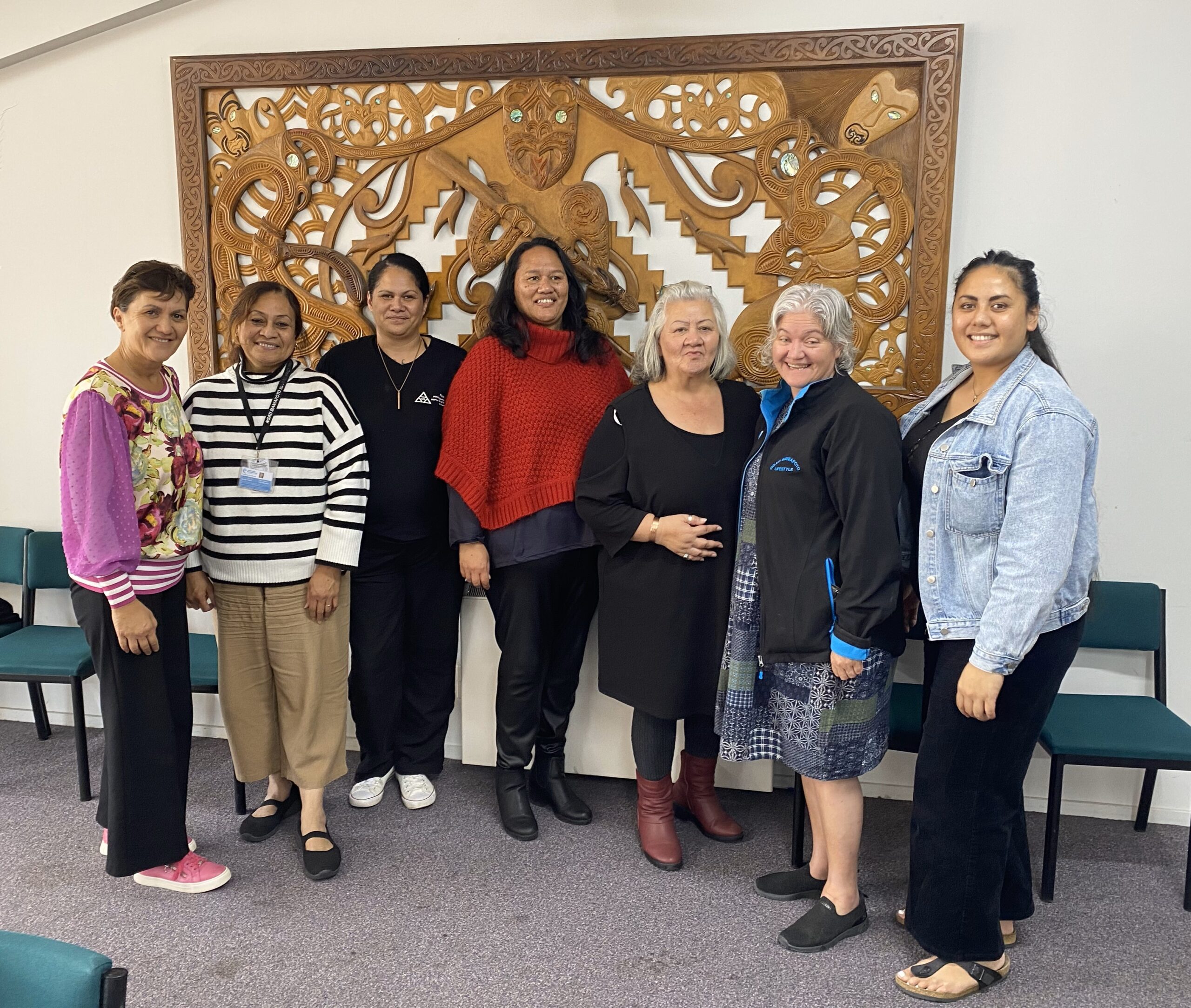
Photo from left to right: Te Tiratū Tumu Whakarae, Brandi Hudson with kaimahi of Maniapoto Marae Pact Trust – Sauaga Poliko, Lisa Kerekere, Rena Morgan, Honour Muraahi, Adrianna Astle and Raven Torea our Whānau Voice kaimahi
The Trust also contributes to Healthy Families Te Kūiti, with locals like Michelle Wi running weekly Māra Kai workshops on preserving, pickling, and food sovereignty — all part of a wider push for long-term wellbeing.
Shirley was clear about how the Trust works, “Whānau are in the driver’s seat — and that’s how it should be. Our services walk with them, not ahead of them.”
Systemic Challenges Undermining Equity
Despite these local strengths, systemic failures continue to undermine outcomes for Maniapoto whānau.
One striking example shared at the hui was of a kuia who was rushed by ambulance to Waikato Hospital with minimal belongings, only to be sent home later in a shuttle and left on the roadside.
It was only thanks to a member of the public contacting a local health worker that she made it home safely. This case highlights the urgent need for a more responsive, automatic travel support process — particularly around the National Travel Assistance (NTA) scheme.
“There needs to be a built-in, automatic system for whānau travel vouchers — not an afterthought.”
Other systemic concerns raised include:
- Falling through administrative cracks in post-hospital care and transport.
- No sustainable funding model for high-performing but underfunded services like Tamariki Ora.
- The need for better wellbeing measurement tools that reflect whānau realities.
- A desire for more regular, locally based specialist outreach, especially for kaumātua and kuia.
Networks and Ngā Kaupapa o te Rohe
The hui also acknowledged the strength of local collaborations — such as the Waitomo Community Health Forum and initiatives like Harvest to Home and Wai to Kai, which focus on food resilience, sovereignty, and wellbeing.
The message from Maniapoto is clear: local, kaupapa Māori solutions are working — but they need resourcing and system-level support.
“We’re seeing positive outcomes because our services reflect the lived reality of our whānau. But without equity in funding and process, our people continue to carry the cost,” said one kaimahi.

Rangitāmiro leads the way – First Commissioning Agency to complete Whānau Ora procurement process
PANUI FOR WHĀNAU ORA PROVIDERS
IN TĀMAKI MAKAURAU & TE TAI TOKERAU
21 May 2025, 6:00 PM
2 minutes to Read
Rangitāmiro is proud to announce that it has successfully completed its inaugural Whānau Ora procurement process and today formally notified successful providers across Region One. This is a significant milestone and reaffirms a commitment held by Rangitāmiro to honour the whakapapa of whānau ora through strengthening service networks, regional capability, reach and service coverage, ensuring and enabling whānau wellbeing.
A comprehensive and values-led procurement process that interim Rangitāmiro Chair, Dr Rachel Brown knows will shape the future of Whānau Ora delivery.
“We are honoured to be able to give providers and communities across Aotearoa confidence in the continuation of Whānau Ora services with minimal disruption, whilst ensuring growth in capacity means service reach and coverage will increase allowing more whānau to access the services they need.
Key achievements from this process include:
• Guaranteed continuity of services for whānau from 1 July 2025, with proactive steps to minimise transition disruption
• An increase in frontline Kaiwhiriwhiri Whānau FTE, supporting a stronger navigation workforce across all regions
• Expanded reach into isolated and rural communities, enabling better access to culturally anchored, whānau-centric support
• The onboarding of new providers, bringing fresh innovation, insight, and presence in areas where service gaps previously existed
Dr Brown acknowledges the tenacity of providers and whānau in the short timeframe.
“Today’s announcement signals the next chapter in our partnership with whānau and reinforces our long-term commitment to the transformation and future of Whānau Ora. Our kaupapa is grounded in empowering whānau, driving better outcomes, and expanding service reach to underserved and high-need communities.”
Rangitāmiro is a collaborative entity comprised of Te Tiratū Iwi Māori Partnership Board, the National Hauora Coalition, and Ngaa Pou Hauora oo Taamaki Makaurau Iwi Maaori Partnership Board.
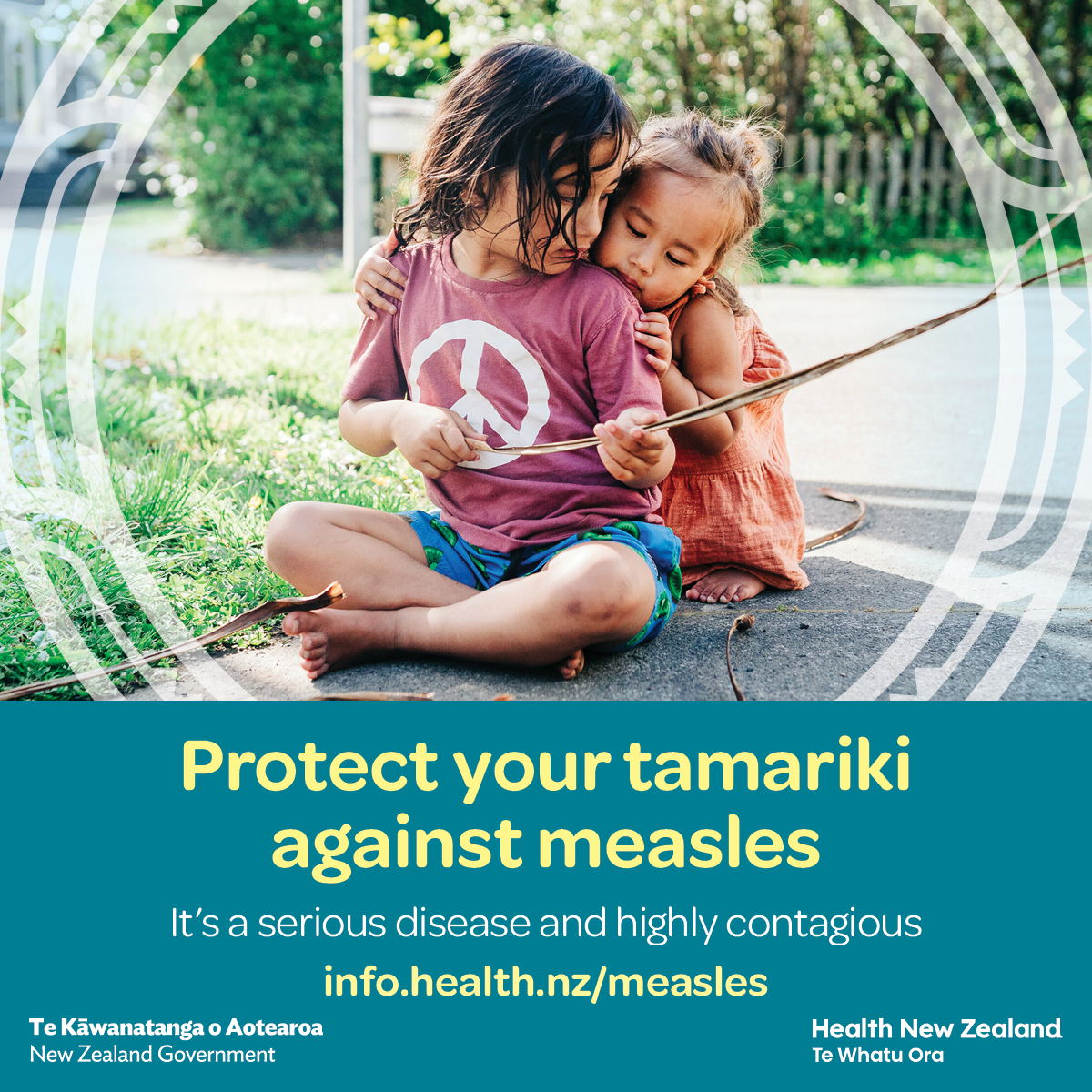
Measles is back in Aotearoa — Protect your whānau now
A confirmed case of measles has been reported in Tāmaki Makaurau (Auckland). The person had recently returned from Asia on 29 April and became infectious on 2 May.
Te Tiratū Iwi Māori Partnership Board in the last 24 hours has received a further briefing from Te Whatu Ora – Health New Zealand about the outbreak. You can check for update on locations of interest HERE.
Tainui Waka Rohe: Tamariki Immunisation Rates Are Low
In our rohe, only 62% of tamariki under 2 years old are immunised against measles — well below the national target of 95%. This makes our communities vulnerable to outbreaks and puts pēpi, kaumātua, and immune-compromised whānau at serious risk.
Protecting Our Whakapapa: Immunise Against Measles
Measles is a serious, fast-spreading illness that can affect both tamariki and pakeke.
Why Immunisation Matters
- Measles spreads quickly and can be dangerous — especially for Tamariki under five.
- Adults can catch measles too, and risk passing it to mokopuna who are too young to be vaccinated.
- The MMR (Measles, Mumps, Rubella) vaccine is safe, effective, and has been used in Aotearoa since 1990.
- Two doses after the age of 12 months protect 99% of people from measles.
What You Can Do – Right Now
- Check if your tamariki or rangatahi have had 2 doses of the MMR vaccine.
- If you’re unsure whether you’re protected, especially if born after 1 January 1969 — get vaccinated.
- Encourage kōrero within your whānau and hapū about immunisation – sharing trusted info saves lives.
Free. Safe. Effective.
The MMR vaccine is free for all under 18s, and for adults eligible for funded healthcare.
It has an excellent safety record and does not contain any pork (porcine) products.
He Pēpi? He Māmā Hapu?
Pregnant wāhine can’t receive the MMR vaccine — so it’s important to make sure everyone around them is protected.
Measles during pregnancy can cause miscarriage and premature birth.
Who Can Get Vaccinated – and When?
Tamariki:
- 1st dose at 12 months
- 2nd dose at 15 months
- Missed a dose? Catch-up vaccinations are FREE
Pakeke (Adults):
- If you’re not sure you’re protected and were born after 1 Jan 1969, get vaccinated – it’s safe to have extra doses.
- If you’re pregnant, you cannot get the MMR vaccine — but it’s safe to get it after baby is born and while breastfeeding.
Overseas-born whānau:
- Had your vaccinations overseas? Check your records with a doctor.
- No records? Still get vaccinated — it’s safe.
- Some countries vaccinate babies before 12 months – they may need extra doses here in Aotearoa.
It doesn’t matter what your immigration status is — the MMR vaccine is FREE for all under 18
- Over 18? The vaccine is still free if you’re eligible for funded healthcare.
He Pātai?
- Talk to your doctor, nurse, or health provider
- Call Healthline – 0800 611 116
- Visit: info.health.nz/measles
- Learn more at: immunise.health.nz
Tō tātou haumarutanga kei a tātou — Our collective protection starts with each of us.
Norton neighbourhood shares a few home truths
This weekend, in the heart of Norton, Hamilton, our Whānau Voices kaimahi joined a neighbourhood Hauora Event organised by the Wairiki Whānau Mentoring Trust, a Māori-led organisation dedicated to creating meaningful change for whānau living at the margins across the Waiariki and Waikato regions.
It provided a positive, safe and non-judgemental space where whānau could speak openly—free from stigma or blame. This environment allowed them to reconnect with their true selves, laying the foundation for healing and unlocking the potential for deep, transformational growth.
The gathering brought together whānau, local hapori, and the local MP, Tama Potaka. His presence highlighted the importance of connecting political leaders with the real experiences of whānau at the flax-roots willing to share their kōrero about the challenges they face within the health system.
Our Whānau Voice kaimahi were there specifically because Norton is a community marked by pockets of higher deprivation, often tied to long-standing inequities. These conditions create unique challenges for our people that need to be heard firsthand.
“They didn’t know who we were,” said Megan Tunks from Whānau Voice Te Tiratū Iwi Māori Partnership Board. “But we had more conversations in person with whānau, rather than relying on questionnaires.”
The stories shared revealed the harsh realities whānau face: “Whānau told us they’re waiting weeks just to see a GP—if they can afford it at all. Some are turning to A&E because urgent care is too expensive, and regular appointments are too short to get the help they need,” Megan said.
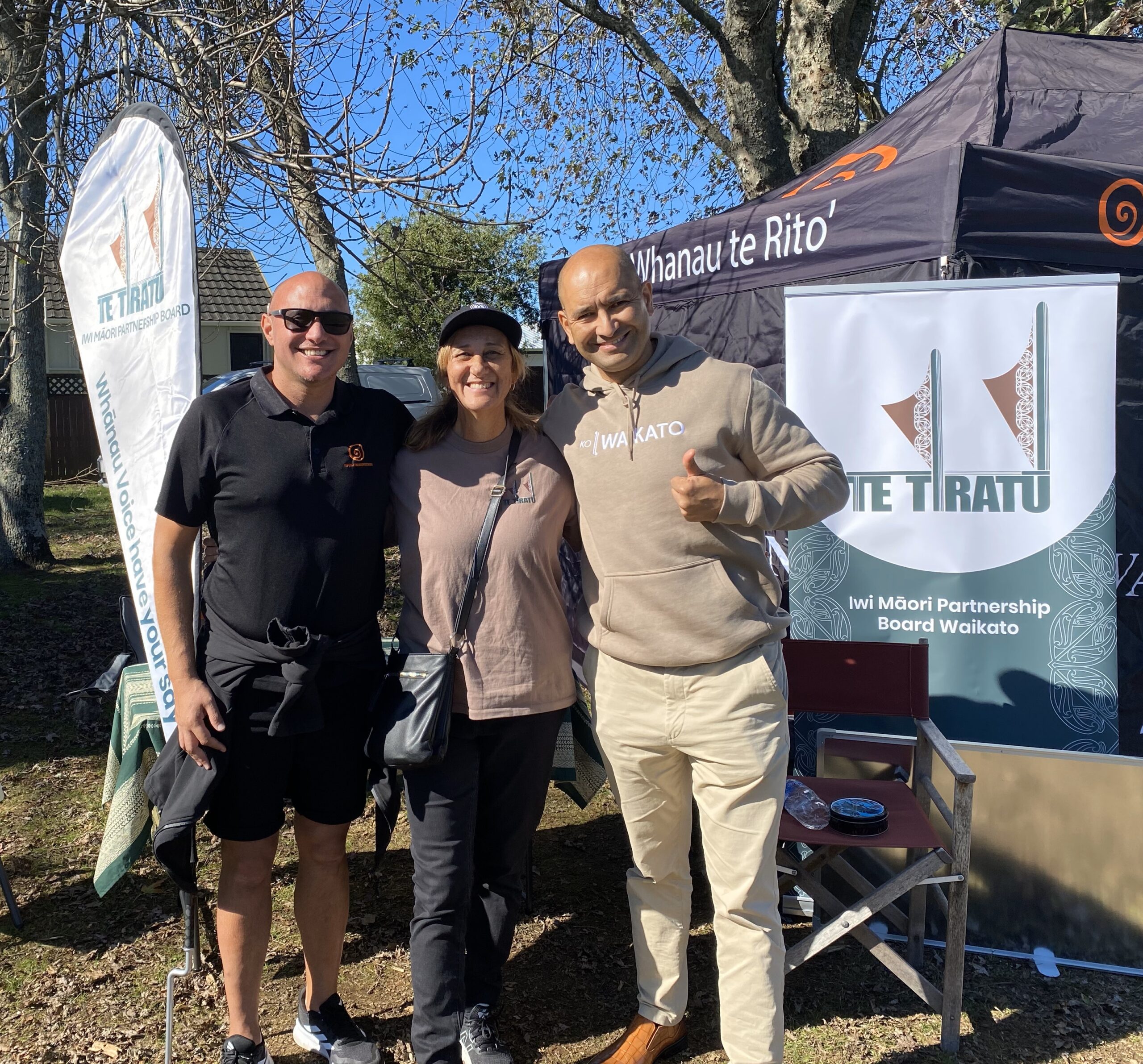
Photo: Waata Heathcote Chief Operating Officer Wairiki Whānau Mentoring Trust, Megan Tunks Whānau Voice kaimahi Te Tiratū Iwi Māori Partnership Board and the local MP, Tama Potaka.
One particularly poignant story was of a kaumātua who had suffered multiple strokes but was left waiting at a clinic with no clear support. “These stories speak to something deeper—it’s not just about access; it’s about trust and the way services engage with our whānau.”
For many, these struggles go beyond the healthcare system. “Our people aren’t just talking about barriers; they’re talking about survival—housing struggles, accessibility blocks, healthcare gaps, and the hopes they carry for their tamariki and mokopuna.”
Megan believes this feedback reveals a clear need for more mobile services that meet whānau where they are at. Hauora Māori services, she said, provide a safe and trusted space where whānau feel less judged and more understood.
This shift towards more accessible, mobile, and culturally supportive health services is vital for creating meaningful change in the lives of whānau.
Throughout the hui, common themes emerged around the need for culturally safe services, wraparound whānau support, and systems that honour te ao Māori ways of being.
These whakaaro are invaluable, and the voices captured will inform local priorities, service design, and future planning—ensuring that whānau are not just consulted but are co-creators of the solutions that impact their lives.
When whānau voices are elevated, transformation is not only possible, it is inevitable.
Ngā mihi nui to all who shared their time, courage, and whakaaro.
Turning whānau truths into system change - April 'whānau voice' report recap
At Te Tiratū Iwi Māori Partnership Board, our role under section 29 of the Pae Ora (Healthy Futures) Act 2022 is clear: to represent Māori voices—and to champion better health outcomes, better services, and better ways of working with the health system that reflect our realities, values, and aspirations.
Our April Whānau Voice Report lifts the lid on what’s happening in our homes, clinics, and hospitals—and what our whānau are calling for. We heard from 53 in our rohe, mostly Māori, mostly wāhine.
Behind every percentage and piece of data is a story—a lived experience of a whānau member trying to navigate a health system that too often feels cold, distant, and unaffordable.
“We’re still waiting.”
Too many whānau are waiting too long for care—GP appointments, referrals, or surgeries. Many whānau are living with multiple long-term illnesses—diabetes, cancer, heart disease—and are expected to manage complex conditions without enough support.
- 23% of respondents said the availability of healthcare is their biggest barrier.
- Many also shared that GP appointments are hard to get, and they often resort to visiting the hospital for non-urgent care.
One kuia shared how her husband finally had life-saving heart valve surgery—but no cardiac follow-up. “No specialist for his 6-week check-up—he wasn’t seen for 11 months. They found a growth and a tear around the valve.” She says they were lucky. What if they hadn’t pushed?
Whānau told us delays in accessing care—from GPs to surgery—are harming their health. “I’ve been waiting for gallbladder surgery since June 2023. It’s stopping me from going back to work.”
A mother said she’s been on the waitlist for her child’s ear operation for two years. Her tamariki has asthma, and their whare is cold. “Keeping the house warm is hard,” she said. “But we try.”
Another was battling on all fronts saying, “I’m dealing with diabetes, AFib, rheumatic fever, dementia, and a family history of cancer.” The lack of mental health services is not meeting the needs of whānau either —especially for tāne and tamariki.
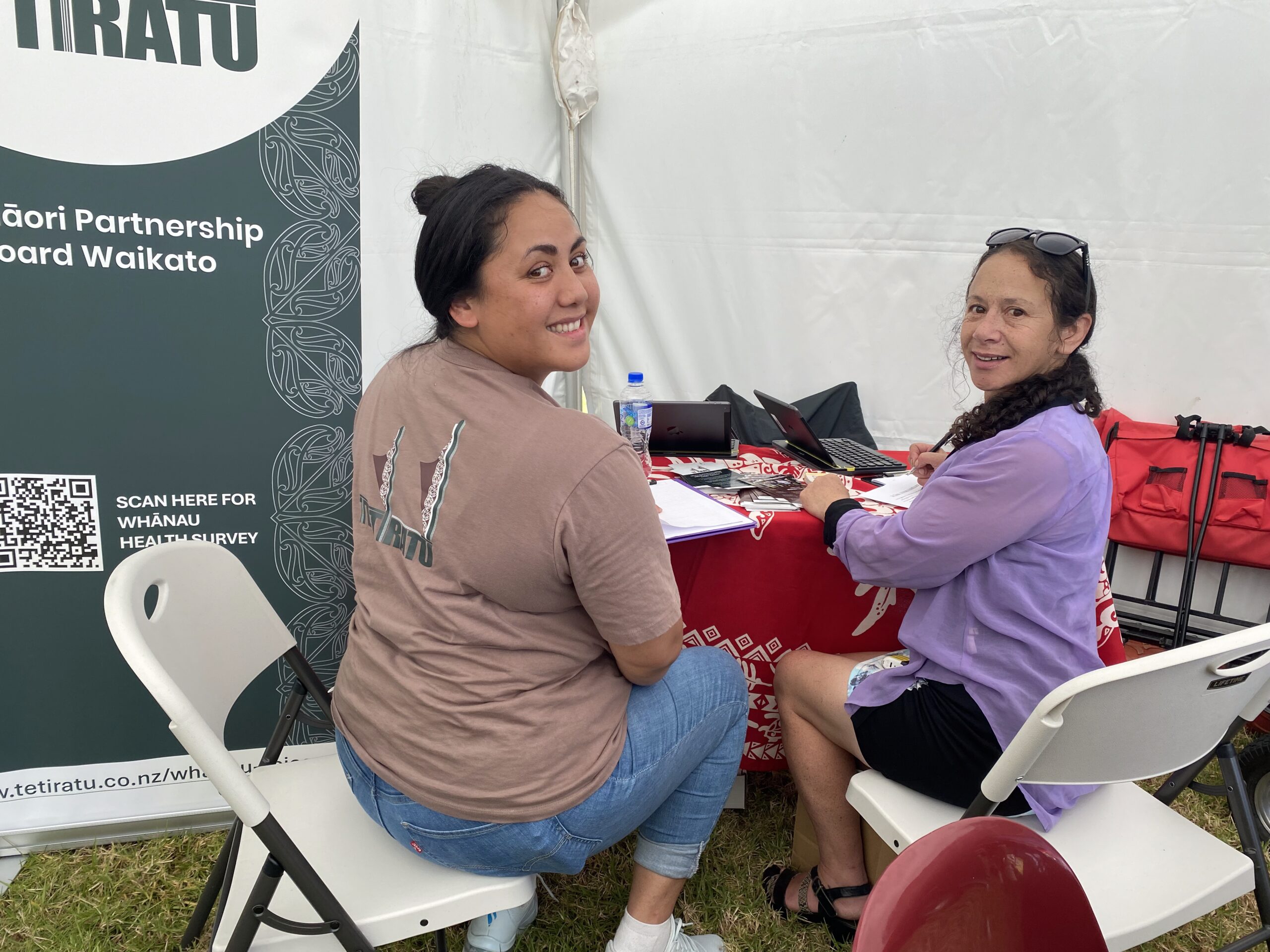
Photo: Raven Torea Whānau Voice kaimahi Te Tiratū Iwi Māori Partnership Board and local whānau giving whakaaro.
“Not enough money.”
This is the silent crisis. Whānau are struggling to afford warm homes, healthy kai, and basic healthcare. For many, choosing between kai and medication is a painful daily decision.
- 27% of whānau said the cost of care is their biggest health barrier.
- That’s more than one in four.
The cost of living came up more than any other challenge. One father shared:
“I work seasonal jobs. I can’t always afford the doctor. So I wait.”
Another said: “Appointments, prescriptions, fuel to get there—it’s too much. Sometimes we choose between kai and meds.”
This is more than just money. It’s about dignity. About being forced to choose between filling a prescription or putting food on the table. About delaying care until it’s urgent.
“We go to the hospital because there’s nowhere else.”
When GP appointments aren’t available, hospitals fill the gap—especially for rural whānau.
- Many whānau told us they use ED services for non-emergencies.
- Others described long wait times, lack of transport, and stress.
Some said they waited from 8-11 hours at A&E—long, draining hours for kaumātua, pēpi, and māmā. Rural hospitals had shorter wait times 3-6 hours. Some had to give up and go home. Others sat in shuttle vans all day to reach the nearest hospital, with no breaks, no support, and no energy left.
“We’re rural,” one koro said. “It’s hard to get anywhere. The system wasn’t built for people like us.”
“We want doctors who understand us.”
Whānau told us they feel safer and heard when care is delivered by people who understand their world, their tikanga, their reo.
- 14% of respondents said the cultural safety of care needs to improve.
- Many said Māori health workers and services made a positive difference.
“We need more Māori nurses and doctors. They get us. They listen. They didn’t just treat us. They respected us.”
“When we went to a kaupapa Māori clinic, they treated us with mana. It wasn’t just the medicine—it was the whole experience.”
But too often, not everyone receives that experience and the opposite is true. One whānau shared a story about caring for their kaumātua in hospital: “The immigrant nurse lacked empathy. No pillow, no kindness, no empathy – it hurts.”
“We’ve got ideas, if someone would listen.”
Whānau didn’t just tell us what’s wrong—they told us what would help. Their priorities were consistent, clear, and backed by strong numbers:
- 24% of whānau said we need more doctors, more appointments, and shorter wait times. Our people are tired of waiting weeks—or months—to be seen.
- 27% said the cost of care is too high. Lower costs, especially for low-income families and those not eligible for subsidies, would make a huge difference.
- 14% called for better transport and services closer to home especially for rural and remotely based whānau, distance is a major barrier. More transport options and local services are needed.
- Another 14% asked for more culturally safe, Māori-led care—where whānau feel seen, heard, and respected.
- 13% want services that talk to each other, with better coordination and communication between providers, clinics, and hospitals.
- 10% reminded us that health doesn’t exist in isolation. They want whānau-centred, holistic support that includes safe housing, stable income, kai, education, and justice.
“Our care needs to reflect our world. Te ao Māori matters in healing.”
“It’s not just one thing—it’s everything.”
Whānau know what good care looks like. The system just needs to catch up.
These stories are not isolated—they are consistent, urgent, and reflect the reality that for many whānau, the health system is not delivering what it promised.
Te Tiratū carries a legal and moral responsibility to ensure our Whānau Voice reporting is heard. We will continue to advocate for a health system grounded in manaakitanga, equity, and tino rangatiratanga.
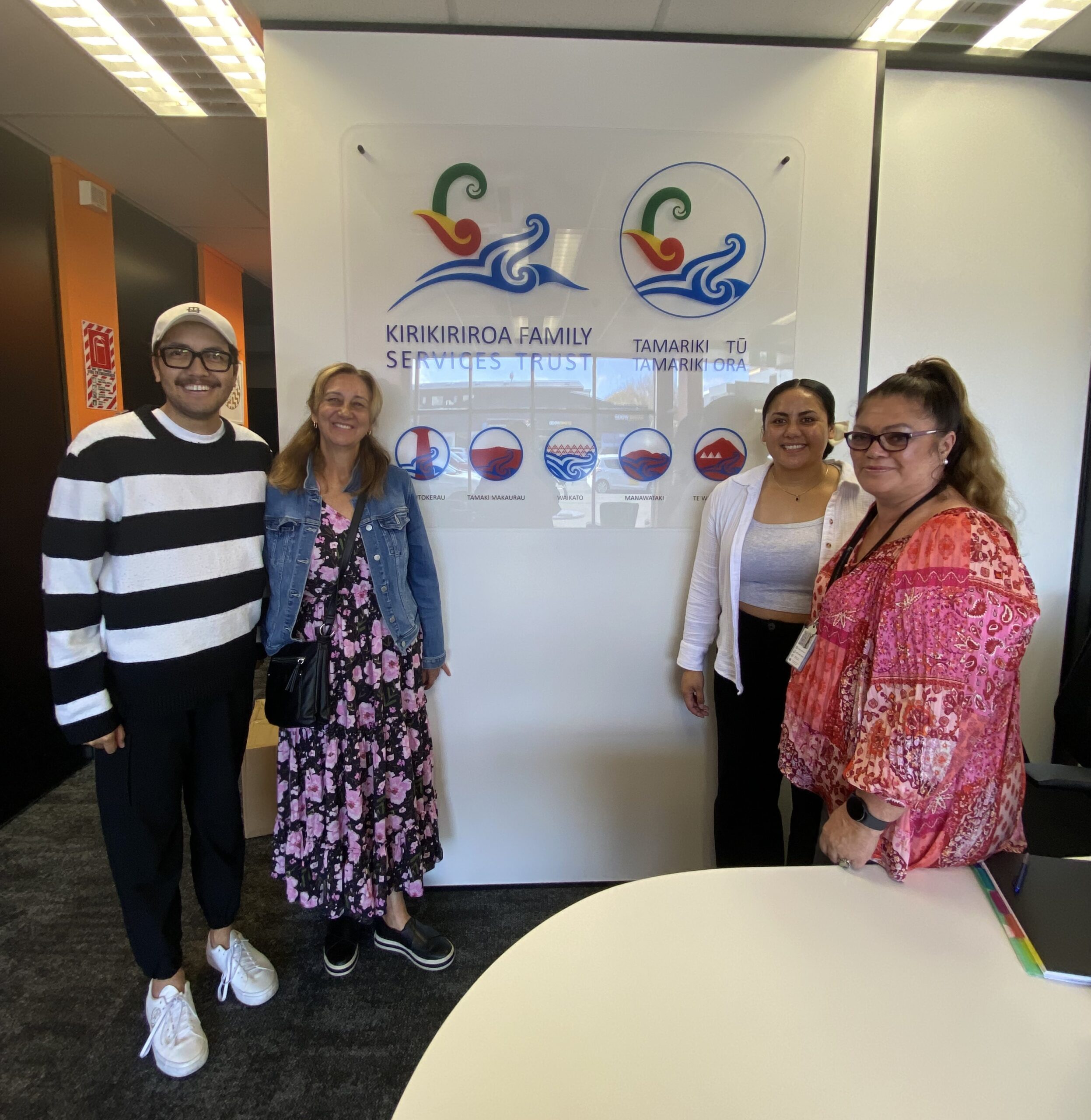
Building bridges with those who walk alongside whānau
Our Whānau Voice team had the privilege of visiting Kirikiriroa Family Services Trust in Kirikiriroa. This kaupapa has its roots in a unique tri-partnership between tripac partnership formed between Maatua Whāngai o Kirikiriroa, Specialist Education Services and Te Kōhao Health to provide the Family Start programme in Hamilton City.
Together, they built a service grounded in early intervention and strengths-based practice — empowering whānau to thrive in their communities by wrapping support around them when it’s needed most.
We were welcomed into their all-of-staff hui to kōrero about Te Tiratū — who we are, the mahi we do, and how Whānau Voice can be uplifted across the motu. We shared ways KFST kaimahi can participate in this kaupapa — as whānau themselves, and as advocates who walk alongside whānau every day.
The team at KFST were engaged and curious, especially around how insights are used to shape systems and services that work for whānau. Their openness signalled strong potential for future collaboration.
At its heart, our visit was about building bridges — whakawhanaungatanga between Te Tiratū Iwi Māori Partnership Board Whānau Voice kaimahi and those working in the community to strengthen whānau.
We know prevention starts with listening early and often. Our relationships with those who deliver frontline services to our Māmās, tamariki and rangatahi in particular are critical — especially those who may not be Māori-led but are deeply committed to whānau wellbeing.
By collaborating together, we ensure whānau are not only seen and heard, but that their voices carry influence — helping reshape the systems that impact their lives.
Ngā mihi nui ki te whānau o Kirikiriroa Family Services Trust. We look forward to continuing to walk this path together.
Regulators removing health workforce cultural safety risks clinical safety - It’s time to double down
Te Tiratū Iwi Māori Partnership Board is calling on health regulators to immediately reject any proposal to remove cultural requirements from the regulation of healthcare professionals, saying such a move would be “irresponsible, inequitable, and dangerous.”
It is responding to the current Ministry of Health online survey Putting Patients First: Modernising health workforce regulation that closes just before midnight. One of the survey questions tests whether regulators should focus on factors beyond clinical safety — such as mandating cultural requirements.
Te Tiratū, which represents 114,000 whānau Māori of the Tainui waka rohe, has submitted a formal response opposing the proposal to remove cultural requirements from regulation.
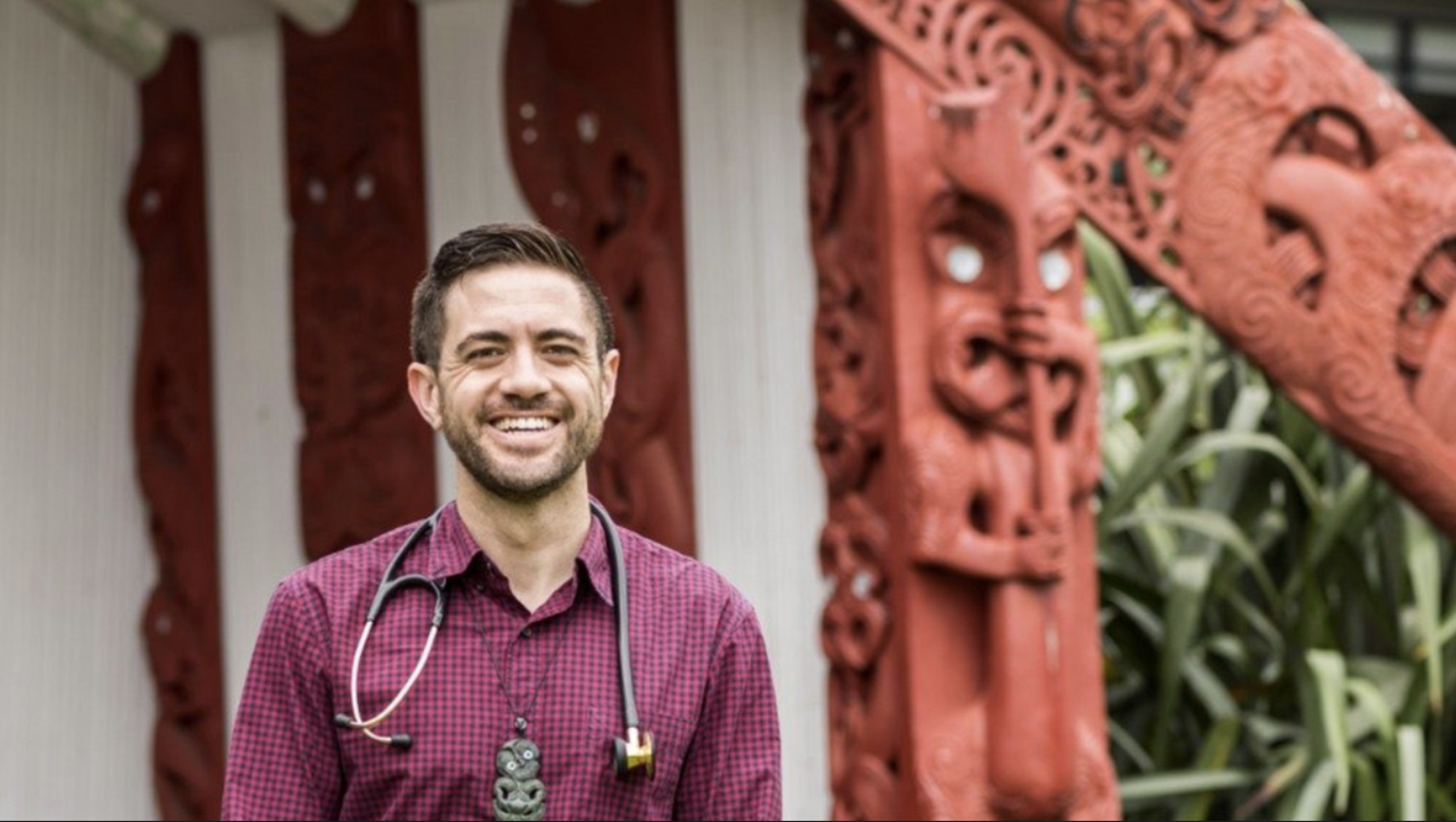
The submission, Response to Proposal to Remove Cultural Requirements from Regulation was prepared by Board member Dr Mataroria Lyndon (MBChB, MPH, PhD), a Senior Lecturer in Medical Education at the University of Auckland, where he trains health professionals in cultural safety.
Dr Lyndon emphasises that cultural safety is not an optional extra — “You cannot have clinically safe care without culturally safe care. Cultural safety is not a parallel concern to clinical standards; it is foundational to them,” he said.
“Removing cultural requirements from regulation can compromise quality of care, deepen inequities, and breach our rights as tangata whenua under Te Tiriti o Waitangi.
Photo: Dr Mataroria Lyndon (MBChB, MPH, PhD) member of Te Tiratū Iwi Māori Partnership Board
“When patients don’t feel culturally safe, they may not share pertinent health information, and as a result diagnosis, treatment, and trust can all suffer. Cultural safety isn’t just about respecting cultural values — it’s about improving health outcomes, clinical quality, and patient wellbeing.”
Te Tiratū fully backs this position. Without cultural safety, patients may not feel comfortable disclosing vital information or engaging with treatment plans — all of which undermines clinical outcomes.
Cultural safety empowers patients — not providers — to define what ‘safety’ means in their care. Without it, patients, especially Māori and other marginalised communities such as takatāpui (LGBTQI+) and tāngata whaikaha (disabled) whānau, face disengagement, reduced access to services, and poorer health outcomes.
The Council for Medical Colleges’ Cultural Safety Training Plan, developed in partnership with Te ORA (Te Ohu Rata o Aotearoa Māori Medical Practitioners), outlines how cultural safety must be embedded across training, clinical practice, governance, and at a systems level.
Its principles are widely recognised by national health bodies, including the Australian Medical Council and Royal Australasian College of Physicians, which link cultural safety directly to clinical and patient safety.
“Culturally unsafe care is unsafe clinical care,” said Dr Lyndon. “To remove these requirements would not only wind back decades of progress toward health equity — it would expose our communities to poorer quality care.”
Research shows that cultural safety is an important pathway to health equity, supporting respectful and accountable engagement between practitioners and communities.
It enables clinicians to work more effectively with Māori whānau by recognising and countering bias, racism, and harmful stereotypes — all of which contribute to more positive patient experiences in the health system.
In September 2024, as part of its legislated functions under the Pae Ora (Healthy Futures) Act 2022, Te Tiratū delivered its Priorities Report to the government, which emphasised the importance of culturally responsive care.[1]
In a separate Community Health Plan also handed to the Deputy Chief Executive of Te Manawa Taki region and senior officials, Te Tiratū reinforced the need for high-quality, community-led, culturally safe healthcare across the Te Tiratū rohe. [2]
Even the government’s own Te Pae Tata Interim New Zealand Health Plan reaffirms the importance of cultural safety training for the Te Whatu Ora workforce.[3]
“These are not new ideas — they are community-driven imperatives and government-endorsed priorities,” said Dr Lyndon. “Contemplating removing cultural requirements from professional regulation flies in the face of both.”
“It’s about ensuring our patients, whānau, and communities are seen, heard, and treated with dignity. Cultural safety is a critical lever to transform the system and structures that continue to disadvantage Māori who on average die between seven and nine years earlier than the general population.”
He points to the recommendations in the groundbreaking 2019 Hauora Report from the WAI 2575 Health Services and Outcomes Kaupapa Inquiry, which affirms the Crown’s binding obligation to ensure Māori have access to culturally appropriate healthcare.
“We are urging all regulators to uphold their obligations to Māori under Te Tiriti o Waitangi and to Aotearoa’s wider commitment to equitable, patient-centred care.”
“This is not the time to retreat — it’s time to double down on cultural safety, for the benefit of all.”
Sources:
[1] Pg23 https://tetiratu.co.nz/wp-content/uploads/2024/10/Te-Tiratu_Hauora-Maori-Priorities-Summary-Report_FINAL.pdf
[2] Pg 6,8,11 https://tetiratu.co.nz/wp-content/uploads/2025/02/Te-Tiratu-IMPB_Community-Health-Plan_FINAL-updated.pdf
[3] Pg15 https://www.tewhatuora.govt.nz/publications/te-pae-tata-interim-new-zealand-health-plan-2022
Bringing the smile back to Taumarunui: Dental care in the spotlight at Hapori Hauora Day
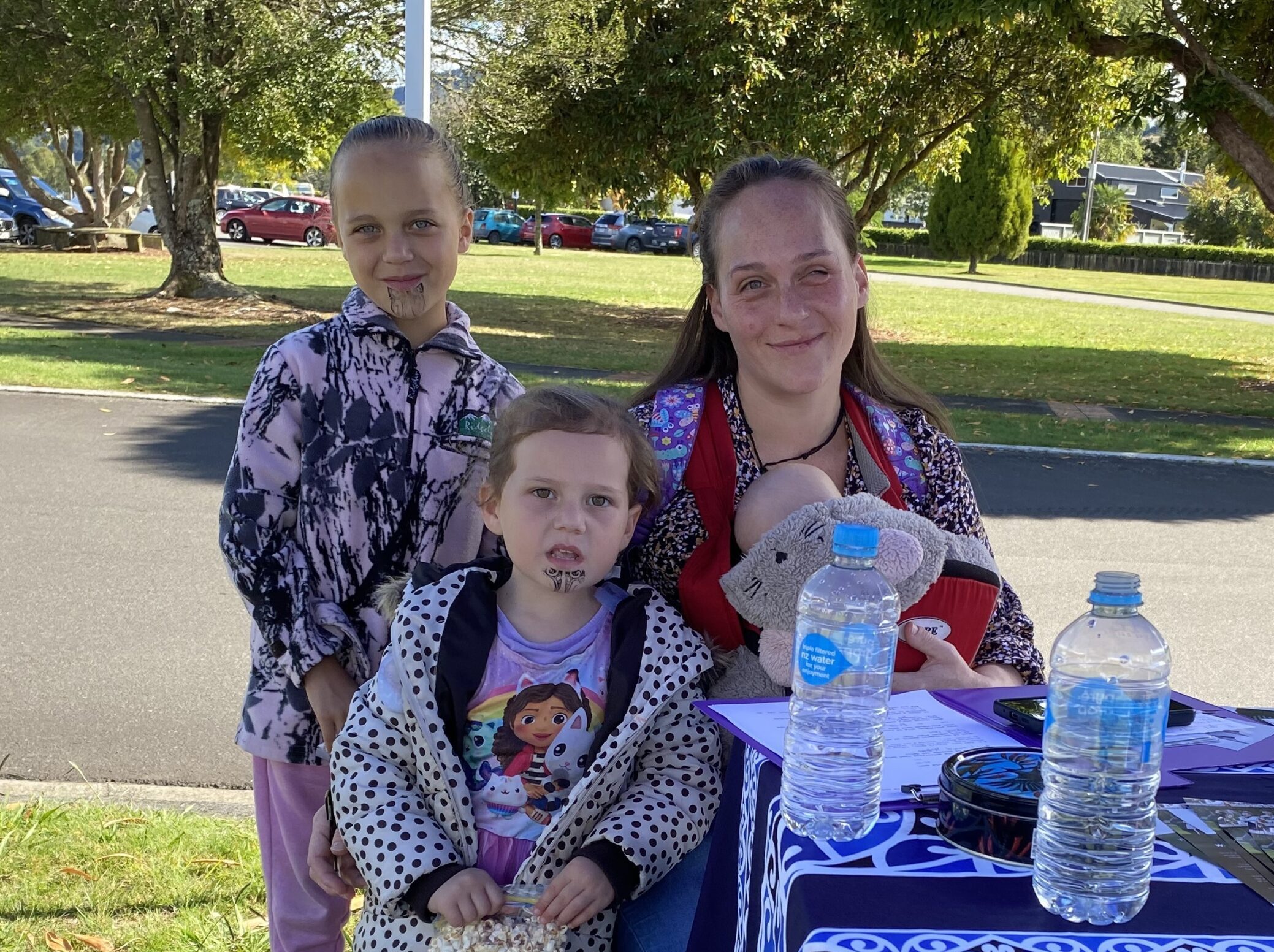
Crowds of whānau gathered today in Taumaranui at the Hapori Hauora Day, a health and wellbeing event designed to connect them with much-needed services—especially those that have been out of reach for too long, including oral health care.
Hosted at Taumarunui Hospital, the event organised by local and Te Whatu Ora services was supported by Te Tiratū Iwi Māori Partnership Board (IMPB) with its dedicated Whānau Voice kaimahi, and it drew attention to the stark gaps in health access across the region—particularly in the areas of dental, eye and ear care.
The Hauora Day provided on-the-spot services that included cardiac/diabetes/cancer screening, an eye clinic, immunisations, gall bladder/hernia/haemorrhoid banding specialists, to skin lesion clinics, but judging by the queues it was oral health and access to dental care that emerged as a top priority for many whānau attending.
“Parents expressed deep concern to get their tamariki seen—lining up in long queues to get access to the visiting dental teams. Yet the cost of treating their own dental issues remains out of reach. Many whānau do the best they can, using services when they’re available—but essential health care shouldn’t come down to waiting in line on a hauora day. That’s not equity—that’s survival,” said Brandi Hudson, Te Tumu Whakarae of Te Tiratū Iwi Māori Partnership Board.
A Call for Regular, Mobile Dental Services
Te Tiratū is advocating strongly for regular mobile dental services to visit remote and rural communities in South Waikato, where many whānau face significant barriers just getting to appointments—if they can find one. With few local dentists, high costs, and long travel times to urban centres, oral health has become a silent crisis.
Why Dental Matters
Oral health doesn’t exist in isolation. Poor dental care can lead to chronic infections, impact nutrition, self-confidence, and is closely linked to other health conditions like diabetes and heart disease. The Hapori Hauora Day included oral health education sessions, helping whānau understand these links and encouraging prevention. But education alone isn’t enough.
Pregnancy also increases the risk of dental issues, and with a high number of young Māori mothers and half the population under 25, the need for regular, accessible dental services is urgent and growing.
Looking Ahead: Growing a Māori Dental Workforce
The solution lies not just in service delivery—but in workforce development. Māori dental hygienists, therapists, and dentists are among the fastest-growing sectors in the health workforce, and the Te Tiratu wants to see that reflected in local service planning.
“Investing in our own people to deliver culturally grounded, community-based care is essential,” said Brandi Hudson. “And that starts with visibility. When our tamariki see Māori dentists in our communities, they start believing it’s a pathway for them too.”
Te Tiratū Iwi Māori Partnership Board hosts inaugural forum with Waikato health providers
Today marks a pivotal milestone for Māori health in the Waikato as the Te Tiratū Iwi Māori Partnership Board (IMPB) holds its first-ever forum with specific regional health providers both mainstream and Māori.
It has brought together those specifically focussed in the area of primary care and cancer to align with current reporting topics that Te Tiratū is canvassing in the community.
The hui is a vital step in realising the aspirations of the Pae Ora (Healthy Futures) Act, which mandates IMPBs to bring the voices of whānau directly into the heart of Te Whatu Ora Health New Zealand planning and decision-making.
At the heart of the discussions are insights gathered through the Whānau Voice initiative — a culturally grounded approach led by Te Tiratū kaimahi using surveys, hui, kanohi ki te kanohi kōrero, and existing research and data.
This powerful community feedback tool paints a sobering picture of the current health landscape for Māori in Waikato.
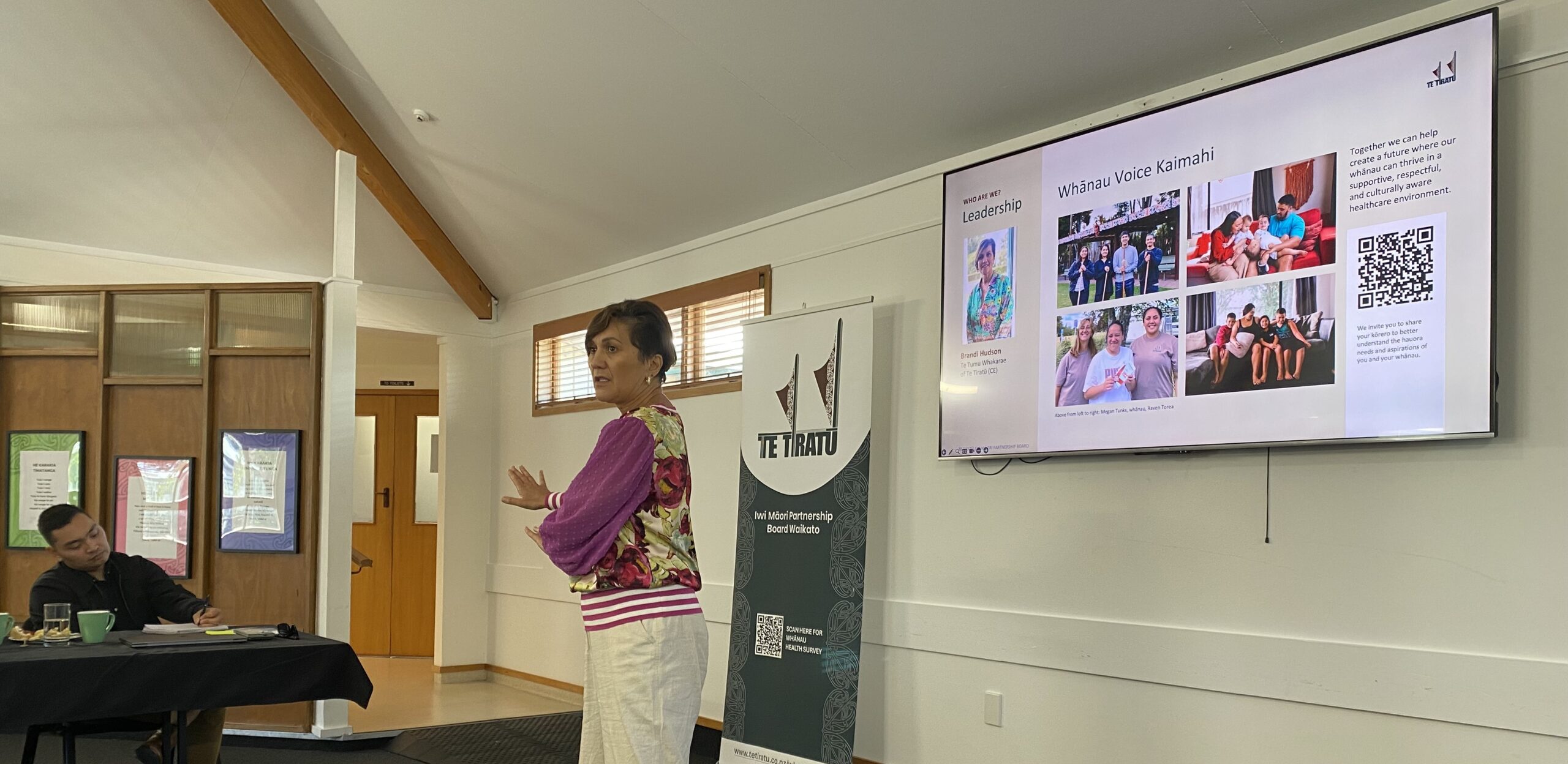
Photo: Te Tiratū Tumu Whakarae, Brandi Hudson presenting to the providers.
Key Challenges Raised by Whānau Voice:
Access & Availability
-
- Long wait times for appointments.
- Shortage of Māori-led, tamariki-focused, and mental health services.
- Disrupted continuity in GP care and low trust in the system.
- Health Navigation
- Strong call for more health and whānau navigators.
- Confusion around available services and support pathways.
- Lack of follow-up and poor communication post-diagnosis.
- Cancer Journeys
- Late diagnoses, particularly lung and prostate cancers.
- Emotional and financial strain on kaumātua caregivers.
- Gaps in transport, spiritual care, and access to rongoā Māori.
- System Gaps
- Fragmented care and poor integration between hospitals, PHOs, and services.
- Limited awareness of entitlements like travel support and Cancer Society aid.
“These stories are a clear call to action,” says Brandi Hudson, Te Tumu Whakarae of Te Tiratū.
“Whānau are asking for a system that listens, responds, and restores trust. Today’s forum is a first step in reshaping that system together with these providers who understand the lived realities of our people.”
“It’s only the start as we intend to proactively meet with many diverse stakeholders in the system operating in our regional area – Māori providers, mainstream providers, NGOs – to zero in on specific areas of interest we’re monitoring.”
Demographic Realities Driving the Urgency:
The Te Tiratū region has a youthful and growing Māori population, projected to rise from 25% in 2023 to 29% by 2043. Nearly half (48%) of Māori are under 25, demanding proactive and youth-focused planning.
At the same time, the Māori population aged 65+ is set to grow by 40% by 2043, increasing the need for age-friendly, culturally safe services for kaumātua and kuia — who already face greater financial barriers to care than their non-Māori counterparts.
Health Priorities Set by Te Tiratū IMPB:
As part of its Community Health Plan, Te Tiratū has tabled three immediate priorities with Te Whatu Ora:
- Pepe and Māmā – First 100 Days
- Māori infants face 1.5x higher rates of avoidable hospital admissions and are almost twice as likely to die as non-Māori infants.
- Hauora Hinengaro – Mental Wellbeing
- Psychological distress among Māori adults is climbing (from 11% to 18%), with 18% of the region’s 47,000 mental health-related GP visits involving Māori.
- Ngā Kaumātua me Ngā Kuia – Elders’ Health Equity
- While older Māori may delay care less frequently, they report more hardship accessing services than non-Māori peers.
Today’s forum is the first of many to come facilitated by Te Tiratū IMPB uniting health system stakeholders to explore and respond to the latest Whānau Voice insights.
“Whānau Voice is not just a report — it’s a relationship,” says Hudson.
“The insights shared come from trust built kanohi ki te kanohi. That’s what our health system needs more of: trust, connection, and commitment to Māori solutions.”
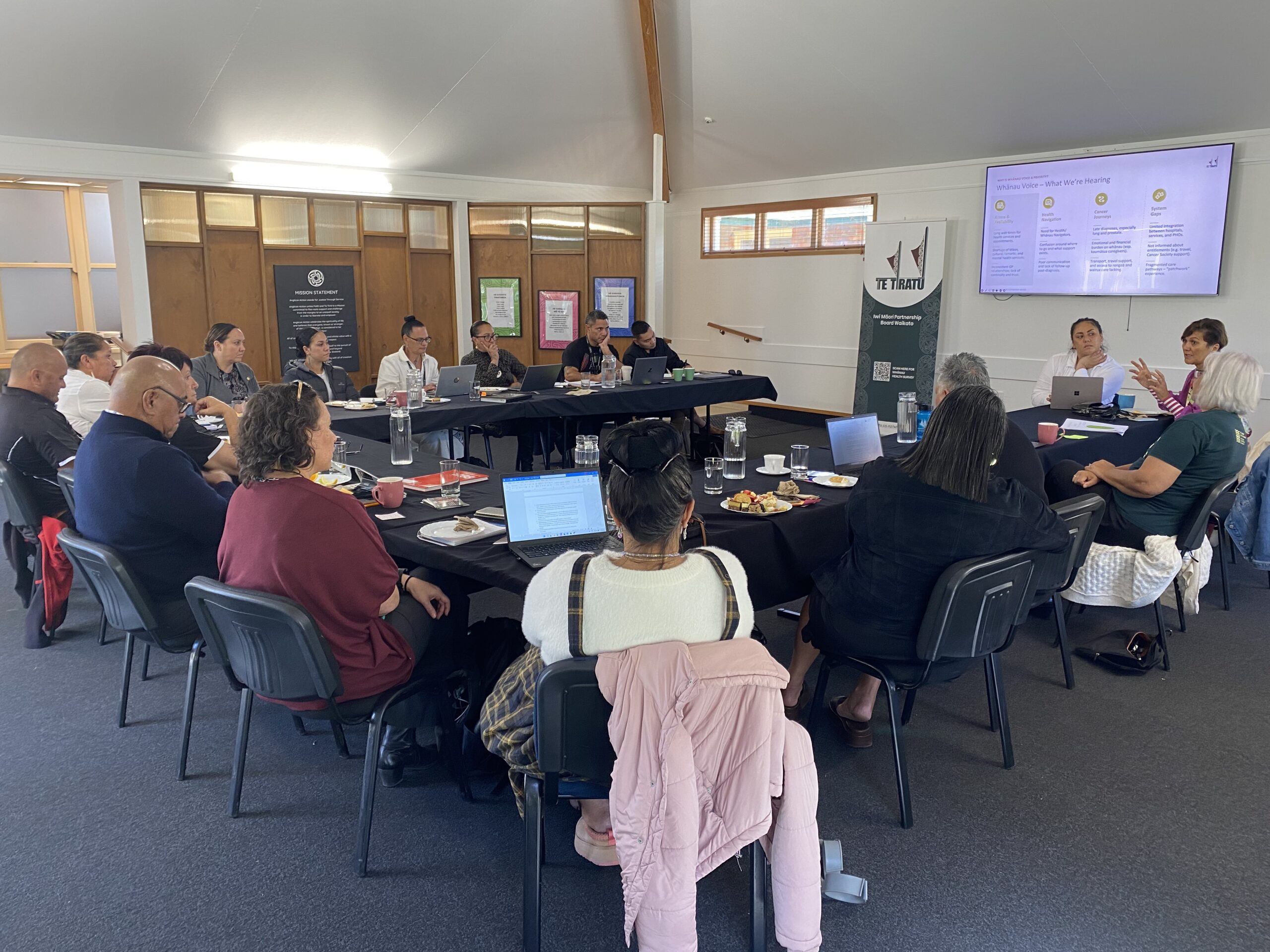
Providers speak up: Te Tiratū forum sparks call for action
Ethos Café in Hamilton provided the perfect backdrop for a powerful first forum hosted by Te Tiratū bringing together a diverse group of health service providers both Māori and mainstream, all committed to transforming outcomes for whānau Māori.
In what participants described as a much needed wānanga, the gathering offered a valuable opportunity to share insights, reconnect with kaupapa Māori approaches to health, and explore how collective action can drive change. It also allowed Te Tiratū Tumu Whakarae, Brandi Hudson to showcase the mahi of the Iwi Māori partnership Board to the providers, strengthening ties across the sector.
At the heart of the discussion was Whānau Voice — a critical reporting tool developed by all Iwi Māori Partnership Boards (IMPBs) to meet obligations under the Pae Ora Act. Providers acknowledged the potential of Whānau Voice to be powerful in advocacy when influencing Te Whatu Ora’s policies, planning, and resourcing — particularly around cancer care, screening, and primary care. Te Tiratū is specifically surveying whānau currently using Whānau Voice on their experiences of primary care and/or cancer screening and treatment.
However, the forum also surfaced shared frustrations: much of the data currently collected ends up buried in compliance reporting, with little meaningful action taken. “We’re ticking boxes, not transforming outcomes,” one provider noted. There was strong consensus that this could — and should — change, and that collaboration is the key.
“We want to work smarter, not harder,” was a recurring theme, especially around data sovereignty, coordination, and the need for intentional and culturally grounded collection methods.
A System Struggling, Whānau Paying the Price
Many participants voiced deep concern about the ongoing challenges whānau face navigating a fragmented and under-resourced health system. From late-stage cancer diagnoses to traumatic hospital experiences, the stories shared painted a powerful picture of a system that is not working—especially for Māori.
Several attendees noted that the current model is failing to keep pace with the lived realities of Māori communities. With the Māori population in Waikato continuing to grow, serious questions were raised about the system’s readiness to care for a rising number of kaumātua—and what actions need to be taken now to prepare for the future.
The importance of strong, accessible primary care emerged as a key theme. Providers emphasised that GP enrolment is a vital point of early intervention, preventing avoidable Emergency Department visits and worsening health conditions. Yet the system continues to place barriers in the way of access.
Transport was raised as a significant obstacle. The high cost of fuel and parking makes regular medical appointments out of reach for many Māori. For those in rural areas, attending hospital-based specialist appointments is often impossible—not just due to distance, but because they also require overnight accommodation to manage the time, travel, and exhaustion involved. Participants were clear: practical solutions to these challenges must be prioritised now.
Partnerships, Innovation, and Hope
Despite the challenges, the mood was hopeful. Many providers expressed a clear desire to continue meeting, strategising, and aligning efforts across the region. Initiatives such as the Mangatoto Pā clinic and digital consultations were celebrated as steps forward, especially for whānau who feel safer and more respected in marae-based or online environments.
One moving example was shared of a dedicated cancer nurse walking alongside rangatahi on their cancer journey, showing the powerful impact of culturally responsive, whānau-centred care. These stories of dedication stood in contrast to the many accounts of systemic failure — reinforcing why Māori-led solutions are so essential.
Providers also recognised the need to rebuild trust with whānau, many of whom have become disengaged after repeated negative experiences. This means creating space for patient-led approaches and ensuring services are delivered in the right way, at the right time.
From a young adult cancer patient’s plea for less “doom and gloom” to calls for more rongoā, karakia, and time for kōrero — the messages were clear: we need a system grounded in humanity, connection, and tino rangatiratanga.