Māori health leaders are calling for ethnicity to remain part of how primary healthcare funding decisions are made, warning that removing it risks overlooking the needs of Māori whānau.
Te Tiratū Iwi Māori Partnership Board and Te Taura Ora Iwi Māori Partnership Board represent more than 193,000 Māori across Waikato and Rotorua and are advocating for a funding system that reflects the realities of Māori communities.
The Boards say health funding is not just about numbers; it determines whether whānau can access the services, support and care they need.
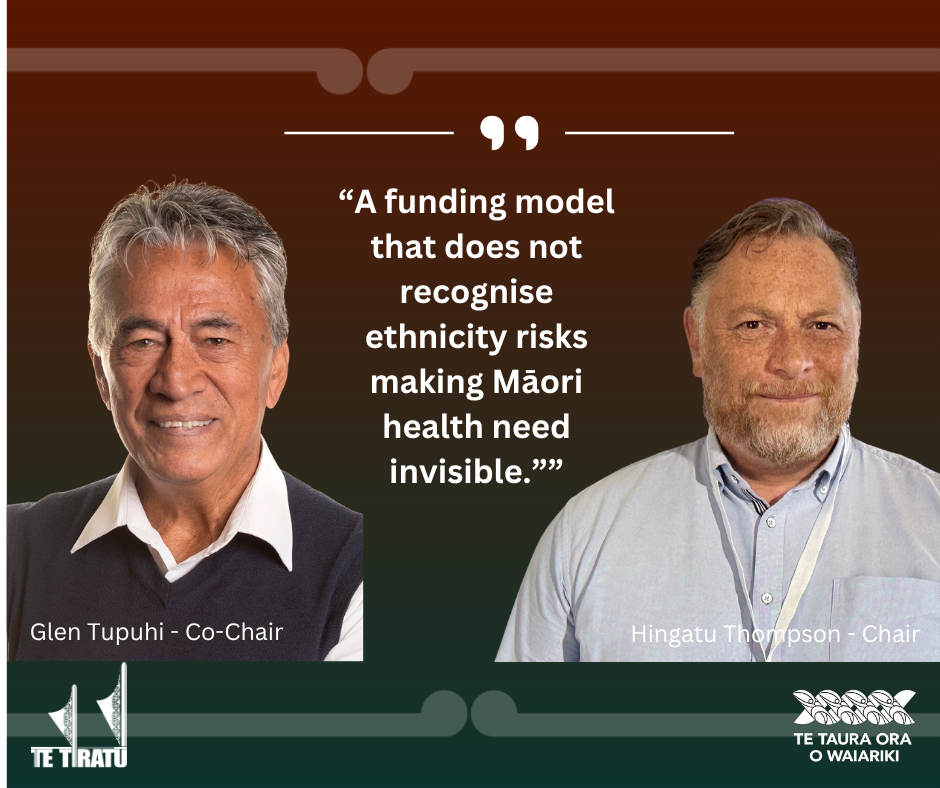
“The way health capitation funding is designed matters. It must reflect the obligations of Te Tiriti o Waitangi and recognise the realities faced by Māori communities,” said Glen Tupuhi, co-Chair of Te Tiratū Iwi Māori Partnership Board.
“A funding model that does not recognise ethnicity risks making Māori health need invisible.”
The new primary care funding model considers factors such as age, deprivation, rurality and complexity of health conditions. However, ethnicity has been removed from the main funding formula, with an Equity Adjuster introduced as a temporary measure.
The Boards say equity funding should strengthen a fair system and not replace a formula that fails to recognise Māori health needs.
Research published in the New Zealand Medical Journal found ethnicity remains an important predictor of health outcomes, even after considering factors such as income, location and existing health conditions.
The study found Māori were 46% more likely than non-Māori to die from conditions that could have been prevented or treated through effective healthcare.
Te Tiratū and Te Taura Ora say Māori health inequities cannot be understood by looking only at poverty, location or illness.
“Ethnicity provides important information about health need and must remain part of how funding decisions are made,” said Hingatu Thompson, Chair of Te Taura Ora Iwi Māori Partnership Board.
The Boards are calling for assurance that Te Tiriti o Waitangi remains central to health funding decisions, that ethnicity continues to be recognised as a measure of health need, and that Māori health leaders and providers have a meaningful role in shaping future investment.
“If Māori health need is not visible in the funding model, it becomes easier for inequity to remain invisible across the health system,” Thompson said.
The Boards will write to the Minister of Health, the Hauora Māori Advisory Committee and Te Whatu Ora Health New Zealand to seek assurance that Māori health remains central to future funding decisions.
Te Tiratū and Te Taura Ora support greater investment in primary care, including stronger funding for GP services, rural communities, immunisation, prevention, early intervention and support for whānau managing long-term health conditions.