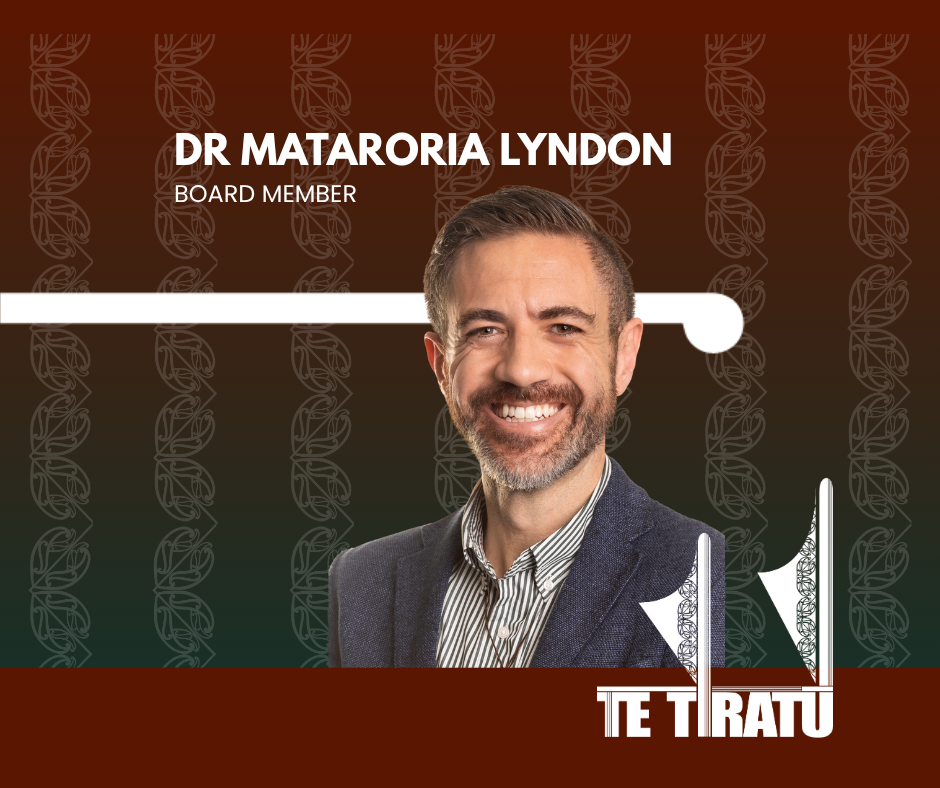
Our Board member, clinician and Senior Lecturer in Medical Education at the University of Auckland, Dr Mataroria Lyndon says new draft guidance from the Medical Council of New Zealand is an important step forward for the health system, but it must go further to truly deliver for whānau.
In his submission filed today responding to the Council’s work on cultural competence, cultural safety, and hauora Māori, he described it as timely and a clear signal of commitment to improving equity and strengthening expectations for culturally safe medical practice.
He says the Council should be commended for advancing this work while also noting there is a significant opportunity to more fully express what cultural safety means in Aotearoa and why it matters.
Cultural safety must go further
Cultural safety was developed in this country as a response to inequity and to address racism, bias, and power imbalances in the health system. Dr Lyndon believes it must remain grounded in Te Tiriti o Waitangi, equity, and the redistribution of power. Without that depth, there is a risk it becomes reduced to a technical competency rather than the transformative framework it was intended to be.
He explains that cultural competence and cultural safety are not the same. Cultural competence is about the skills and knowledge of a clinician, while cultural safety is defined by the experience of patients and whānau. That means only whānau can determine whether care felt safe. The shift is not just about improving behaviour but about changing relationships and power so people feel respected, heard, and able to participate in decisions about their own care.
Dr Lyndon also points to new guidance from the Nursing Council of New Zealand, saying it is more progressive in how it clearly names racism, centres equity, and grounds cultural safety in Te Tiriti. He says this shows what is possible and provides a strong foundation for alignment across the health sector.
A key concern raised in his submission is that the current draft focuses too heavily on individual clinicians. While self-reflection and awareness are important, they are not enough to address deeper drivers of inequity such as institutional bias and system level barriers. Dr Lyndon says cultural safety must be owned by the whole system including organisations and leadership, not just individuals.
What this means for whānau
He also calls for stronger accountability so cultural safety is not only reflected on by practitioners, but a measurement of whānau experience and health outcomes. What matters most is whether people feel safe and whether equity is improving.
On hauora Māori, Dr Lyndon supports the draft statement and says it appropriately centres Māori health, acknowledges colonisation, and recognises the right to equity and self-determination. He also sees an opportunity to strengthen the focus on Māori led solutions, system accountability, and whānau centred care that looks beyond immediate treatment to long term and intergenerational wellbeing.
For whānau, this work is about being able to access care without fear, being listened to, and having their knowledge and lived experience valued. Dr Lyndon says the direction is right and the intent is strong, but this is a moment to go further so Aotearoa can build a health system that truly delivers for Māori and for all whānau.