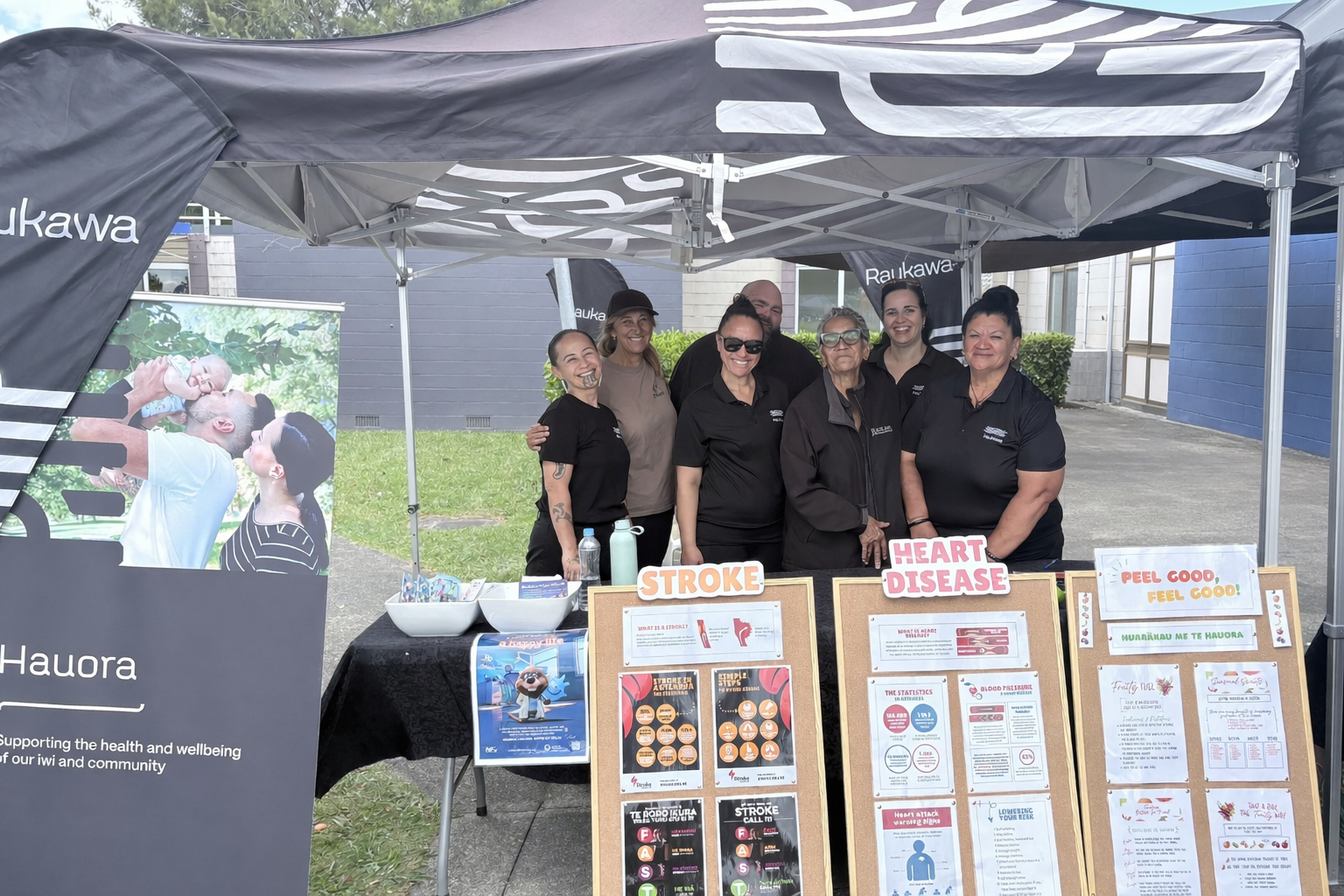
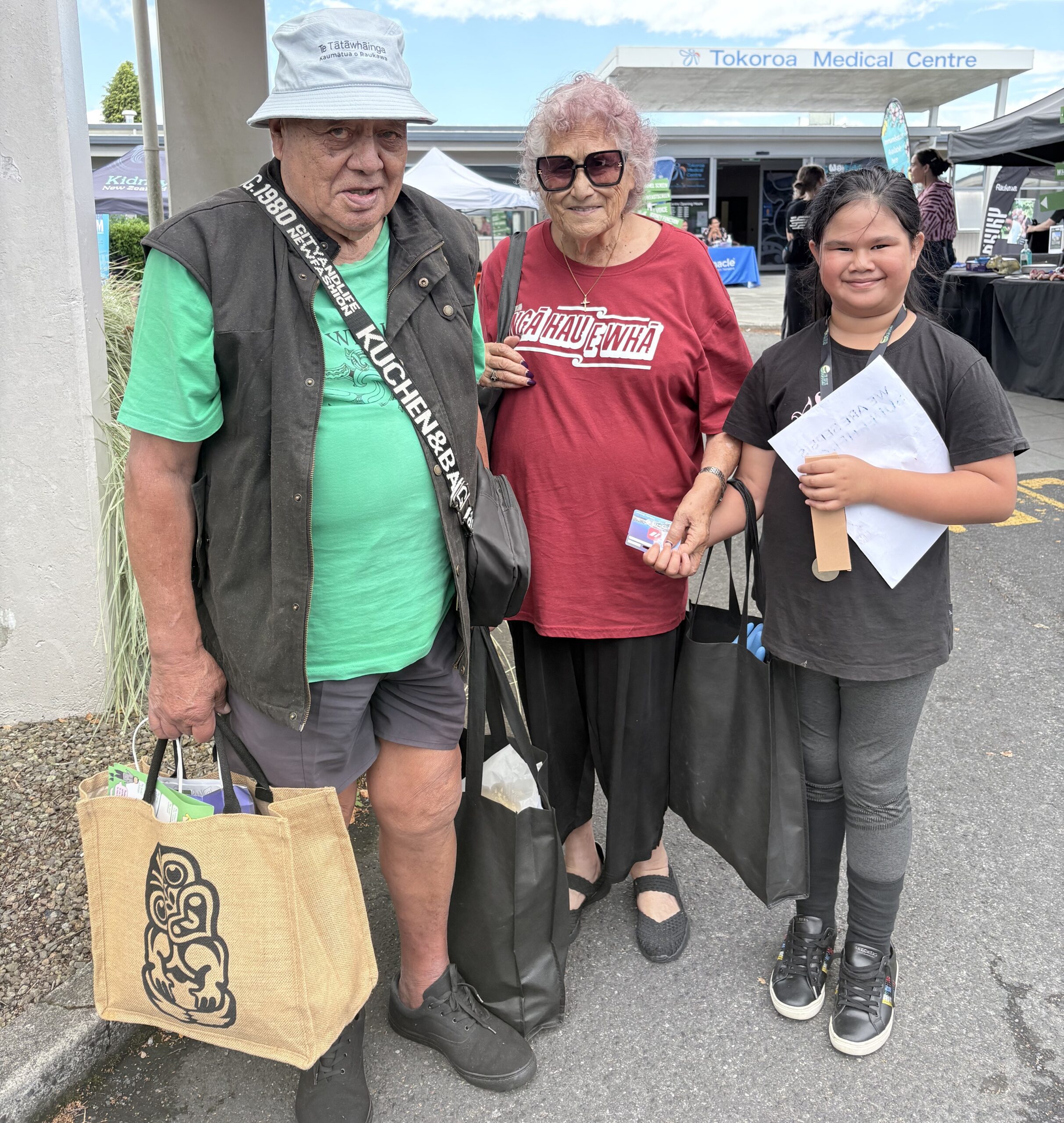
Whānau in Tokoroa came together for the Hauora Day at Tokoroa Hospital organised by South Waikato Community Services. The event brought together health providers, clinicians, community organisations, locals, and the Te Tiratū Whānau Voice team, offering a wide range of health, wellbeing, and support services for all ages.
Our kaimahi completed a dozen surveys and had countless conversations with whānau that revealed common concerns, including diabetes, respiratory conditions like asthma, mental health challenges, and addiction.
Many whānau appreciated the presence of nurses at the event, who offered advice, education, and quick checks for blood pressure, diabetes, and cardiovascular risks. Skin lesion checks and general surgery advice were also available, alongside children’s vision and hearing screenings, oral health checks, cervical and HPV screening, breast and bowel screening guidance, and pre-school health assessments.
Several whānau highlighted that sitting down with health professionals helped them better understand their conditions and the guidance they receive. Health promoters were also on hand to provide education and prevention support. Free information on immunisations, Well Child Tamariki Ora services, and whānau education programmes supported families in navigating care.
Access to GP appointments was generally possible for urgent needs, but standard appointments often involved waits of around two weeks. Some whānau said they resorted to Accident and Emergency when earlier care was unavailable.
Advocacy from nurses such as liaising with GPs or helping prepare for appointments was seen as vital. Whānau noted the importance of having family members who understand the health system or can help interpret medical advice, particularly when travelling to Waikato Hospital added stress and cost.
Access to affordable, healthy kai was also raised as an ongoing challenge for some families.
Mental health services were mentioned by a small number of whānau who had lived experience of the system. They spoke about long waits to see a psychologist and the difficulty of finding clear information about available support. There was also interest in kaupapa Māori mental health services and culturally grounded responses.
Rangatahi wellbeing was a recurring topic. Whānau voiced a desire for more youth programmes and activities, expressing concern over vape and gambling outlets and their impact on young people. Other concerns raised included communication between schools and families about health risks.
One parent described frustration when there had been a delay in communication after a person with COVID-19 had been on a school bus, which was particularly concerning because their child was immunocompromised.
Community safety was also mentioned, including concerns about parking and pedestrian crossings around a local primary school.
Employment opportunities were another topic raised in conversations with the Te Tiratū team. Some people were concerned that overseas companies were bringing in workers from other countries while employment remains a challenge for some local residents.
A small number of whānau also spoke about experiences of racism in the wider community, although these experiences were not specifically linked to the health system.
Alongside the challenges, whānau also spoke positively about the work of local providers and community organisations. Programmes that support health education, including diabetes education, were appreciated, as were community initiatives focused on wellbeing.
A local kaumātua group was mentioned as an example of a kaupapa that brings older people together through activities and guest speakers. Community food māra kai initiatives were also recognised for helping whānau access healthy food.
Support for the Cancer Lodge was also acknowledged, with whānau noting the importance of having accommodation available for patients and whānau who need to travel for cancer treatment.
The Hauora Day offered a full range of services beyond clinical checks. Parenting, men’s and women’s groups, elder safety and financial harm support, Family Start home-based parenting programmes, healthy homes guidance, driver and truck licensing, apprenticeship and employment pathways, financial literacy, smoking cessation support, transport assistance, and community referrals including the Putāruru shuttle service were all available.
For the Te Tiratū Whānau Voice team, the day was a vital opportunity to hear from whānau directly, ensuring their experiences and priorities inform our ongoing advocacy work to improve health outcomes across the rohe, particularly in Tokoroa where 46.6% of the population has identified as Māori.