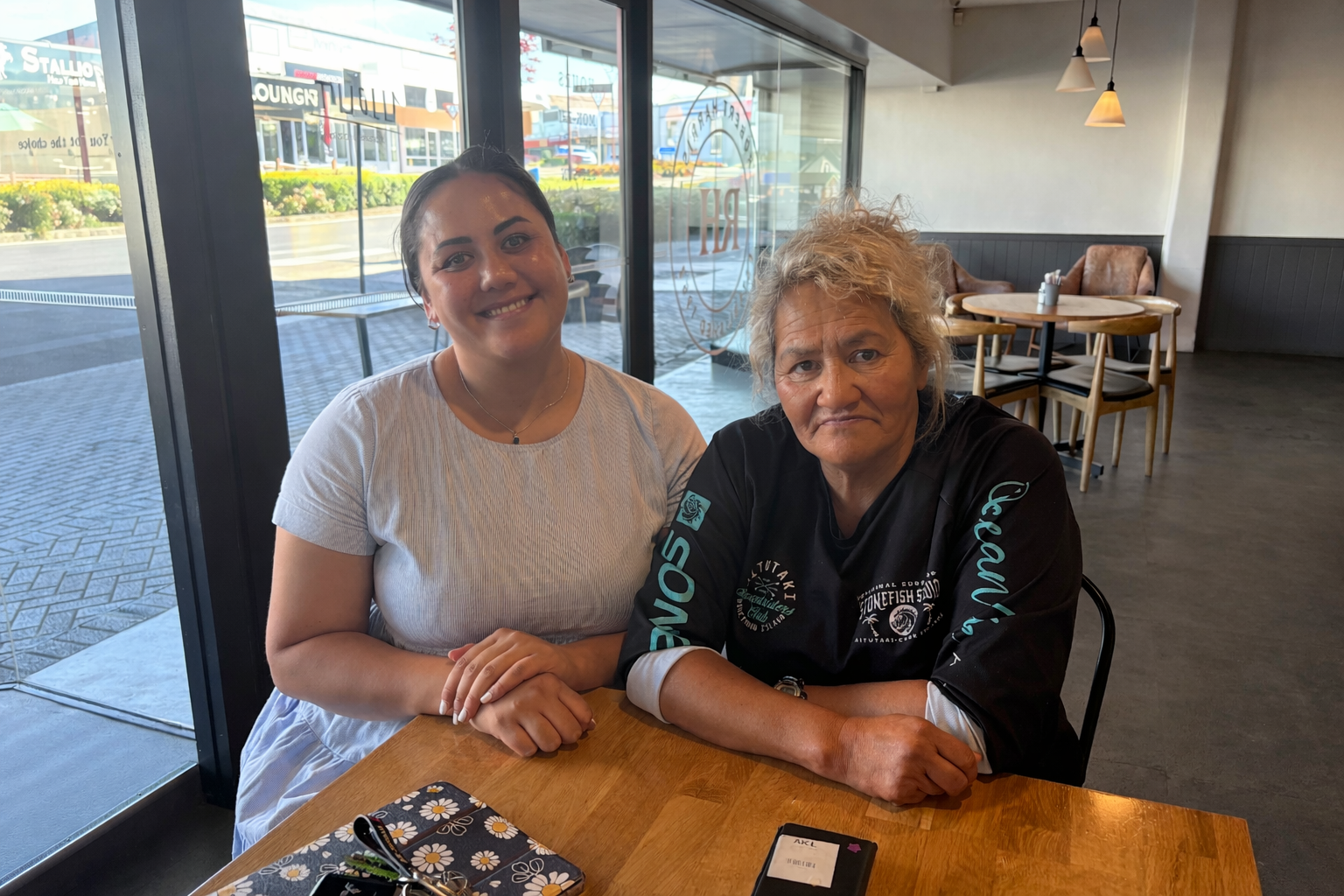
Photo: Raven Torea with Whāea Lynette Stafford
Healing grounded in aroha and intention sits at the heart of rongoā Māori. As the whakataukī says, He ringa nā Rongo, he ringa nā te aroha, the hands that heal are guided by peace and care.
The Whānau Voice team recently spent time with rongoā Māori practitioner Lynette Stafford, gaining insight into a healing practice that weaves mātauranga Māori with contemporary therapeutic approaches.
Lynette, known to many as Whāea Lynette, is a rongoā practitioner working through her organisation Te Kora O Mahuika, a Waikato-based provider covering Te Awamutu, Kāwhia, Te Kūiti and Hamilton. Her work takes her across the rohe, and she is in high demand, supporting whānau with injury recovery and wellbeing.
Around 96 percent of Lynette’s mahi is funded through ACC referrals, reflecting growing recognition of rongoā Māori as a legitimate and effective pathway for healing. ACC currently supports rongoā as part of injury recovery, and Lynette is formally trained through Te Wānanga o Aotearoa, where she completed her rongoā qualification. She is also trained in the Emmett Technique, a specialist muscle release therapy that uses gentle finger pressure on specific points of the body to support physical recovery.
Lynette explained that the Emmett Technique is suitable for addressing a wide range of physical and non-physical injuries, and that practitioners must be formally trained to apply it safely. In her practice, this technique often sits alongside rongoā Māori, including rongoā rākau, where native botanicals are used as part of healing. These plants are carefully sourced and applied with knowledge handed down through generations.
For Lynette, rongoā is never “just one thing”. She shared that people sometimes think rongoā is only mirimiri or karakia, but in reality it is a holistic system of healing that includes different forms of treatment, spiritual care, physical techniques, plant knowledge, and deep connection to whenua and whakapapa. In Waikato alone, there are a small number of trained practitioners, each carrying distinct knowledge and approaches.
The visit was especially meaningful for Whānau Voice kaimahai, Raven, who is also a nursing student. Seeing how rongoā Māori and techniques like Emmett can sit alongside Western health practices was new to her and highlights the potential for truly complementary care that centres whānau needs and lived experience.
Time with Lynette reinforced the value of kaupapa Māori healing approaches and the importance of creating pathways where whānau can access care that feels culturally safe, effective, and grounded in who they are. For Te Tiratū and the Whānau Voice team, this visit was a powerful reminder that wellbeing is relational, holistic, and deeply connected to whenua, mātauranga, and whānau.