
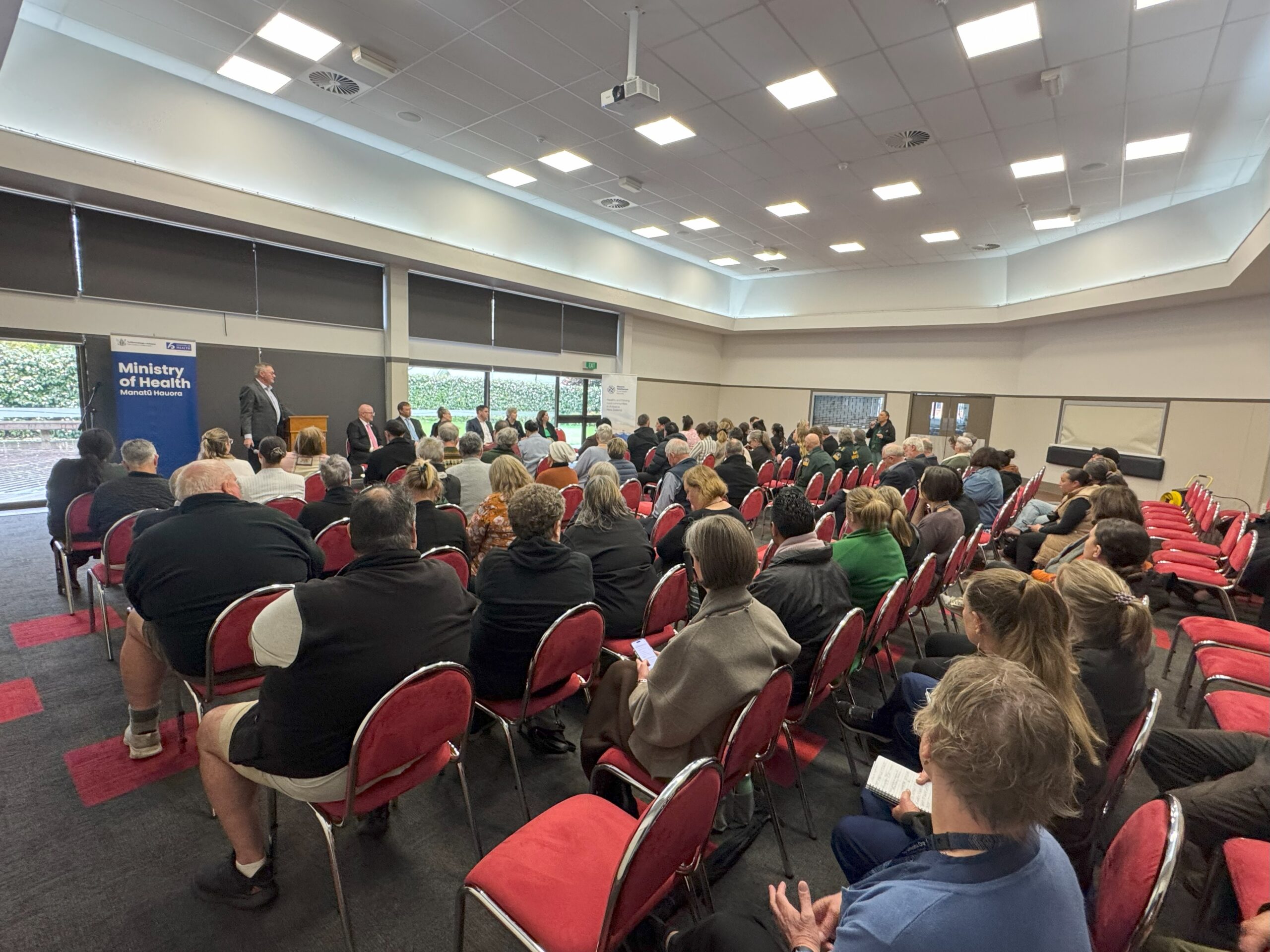
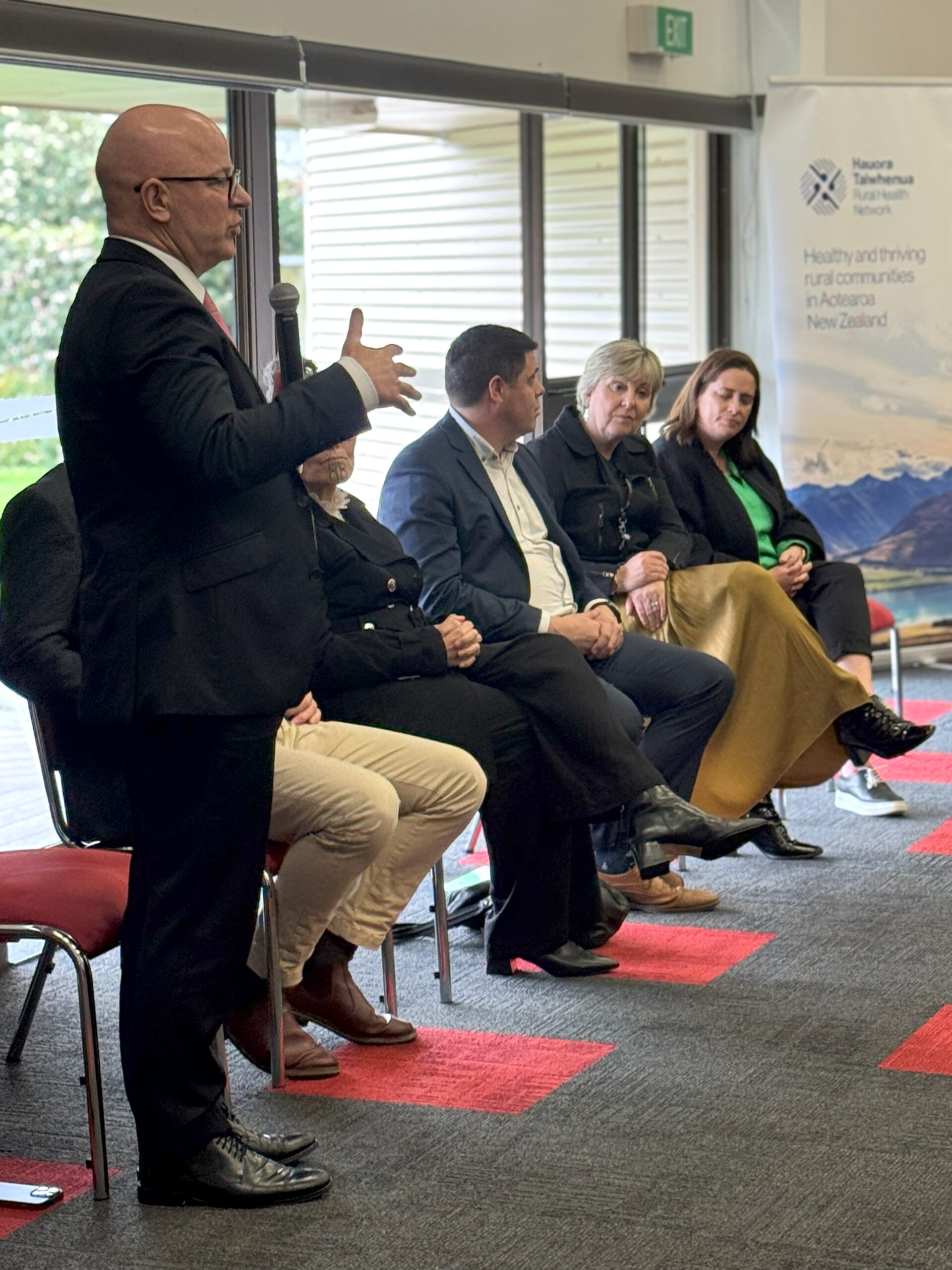
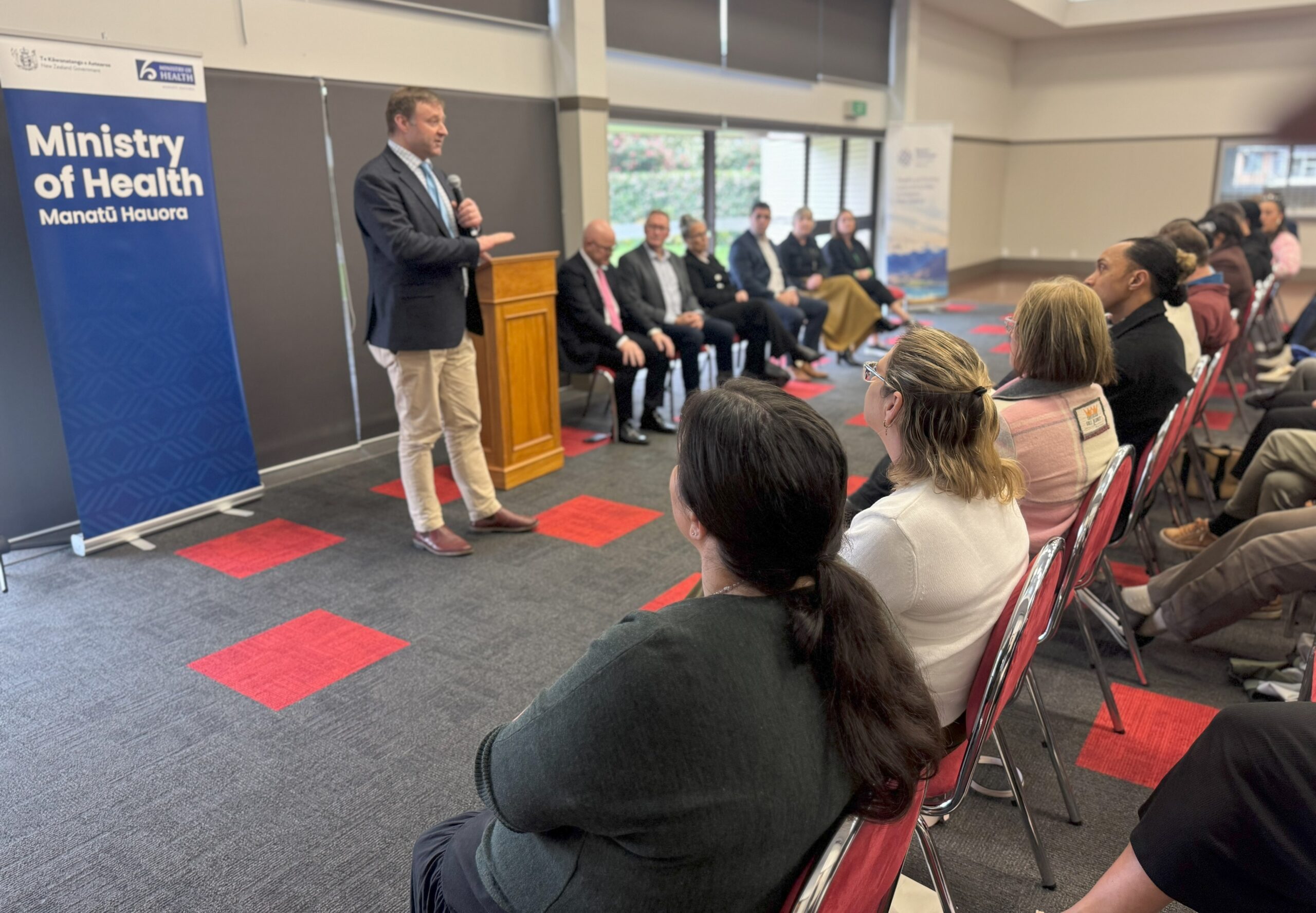
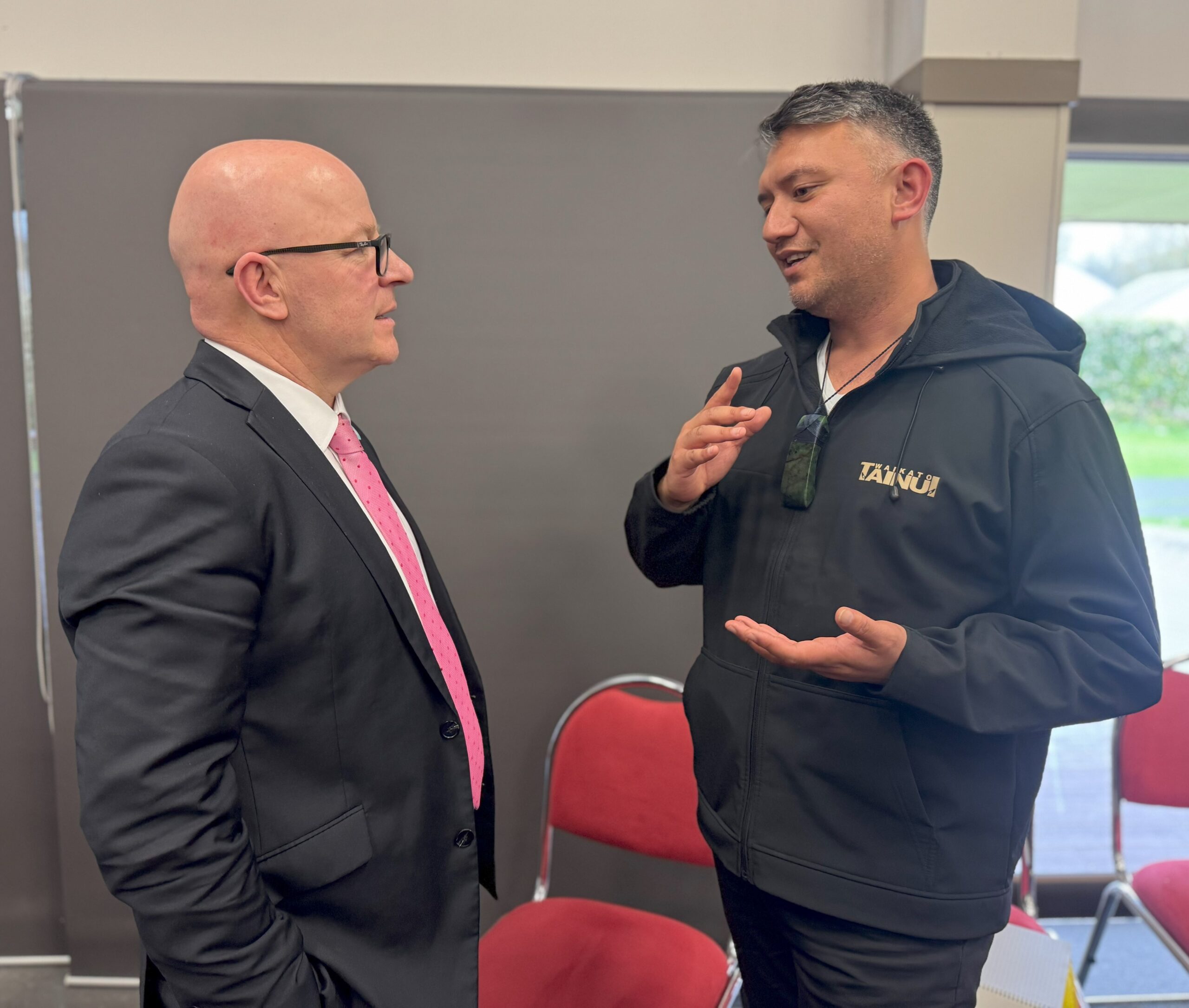
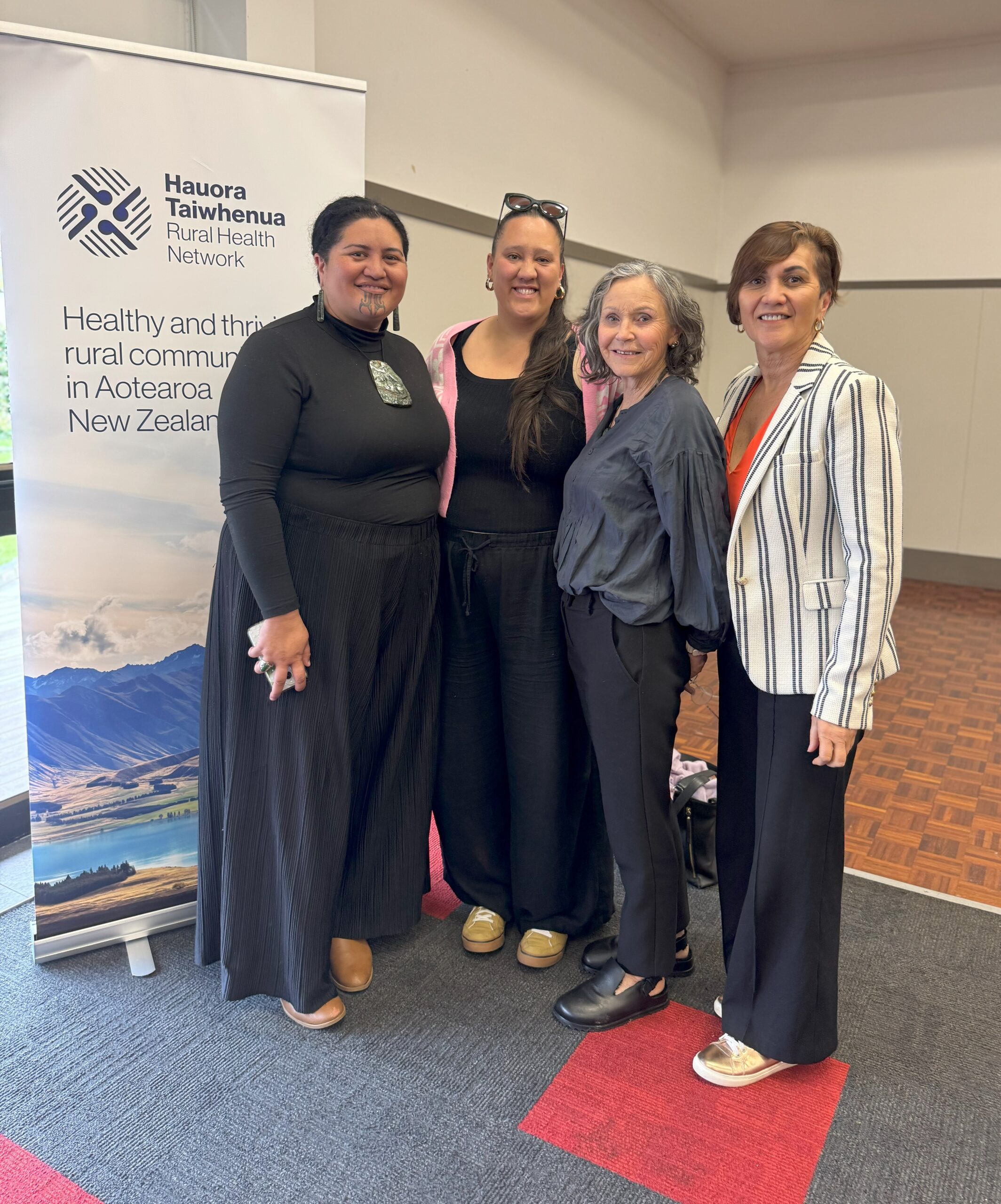
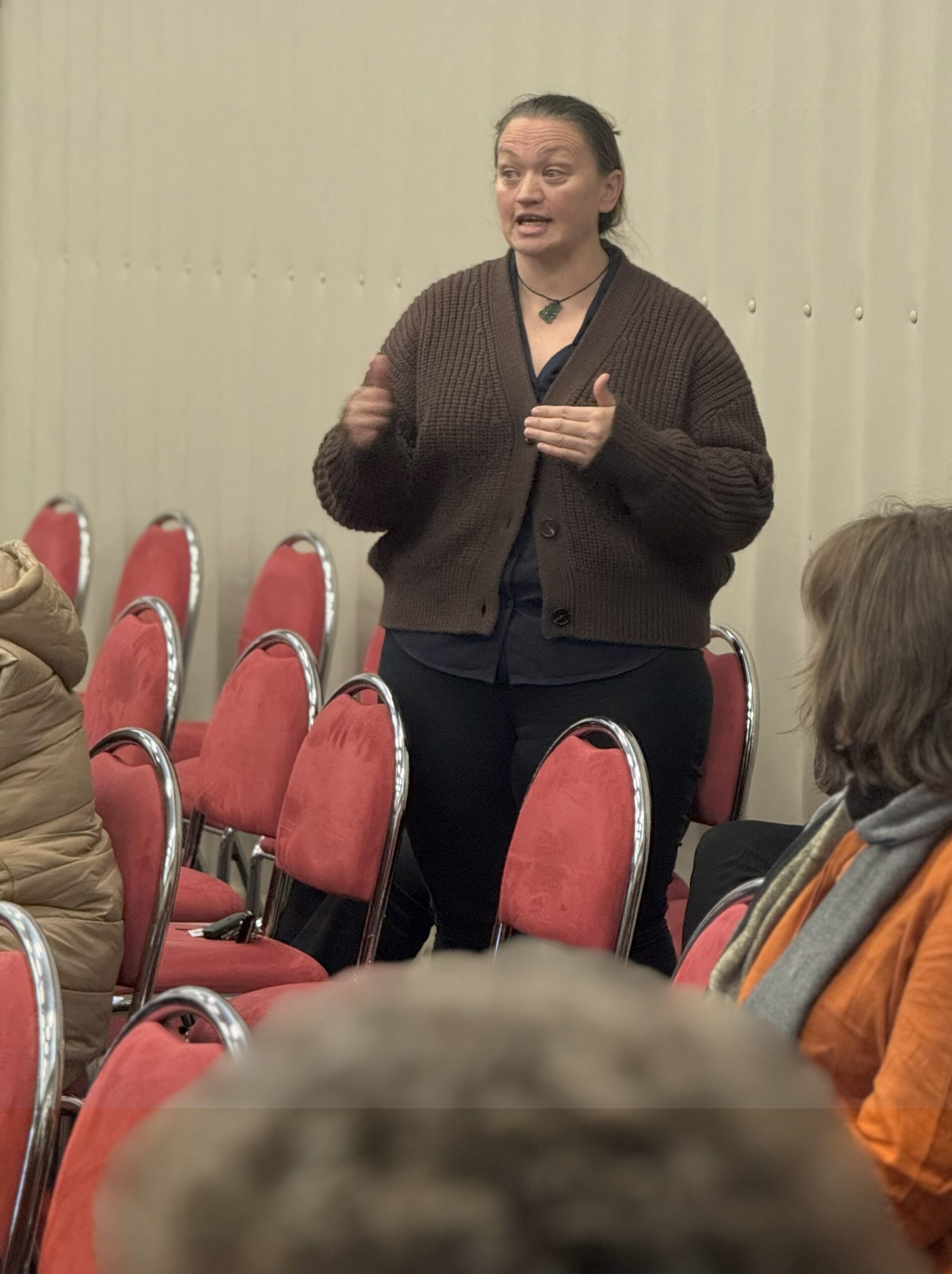
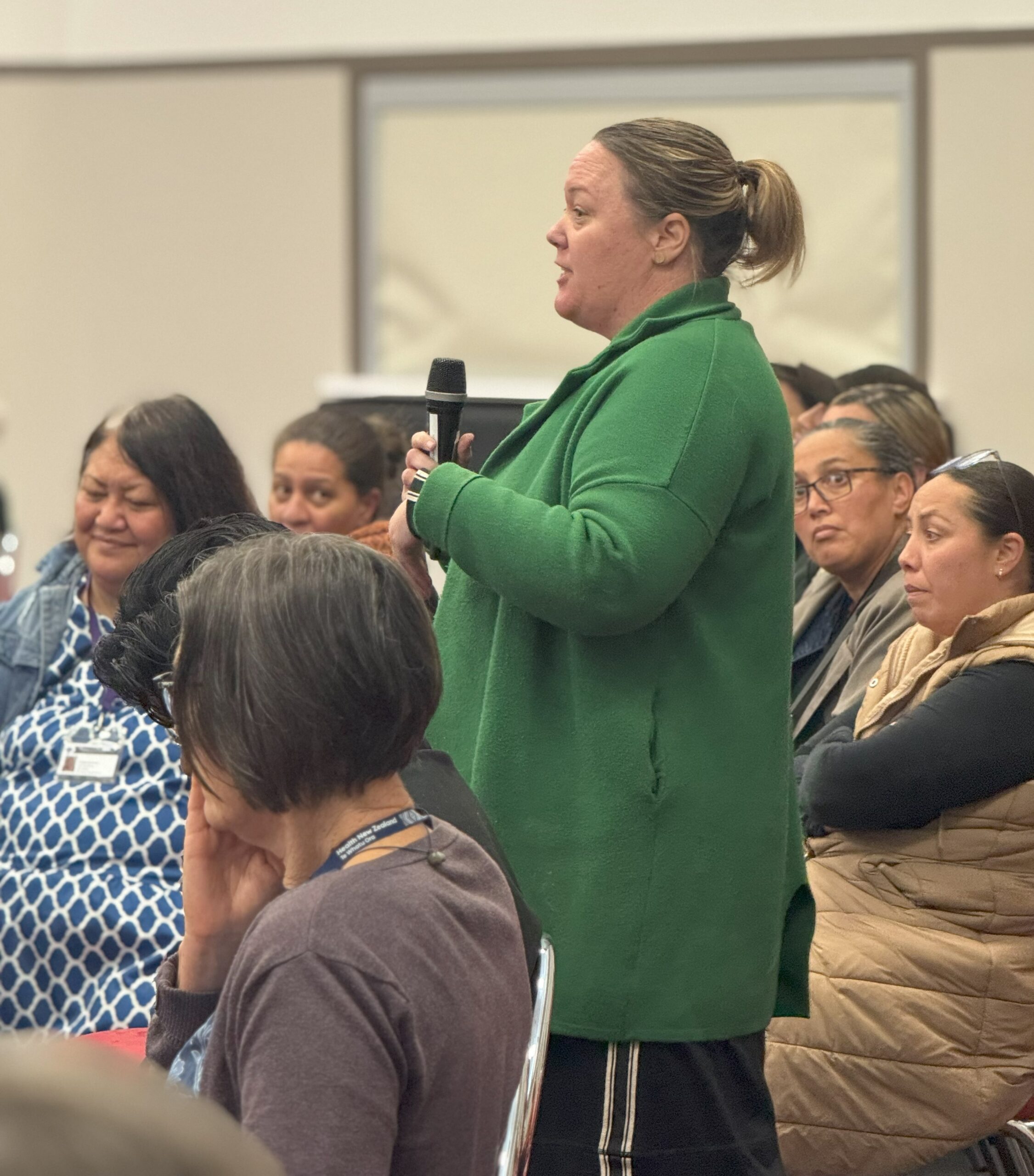
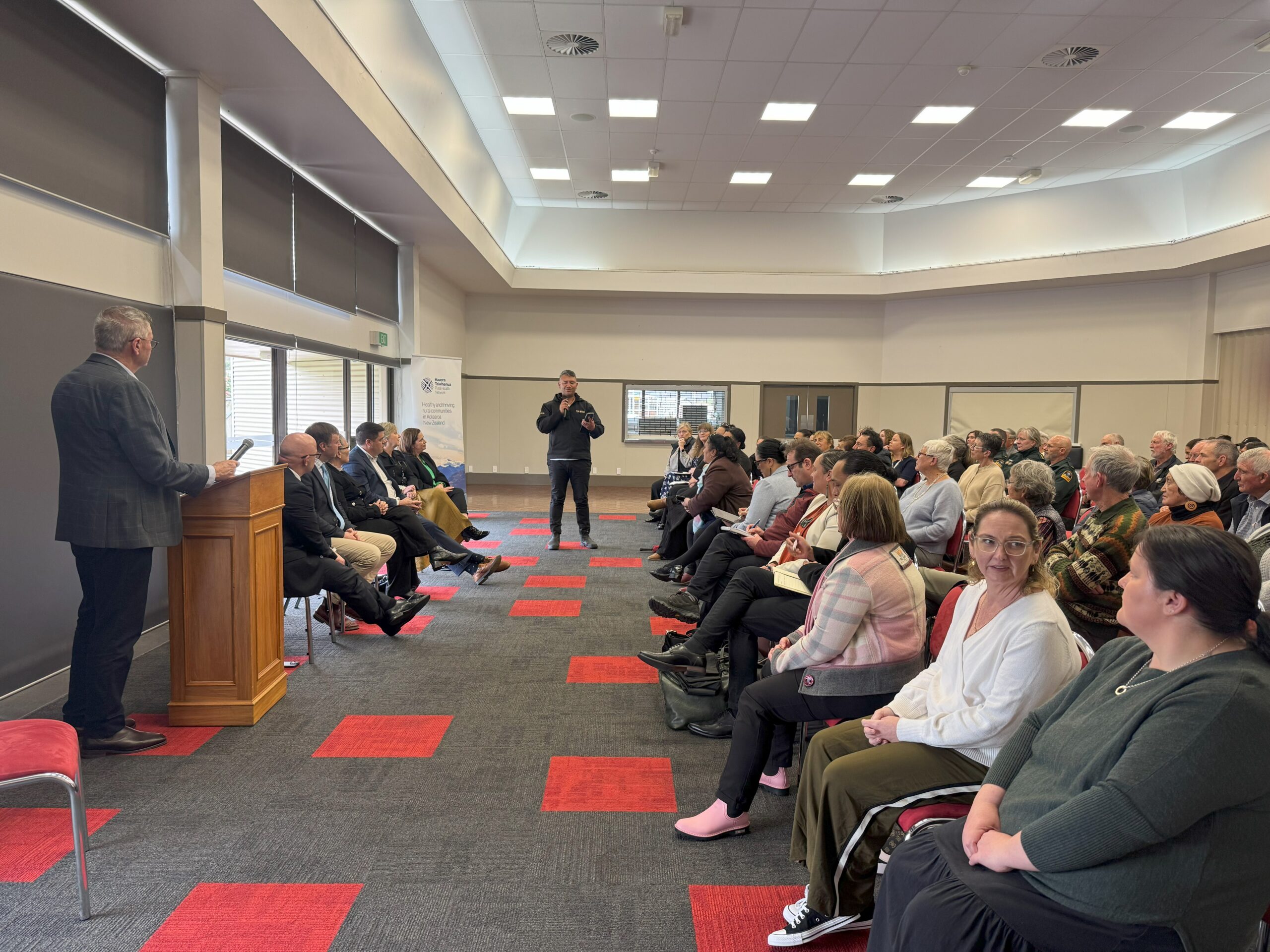
Yesterday, the Les Munro Centre in Te Kūiti was packed as Te Tiratū Iwi Māori Partnership Board attended the Rural Roadshow. Mental Health Minister Matt Doocey and Minister for Rural Communities Mark Patterson listened as the community spoke directly about the real issues affecting them so both ministers and bureaucrats heard their voices firsthand.
Minister Doocey admitted that while national targets for health services may appear strong, performance in rural areas, particularly for rangatahi Māori mental health, lags significantly behind.
“Nationally we might be hitting 80 percent, but in rural Māori communities, the figures drop sharply,” he said. He praised the importance of local decision-making, stressing that community knowledge is essential to design effective services, and shared that the government is prioritising investment in underperforming areas, with $2.8 billion committed to mental health services this year, aiming to resource local providers and lift access and outcomes.
Key Questions from the Community
Local doctors, Kaimahi, and hauora Māori providers raised concerns that included access to care, noting that in some rural areas travel times to a hospital can exceed three hours, meaning urgent care is often delayed. Workforce shortages were another pressing issue, with providers asking what strategies will be implemented to retain doctors, nurses, and Māori health practitioners in rural areas. Digital health limitations also surfaced, with communities highlighting the challenges of telehealth in areas without reliable internet. Sustainable funding and integration of services were other priorities, with providers questioning why many community services still receive only one-year contracts and how mental health, primary care, social services, and housing can be coordinated locally.
Various locals raised the broader determinants of health, including alcohol accessibility, youth vaping, housing, and poverty, noting that these factors directly influence mental health outcomes. A story was shared about intergenerational trauma, the lingering impact of war, and how past experiences of discrimination and stigma continue to shape the mental health landscape for whanau living rurally and remotely in the rohe today.
Ministers’ Responses
Minister Doocey spoke about targeted investment to underperforming regions and the importance of enabling local providers to design solutions from the ground up. Relational commissioning was highlighted as a key approach, allowing communities to develop services that meet their own needs rather than relying solely on top-down directives. He spoke about ambitious mental health targets, including one-week access for primary mental health services and three-week access for specialist services, among the fastest internationally.
Ministers discussed workforce development as a critical piece of the solution, encouraging rural students to pursue healthcare careers and return to their communities. Initiatives such as mobile health screening units, and integrated care prototypes currently on the drawing board as innovative ways to improve equity and access. Ministers also recognised the importance of preventative and early intervention services, stressing that timely support is vital to prevent minor health issues from escalating into serious conditions.
The meeting underlined that improving rural health requires both cross-agency government support and local leadership.
“Health isn’t just about seeing a doctor. It’s about housing, food security, education, and the broader environment. The government can pull a few levers, but ultimately communities drive what works,” said Minister Doocey.