
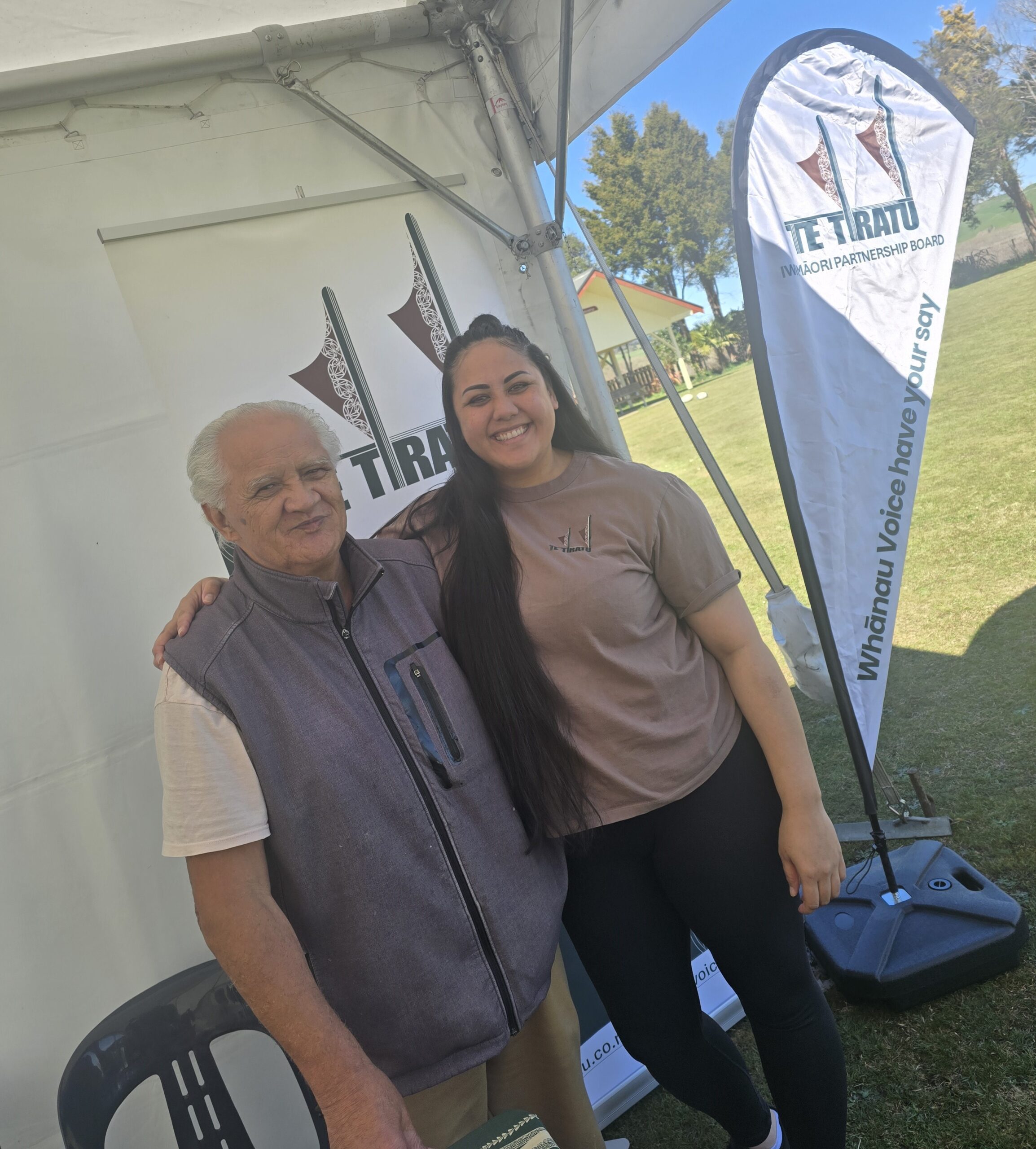
Photo: Whānau Voice kaimahi Raven Torea with kaumātua at Te Nehenehenui Hui-a-Tau
Whānau from Te Kūiti, Taumarunui, and surrounding areas came together at the Te Nehenehenui Hui-a-Tau, held at Napinapi Marae in Te Mapara, Piopio, to share their experiences with local health services, highlighting both the strengths of providers and the pressing gaps in care.
The hui, held on a clear and sunny day, provided an opportunity for kaumātua and whānau to discuss their needs and challenges with our Whānau Voice team. They reported using a mix of mainstream health services, including GP clinics, hospitals, dentists, midwives, physiotherapists, and optometrists, alongside traditional rongoā practices such as kawakawa teas, mirimiri, and herbal remedies. For many, GPs are a last resort, accessed only when traditional methods are insufficient.
Despite these resources, whānau emphasised the need for expanded services. Requests for more GPs, dentists, Māori-led health providers, mental health and counselling support, dieticians, and specialist services were consistent. Many whānau continue to travel to Waikato for care, often relying on friends or shuttles for transport, adding additional strain for elderly community members.
Access challenges were a recurring theme. Long wait times for GP and specialist appointments, lack of after-hours care, high costs for dental and optometry services, and limited information about available services all create barriers. Some whānau reported preferring to travel to Hamilton for glasses or dental care due to affordability and better service, highlighting inequities in local provision.
Despite these challenges, trusted providers received strong praise. Dr Rose Harris of the Maniapoto Whānau Ora Centre, which is part of the Taumarunui Community Kokiri Trust in Te Kūiti was highlighted as a Hauora Māori provider who delivers exceptional care, earning widespread respect from the community.
When asked about government health targets, whānau were unanimous in their assessment: the targets are not being met. “The government don’t see the struggles whānau have on the ground. They should walk in our shoes,” one wahine said. Another noted the higher rates of diabetes among Māori and Pasifika, adding, “No way. They’re not meeting them, and they need to go.”
Whānau also shared what supports their wellbeing. Engagement in marae and iwi activities, speaking te reo Māori, participating in physical activity, and spending time in nature were identified as key to maintaining health.
The hui underscored the importance of whānau voices in shaping health services. Whānau called for care that is accessible, culturally grounded, and delivered by Māori providers close to home. Their message was clear: health systems must meet the needs of the people they serve.